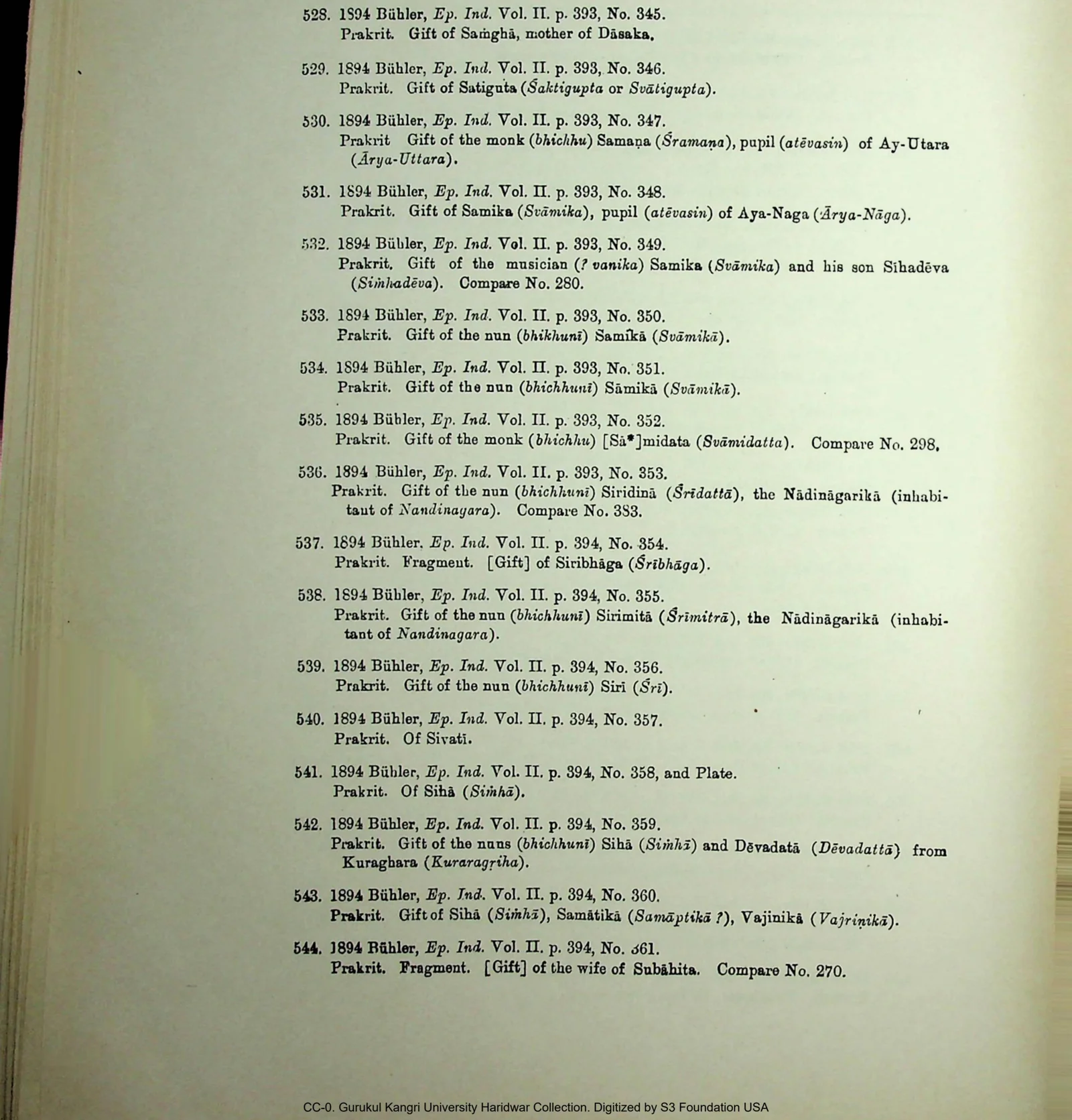
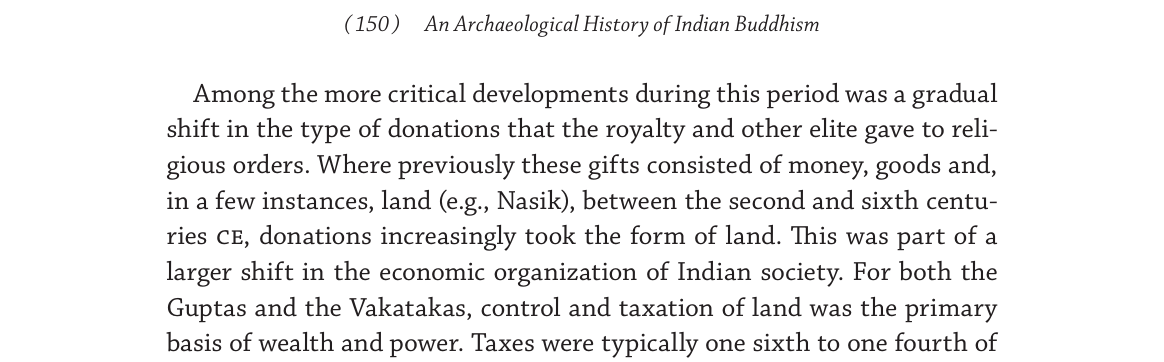
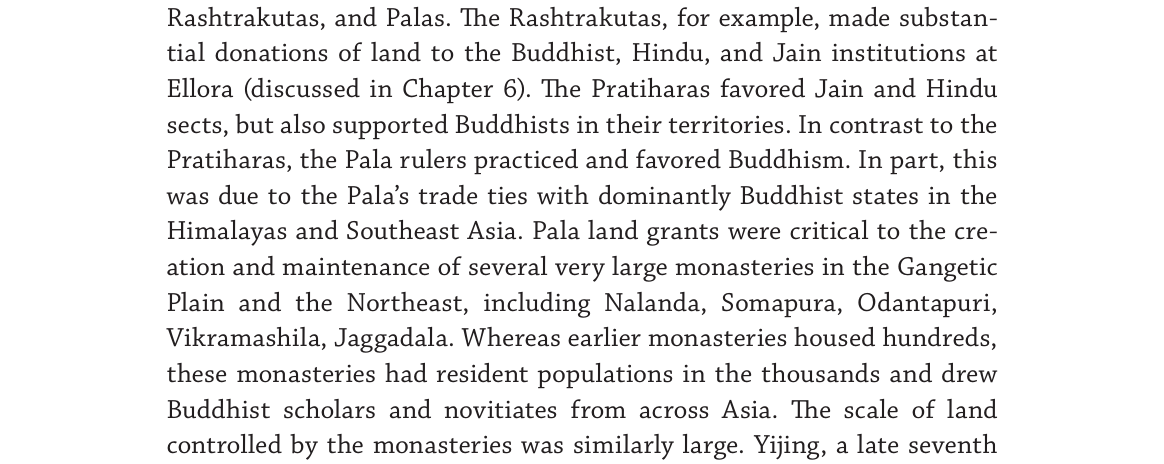
早期一半有原始数据可引:H. Lüders, A List of Brāhmī Inscriptions from the Earliest Times to About A.D. 400 excluding those of Aśoka(原刊 Epigraphia Indica 卷十附录,1912;Indological Book House 1973 重印)。该批铭文的通行格式即“gift of”,全表七百八十二见;施主身份的分布亦与正文所述相合:比丘一百八十一见(bhikhu 八十二、bhichhu 九十九两种转写)、比丘尼四十九见(bhikhuni 二十、bhichhuni 二十九)、优婆塞二十三见、优婆夷十九见;在家一侧则 householder 六十六见、sethi 二十三见(sethin、sethivadicha、sethiz 三形合计;本注旧作二十五见,2026-09-14 复算改)、gahapati 二十二见,并大量以亲属关系标身份(son of 一百四十九、wife of 七十七、daughter of 五十七)。巴尔胡特二百一十一见。该清单断限在公元四百年前后且明言不含阿育王铭文,正好覆盖不到“越往后越向王家与大额集中”这个后期变化。后期一半今有本可依:Lars Fogelin. An Archaeological History of Indian Buddhism. New York: Oxford University Press, 2015。捐施形态之变见书内 150 页:“a gradual shift in the type of donations that the royalty and other elite gave to religious orders. Where previously these gifts consisted of money, goods and, in a few instances, land (e.g., Nasik), between the second and sixth centuries ce, donations increasingly took the form of land”;王家土地授予与大寺之立见书内 204 页:“Pala land grants were critical to the creation and maintenance of several very large monasteries in the Gangetic Plain and the Northeast, including Nalanda, Somapura, Odantapuri, Vikramashila, Jaggadala. Whereas earlier monasteries housed hundreds, these monasteries had resident populations in the thousands”。惟须留意所证只及一端:该书所证是王家与土地一头之涨,小额施主一头是否相应萎缩,上引两处未直说。所见两种 Schopen 皆不对题(Sanchi 一见、Bharhut 五见而多在书目),故不复举。其早期一半第一卷第四篇论碑铭时已用。该书文本中 Sāñchī 一名识读多误,径检所得偏少。