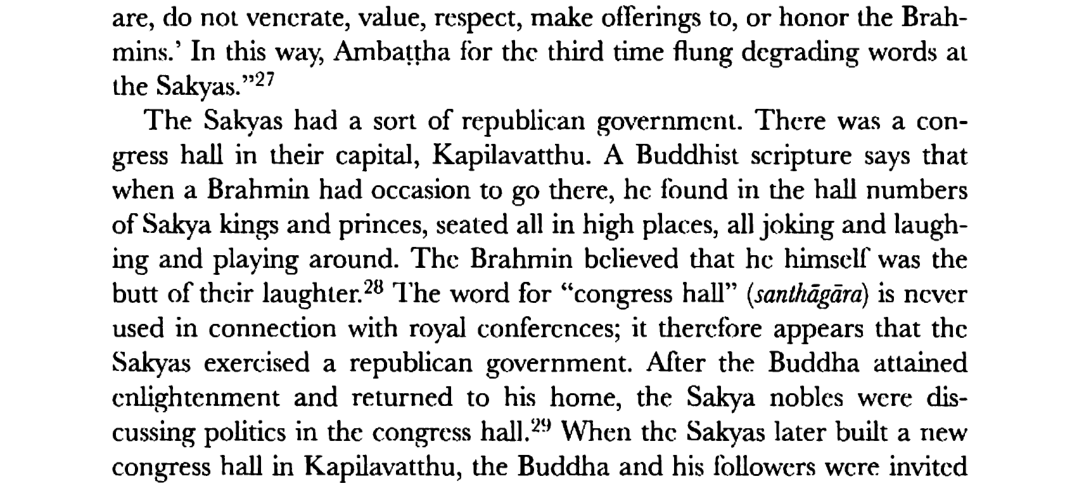
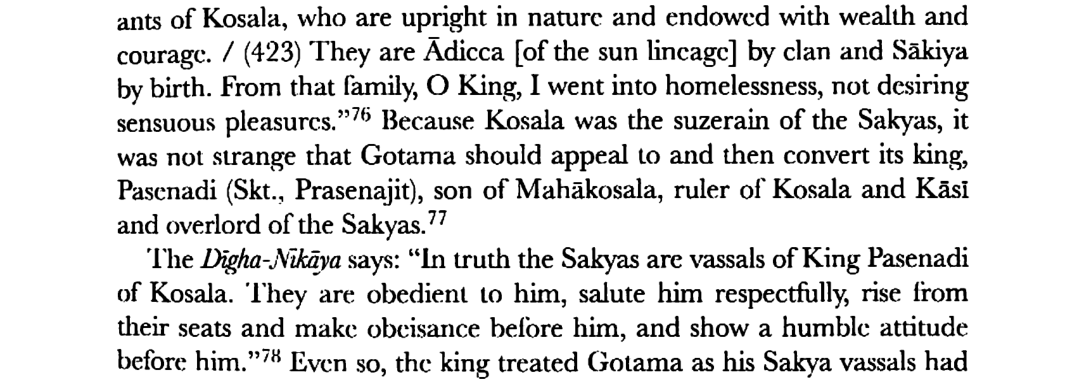
同上书,脚注所引两句连成一段,逐字对上:「Because Kosala was the suzerain of the Sakyas, it was not strange that Gotama should appeal to and then convert its king, Pasenadi (Skt., Prasenajit), son of Mahakosala, ruler of Kosala and Kāsī and overlord of the Sakyas. The Dīgha-Nikāya says: "In truth the Sakyas are vassals of King Pasenadi of Kosala. They are obedient to him
核查全文
, salute him respectfully, rise from their seats and make obeisance before him, and show a humble attitude before him."」脚注把《长部》原文与中村元的断语分列,与该页的行文次序一致,无误。须记一处版本内的异文:同书 另引《起世因本经》(Aggaññasuttanta)同一段而译文小异,作「The Sakyas are the vassals of King Pasenadi of Kosala. The Sakyas are submissive to him, bow before him…」——即同一部《长部》文句在此书中有两种英译(obedient/submissive,salute/bow),日后逐字引用须标明所据之页。又该处并谓释迦族与憍萨罗「perhaps in a tributary relationship」,用语较 suzerain 一词为松,可见中村元于此层的措辞前后有轻重之别。判确:脚注所承担的两项(《长部》原文、憍萨罗为宗主)俱得。