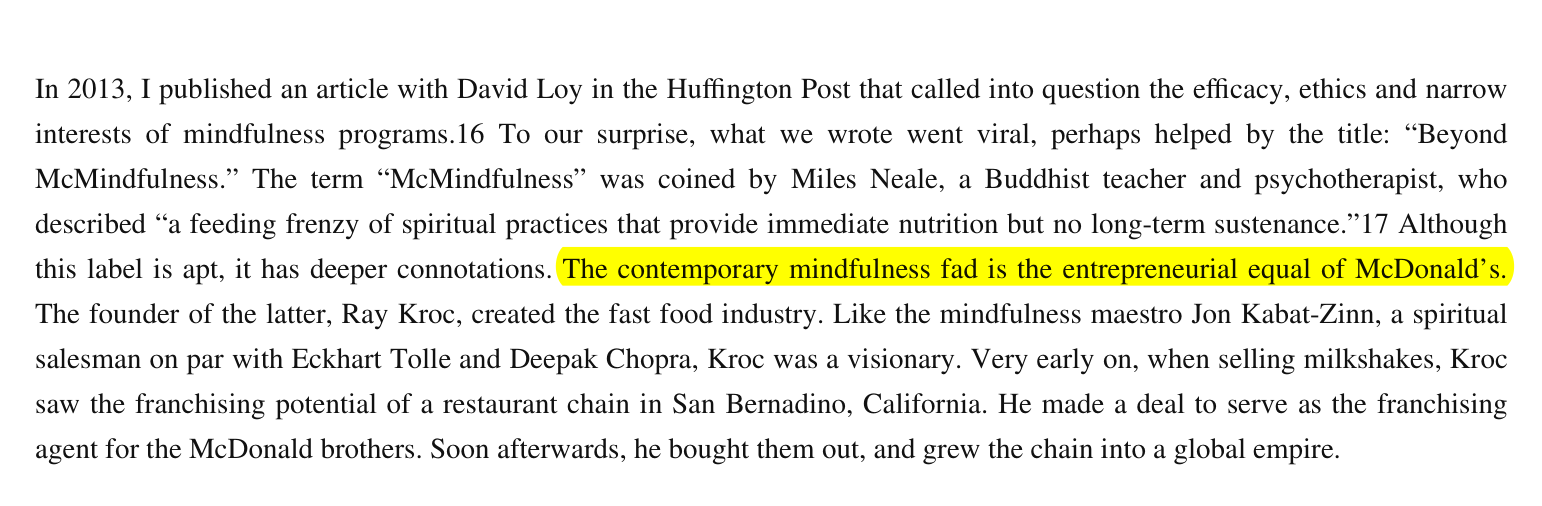
前记所缺者为 MBCT 公共医疗资料、企业/军队正念研究两项,另有「地下室」一细节在卡巴金本人书中查不到。(一)地下书:第四章〈Privatizing Mindfulness〉明记「Kabat-Zinn's first course, in 1979, was called a "Stress Reduction and Relaxation Program." It took place in a basement at the University of Massachusetts Medical Center」——正文「在麻省大学医学中心的地下室」由此坐实。并得一项正文未记的事实:首期课程原名为 Stress Reduction and Relaxation Program,MBSR 之名后起。
核查全文
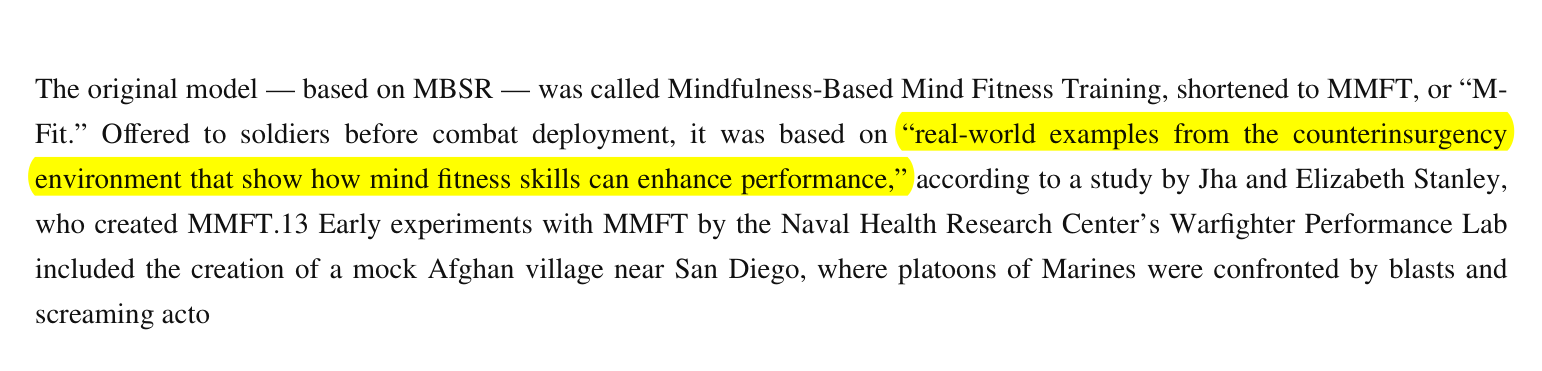
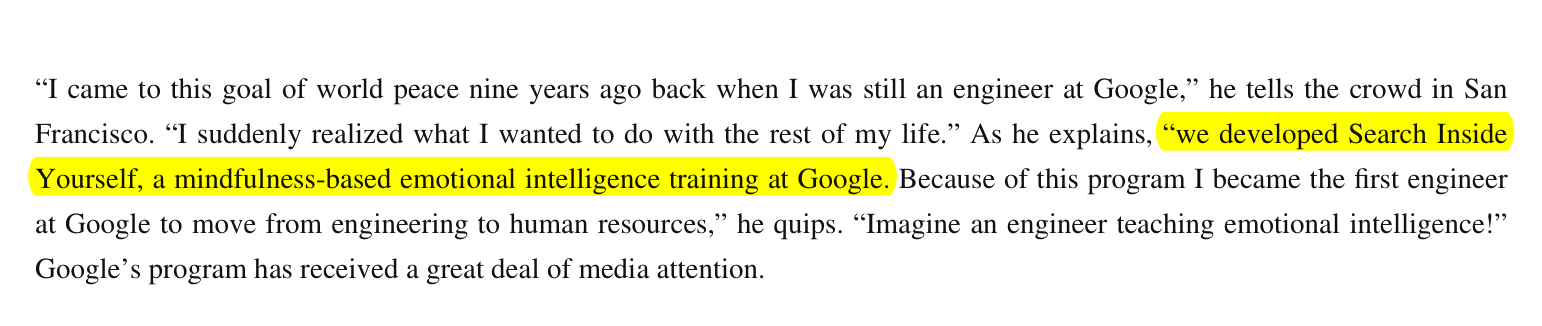
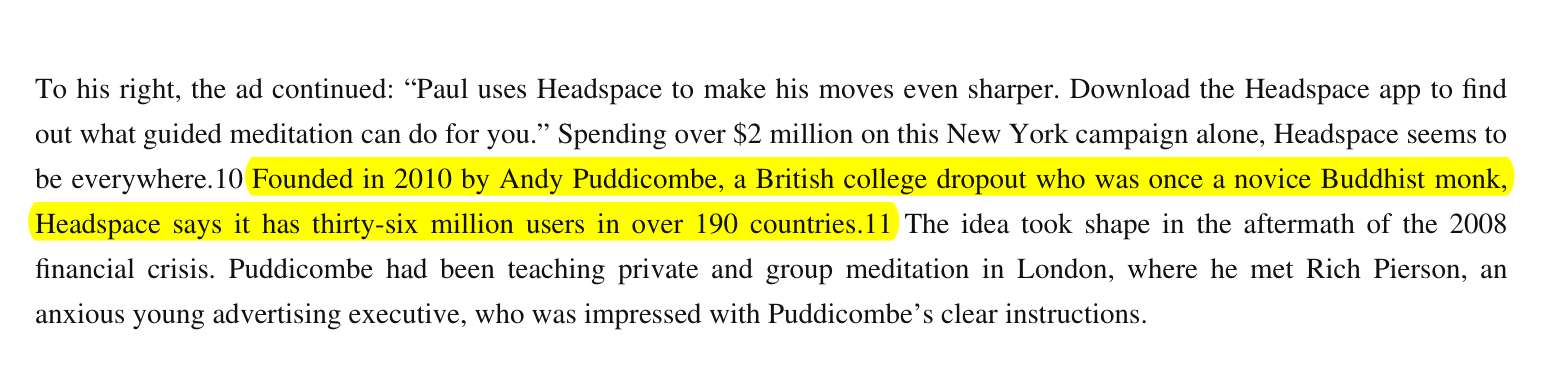
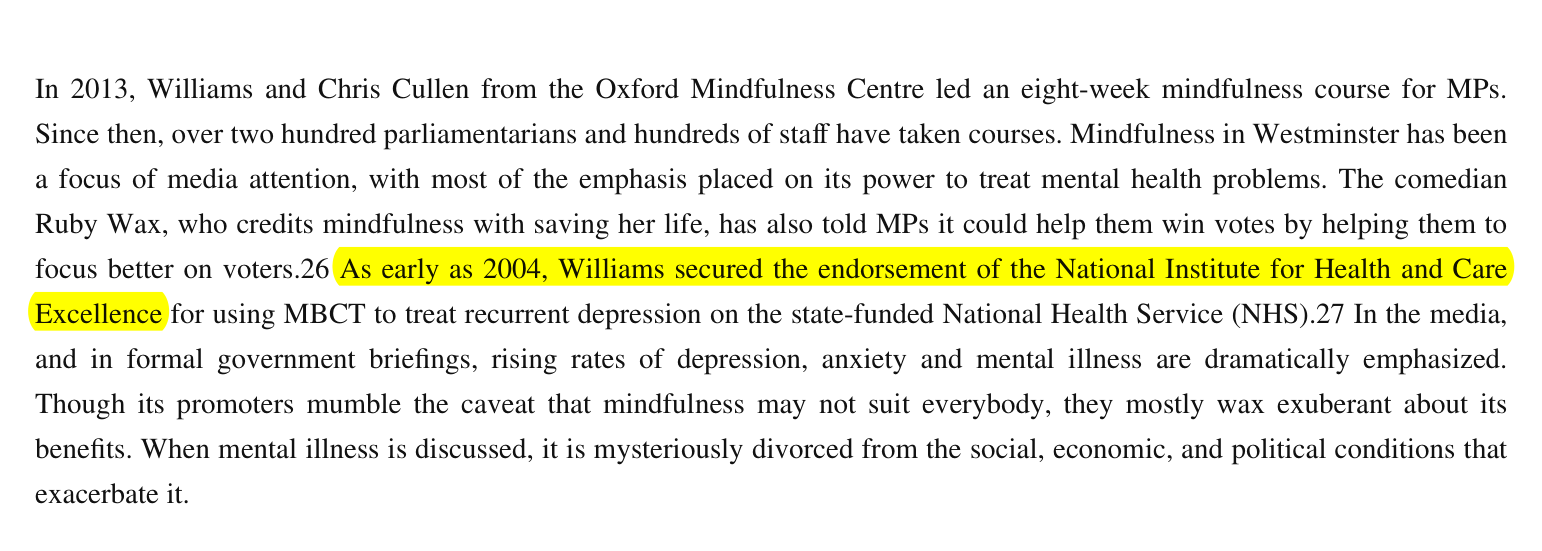
(二)公共医疗:同章记 MBCT「is now a treatment modality recognized by the UK's National Health Service」;第十三章更系其事于 2004 年,谓威廉斯于是年为 MBCT 争得 National Institute for Health and Care Excellence 之背书,得入国民保健署。(三)军队:第十二章〈Mindful Warriors〉:以 MBSR 改制的 Mindfulness-Based Mind Fitness Training(MMFT/M-Fit)由 Jha 与 Elizabeth Stanley 创制,供部队战前受训,取材「real-world examples from the counterinsurgency environment」;海军健康研究中心 Warfighter Performance Lab 于圣迭戈近郊筑仿阿富汗村落,以爆炸与演员尖叫制造压力。(四)企业与软件:第二章列谷歌、脸书、推特、雅虎、Salesforce、苹果、Zynga;谷歌「Search Inside Yourself」由陈一鸣主持。第九章记 Headspace 系 2010 年安迪·普迪科姆(曾为佛教沙弥)所创,自称用户三千六百万,仅纽约一地广告耗二百万美元;第一章称全行业规模四十亿美元,亚马逊上题含 mindfulness 者逾十万种。正文「应用软件把打坐装进手机,焦虑经济为平静明码标价」由此有据。但须记明立场之别,已写入脚注:普瑟此书通篇是批判,把这一链读作资本对正念的收编(「mindfulness becomes a form of capitalist spirituality, perfectly attuned to maintaining the neoliberal self」),并把 1979 年建所之年与撒切尔上台之年并置为同一潮流之始;他又不认临床证据之强:「the widespread belief that there is compelling clinical proof that 'mindfulness works' is simply not supported by the scientific evidence」,并称 MBCT 防复发之效「only modestly helpful」。正文此段是中性叙事(「这是佛教史上最远的一次外派」),取的是其事实一层;若日后要引普瑟为论据,须连他的评断一并交代,不可只取事实半边。判确:脚注所列四事俱有着落。脚注已补出普瑟一书的逐章定位与上述立场之别。该本为 电子书,无版心页码,故按章引。