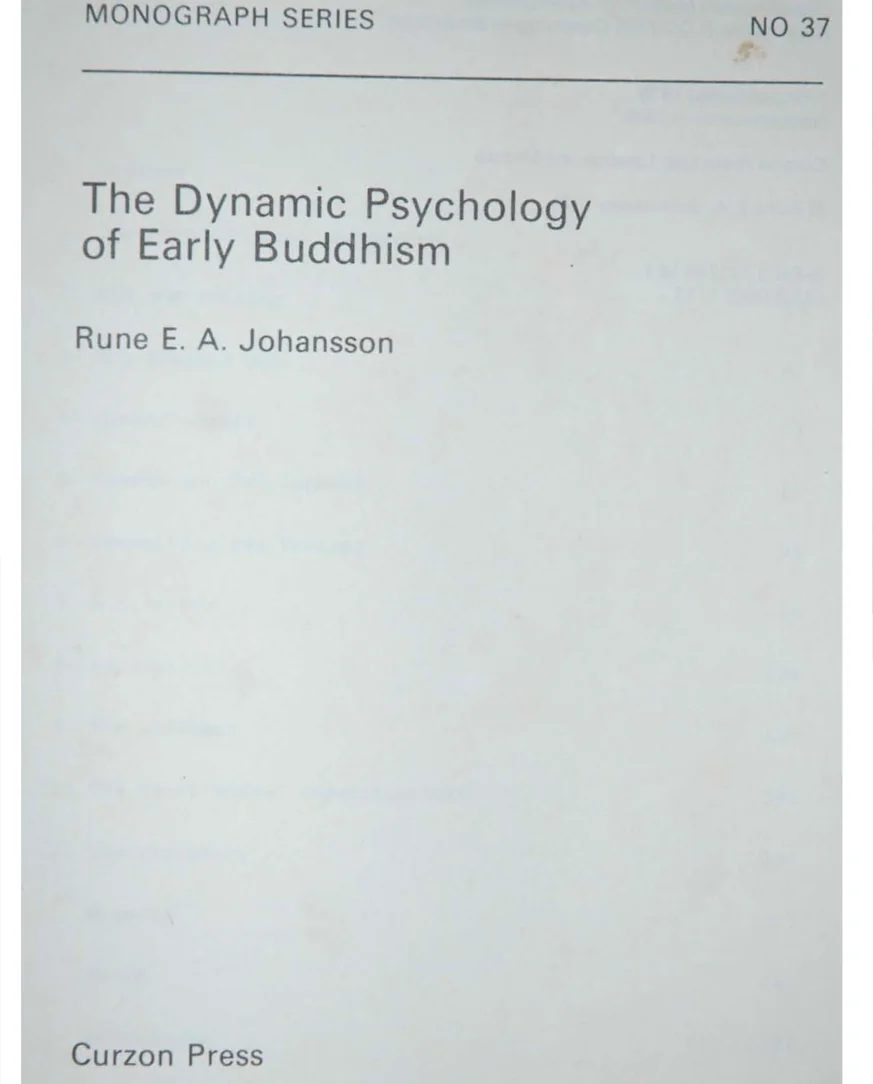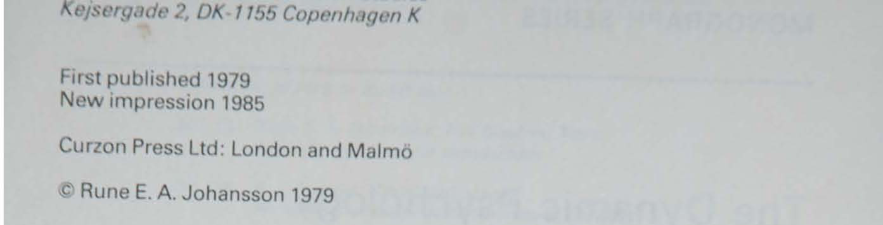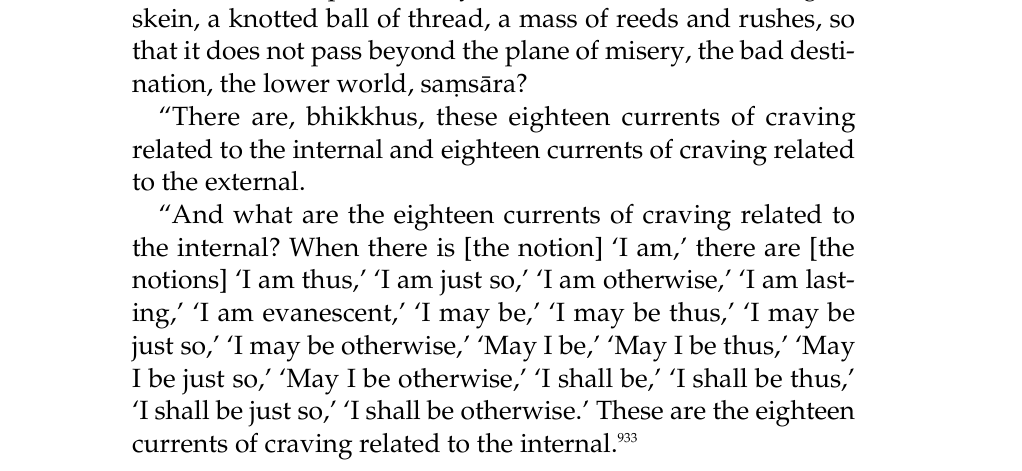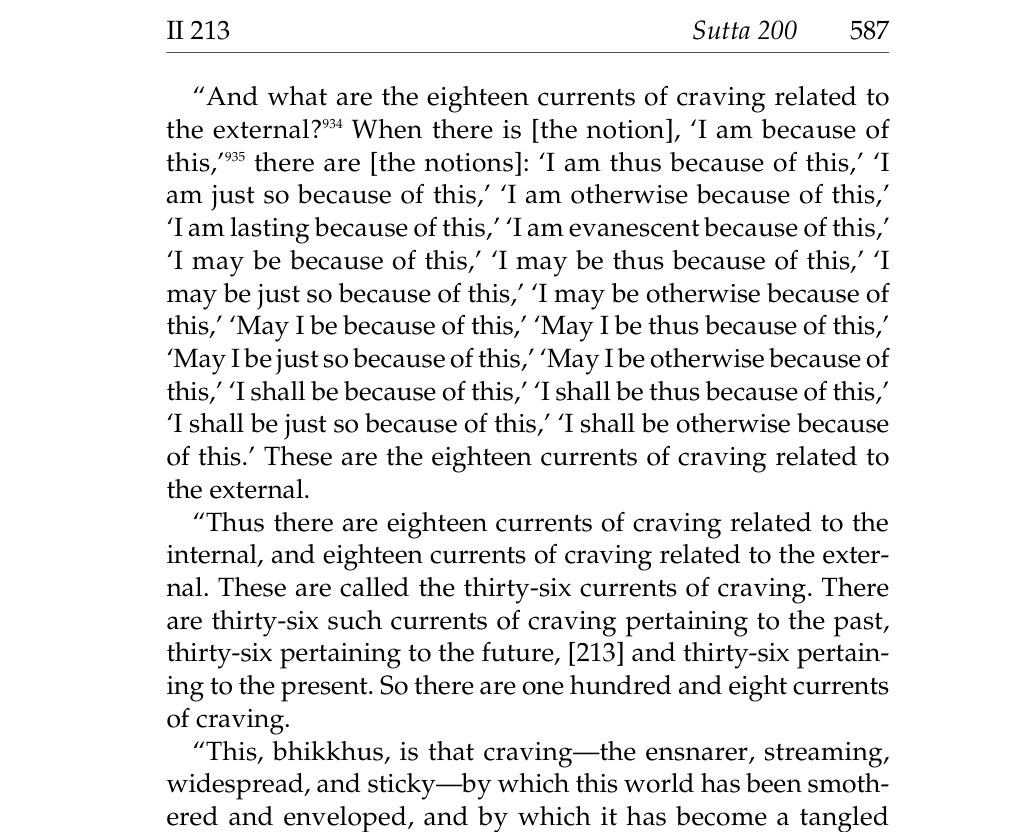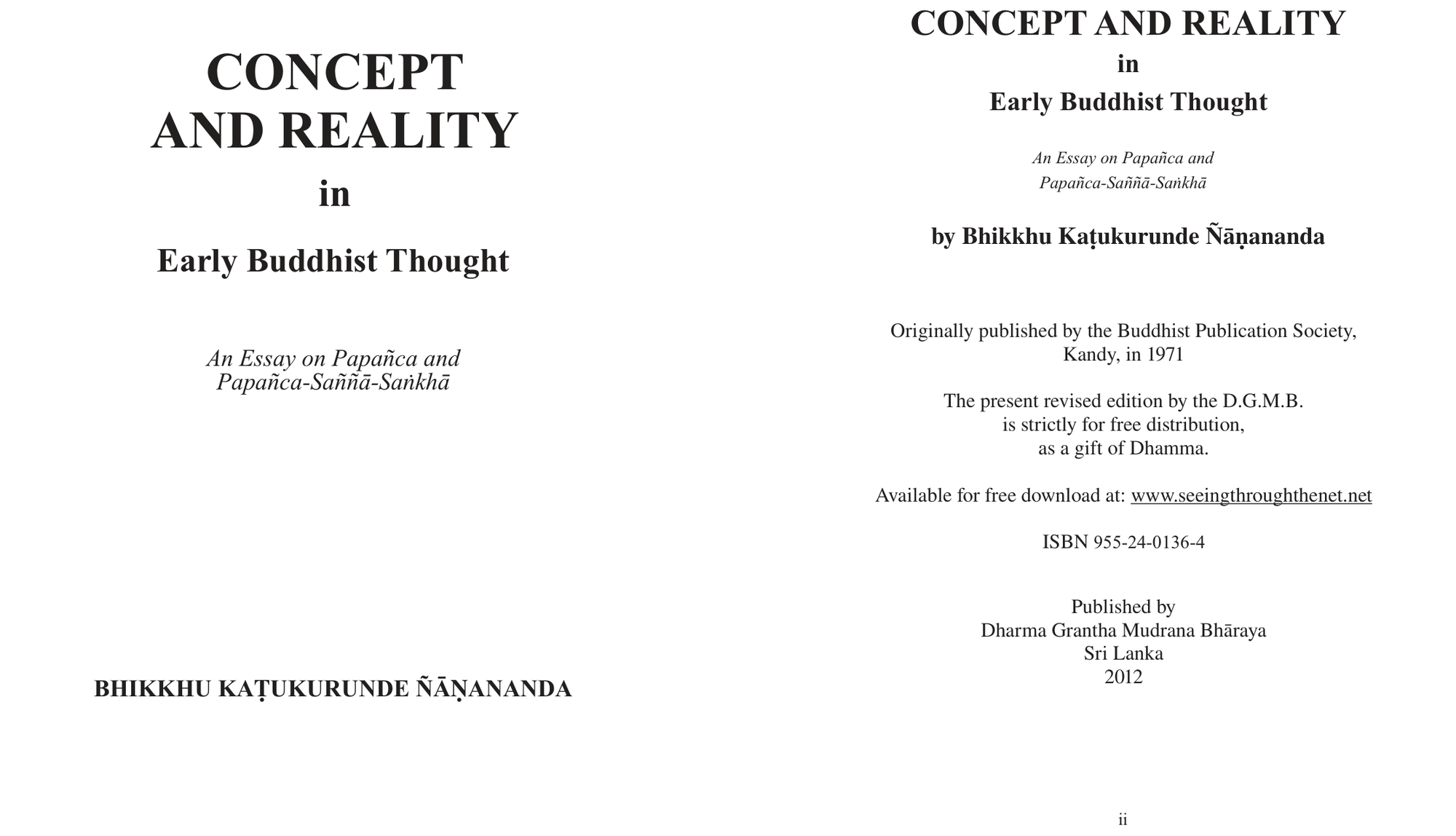
約翰森 1979 全书 234 面与 1969《The Psychology of Nirvana》俱。版本项对:1979 本版权页作「SCANDINAVIAN INSTITUTE OF ASIAN STUDIES MONOGRAPH SERIES / NO 37 / Curzon Press / First published 1979 / New impression 1985 / ISBN 0700701141」;1969 本扉页作「GEORGE ALLEN AND UNWIN LTD, RUSKIN HOUSE, London / FIRST PUBLISHED IN 1969」。
核查全文
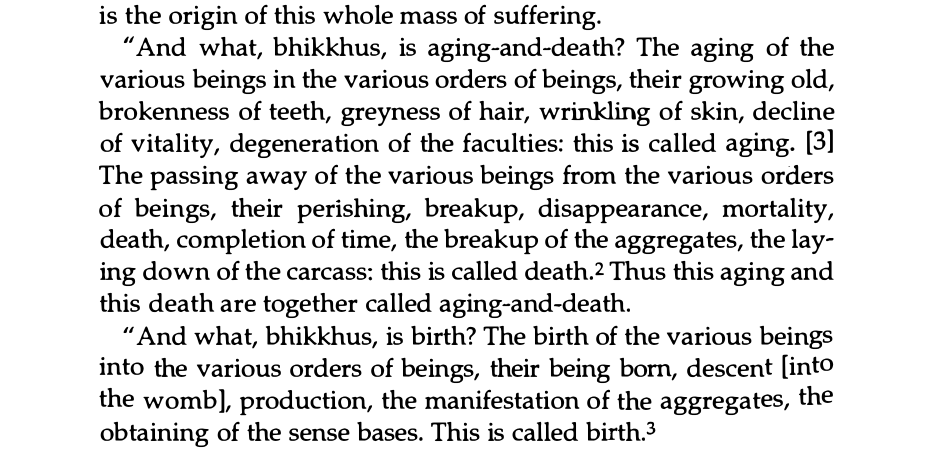
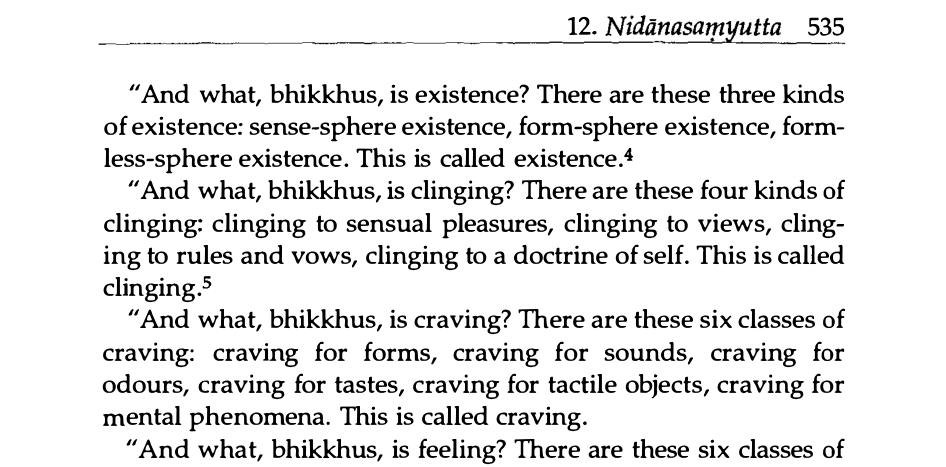
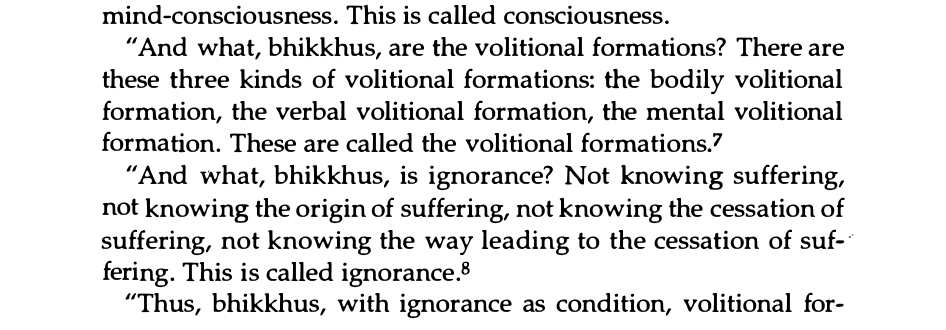
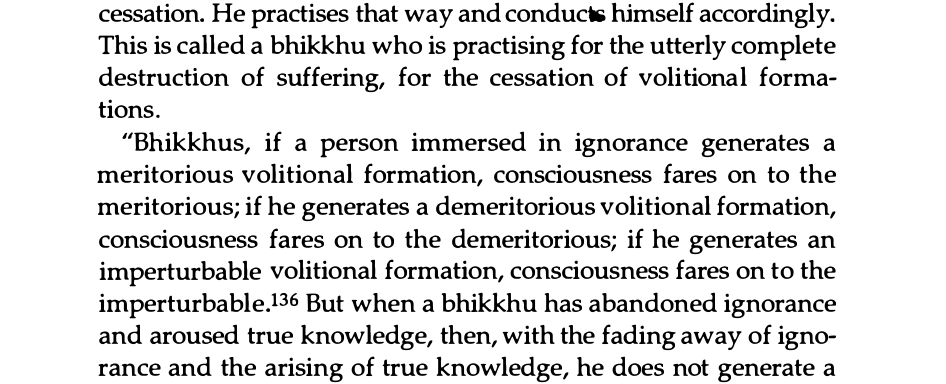
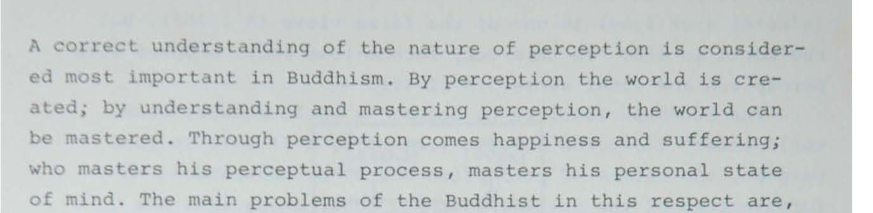
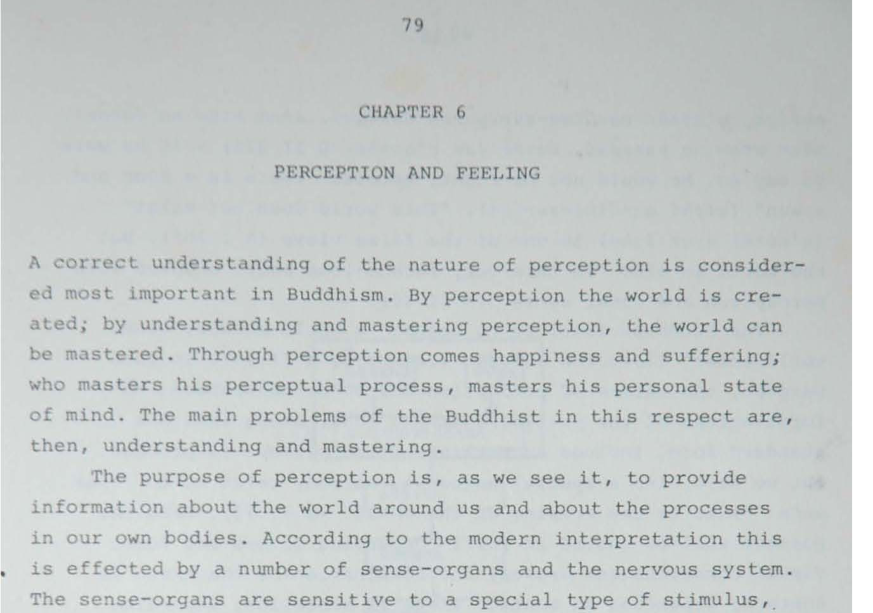
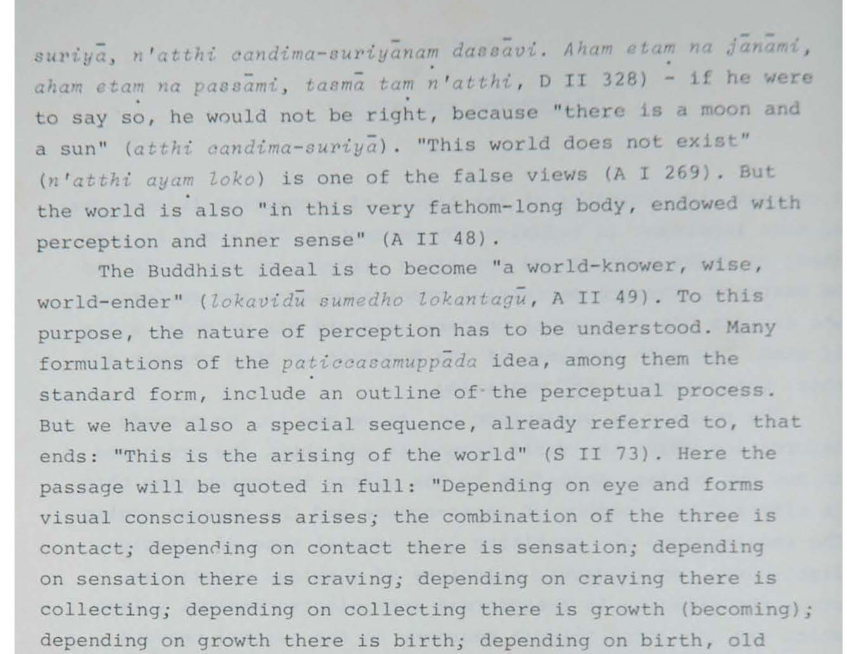
二书著录皆无误。十一章编排对,且六个章名逐一可对:目次作 1. The psychological background (11)/2. The one reality (25)/3. The dynamic act (41)/4. Consciousness (57)/5. Growth and development (65)/6. Perception and feeling (79)/7. Motivation (99)/8. Personality (125)/9. The influxes (177)/10. The intellectual superstructure (185)/11. Understanding (197),共十一章。正文所举「意识,知觉与感受,动机,人格,诸漏,知解」正是其第 4、6、7、8、9、11 章,无一错配。第七十九页纲领句逐句对上(該頁即第六章起页,):「A correct understanding of the nature of perception is considered most important in Buddhism. By perception the world is created; by understanding and mastering perception, the world can be mastered. Through perception comes happiness and suffering; who masters his perceptual process, masters his personal state of mind.」——与正文三句「知觉创造世界/藉由理解与驾驭知觉,世界可被驾驭/谁驾驭其知觉过程,谁就驾驭自己的心境」全同。「把十二支读为知觉创造性因果」之概括亦确:同页续云「Many formulations of the paṭicca-samuppāda idea, among them the standard form, include an outline of the perceptual process」,随即全引《相应部》II 73 一段(眼色生眼识、三事和合触、触缘受、受缘爱……)而以「This is the arising of the world」收,并以图一表之。作者确以知觉过程统摄全轮缘起,且以「世界之生起」为其果,正文的转述与本书对它的不认同(『缘起于是成了一门知识论之内的心理学』)皆有据。
前图逐字见“知觉创造世界”及驾驭知觉即驾驭心境;后图把缘起诸式(含标准十二支)解释为知觉过程的轮廓,并引“世界之生起”的次第。