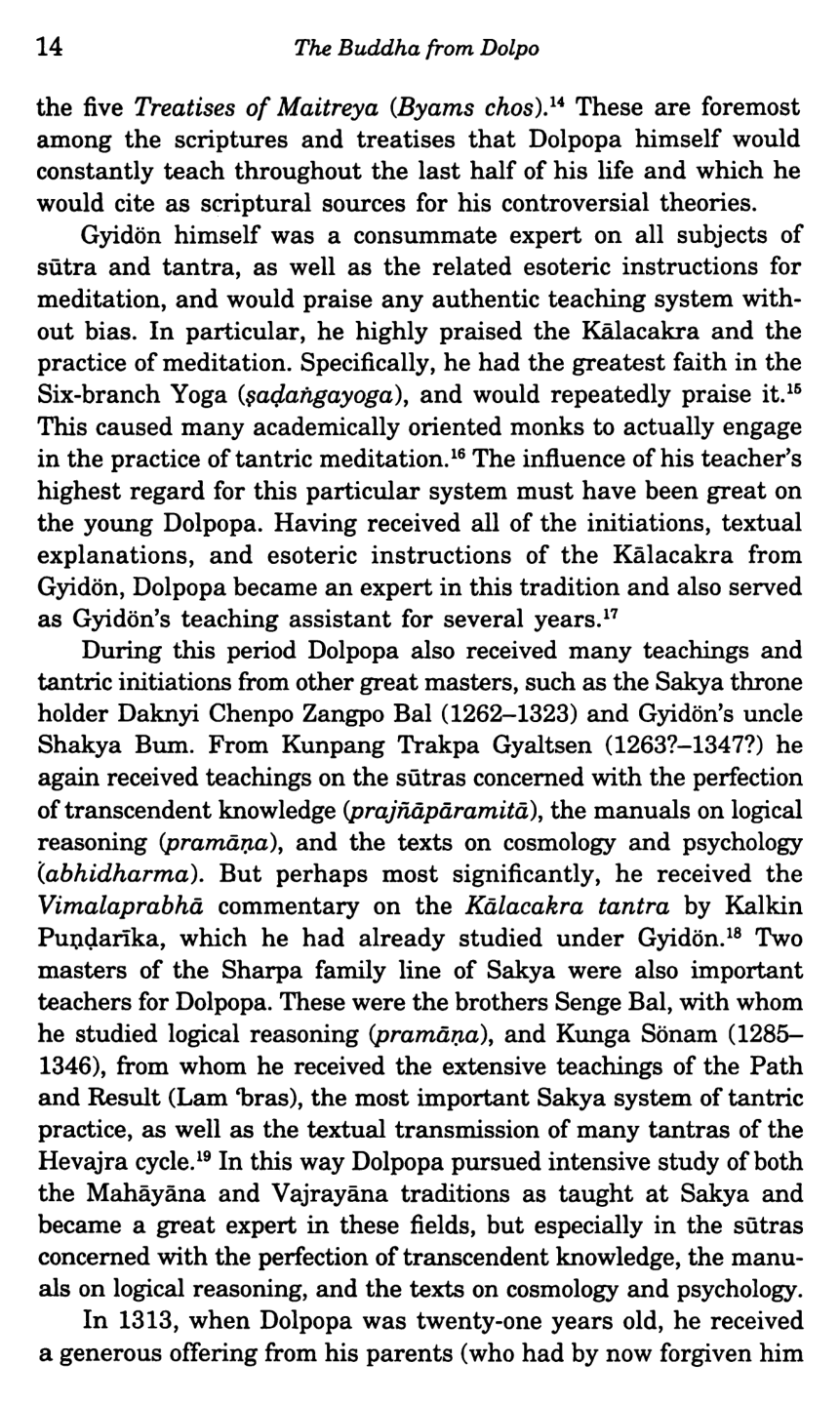
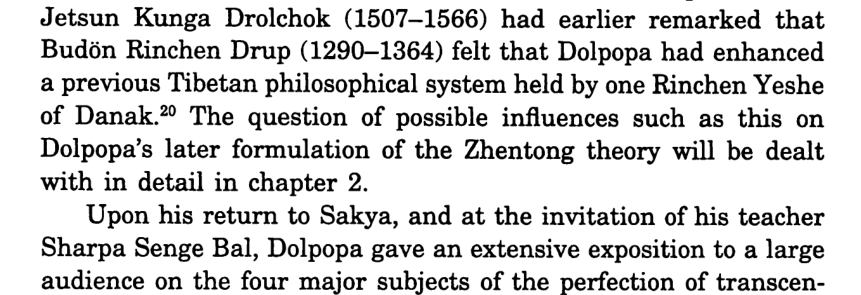
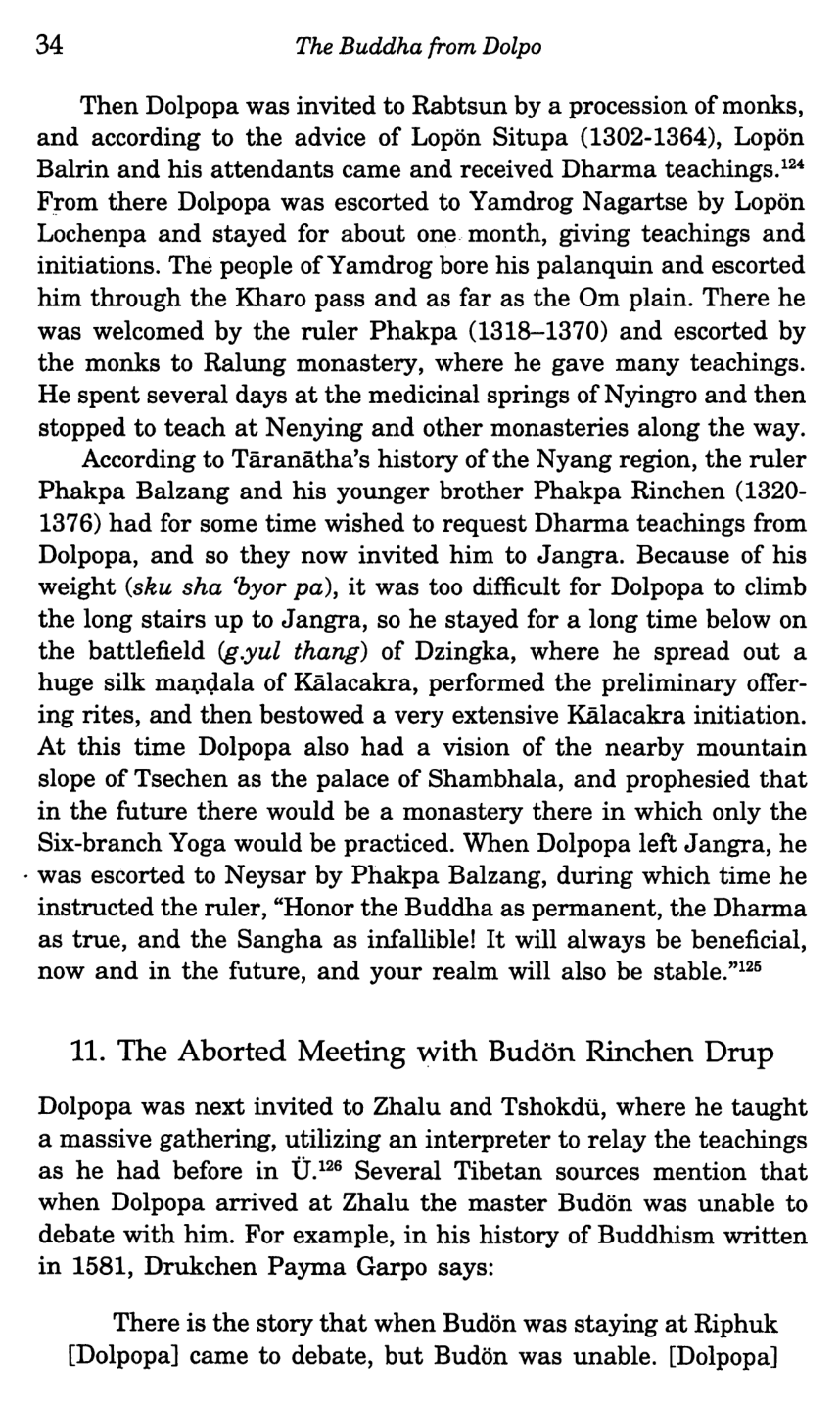
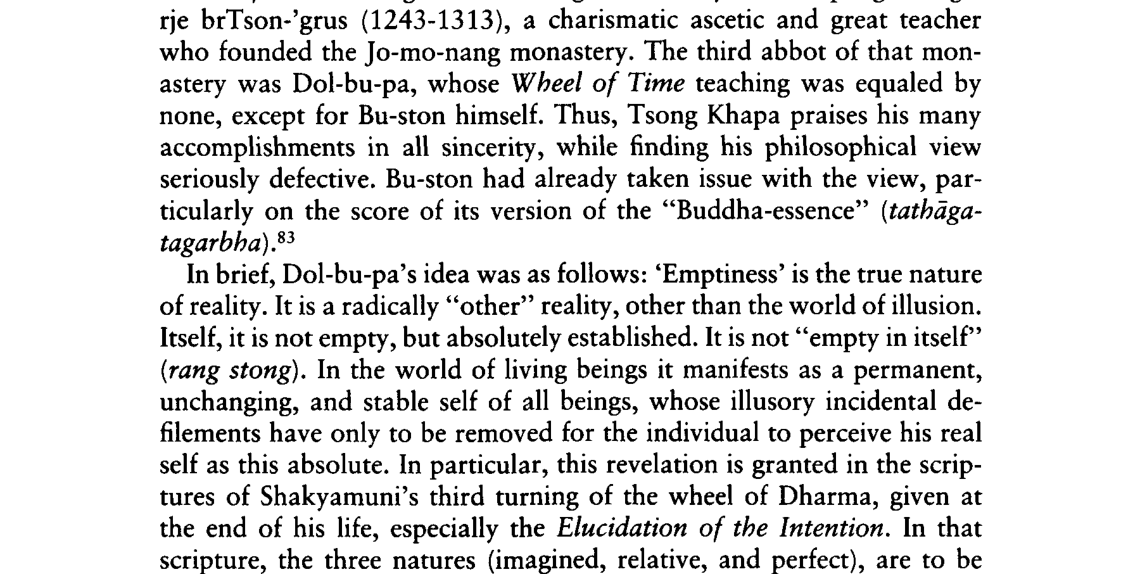
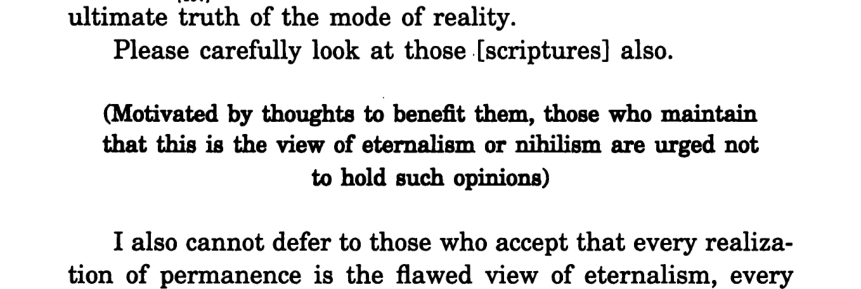
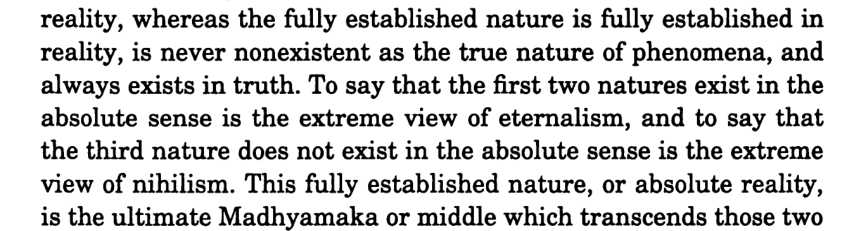
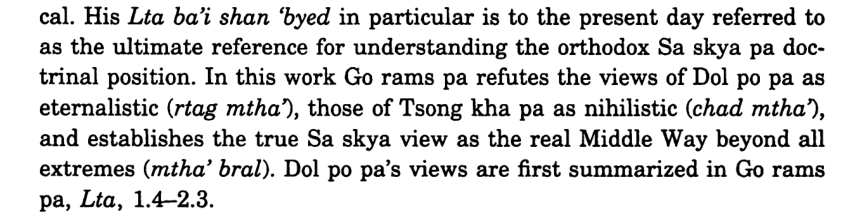
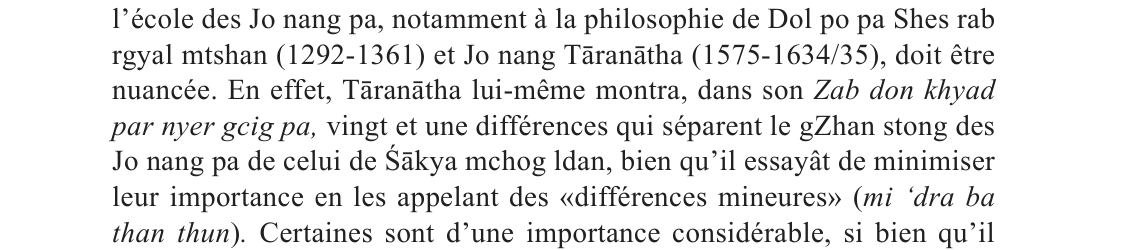
Robert A. F. Thurman (trans.). Tsong Khapa's Speech of Gold in the Essence of True Eloquence. Princeton: Princeton University Press, 1984。该本可核者有二:一是多普巴的主张,书内第 61 页作"'Emptiness' is the true nature of reality. It is a radically 'other' reality… Itself, it is not empty, but absolutely established. It is not 'empty in itself' (rang stong)",并谓其在众生位现为"a permanent, unchanging, and stable self of all beings";其人见第 60 页注 6"Dol-bu-pa Shes-rab rGyal-mtshan (1292-1361), the founder of the Jo-nang"。二是宗喀巴实际所下的破,见第 202 页注 44:其法是以《解深密经》自身对圆成实的界说反证觉囊的读法,"if, as they do, you take this scripture as definitive, you must accept as stated that the perfect is the relative devoid of the imagined only, and not the former devoid of the two latter"。须注明:瑟曼在导言中明言不在导言里作破(第 61 页"it is better to leave the refutation of this view to him");而正文所述的那个两难(名言安立故自空、自性成立故常见),通检此本未见,亦不见于 Cyrus Stearns. The Buddha from Dolpo. Albany: SUNY Press, 1999 與 Matthew T. Kapstein. The Tibetan Assimilation of Buddhism. New York: Oxford University Press, 2000,本书这一节是就宗喀巴的一般论式所作的重构,非某处原文的转述,出处俟考。两点旁及:其一,多普巴本人预先挡过常见之讥,其颂末自注"those who maintain that this is the view of eternalism or nihilism are urged not to hold such opinions"(Stearns 书内第 164 页),且他把常见、断见二名反过来用:依他起與遍计若说胜义有,才是常见;圆成实若说胜义无,才是断见(同书第 95 页)。其二,萨迦的果然巴给出的是对称的判语:判多普巴为常边(rtag mtha')、判宗喀巴为断边(chad mtha'),而以萨迦见为离边中道(同书第 207 页注 69)。