← 引用核查

01-大乘起源问题

10 条 · 9 行 · 到书里读本章 →

第 31 行三它其实不是一个宗派在部派之内生长

巴利1.4.1-1条0715
所据
巴利本:VRI《Vinayapiṭaka Cūḷavaggapāḷi》(Chaṭṭha Saṅgāyana,罗马字)
巴利原文

Te imehi aṭṭhārasahi vatthūhi apakassanti, avapakassanti, āveniṃ āveṇi (sī.), āveṇikaṃ (syā.) uposathaṃ karonti, āveniṃ pavāraṇaṃ karonti, āveniṃ saṅghakammaṃ karonti. Ettāvatā kho, upāli, saṅgho bhinno hotī

对读
suttacentral.net/pli-tv-kd17 篇级 · 同一底本(Mahāsaṅgīti),把上面的巴利词贴进浏览器查找框即可对上
核查结论

判疑转确。正文、注皆不须再动。

正文書 31 行「破僧在律中有明确的技术定义,部派时代通行的定义指的是在同一戒场另立布萨」之据。VRI《小品》§352(Vin II 204)优波离问 Kittāvatā nu kho, bhante, saṅgho bhinno hotī’ti?,佛答先列十八事(adhammaṃ dhammoti dīpenti 以下,即倡异纠众一型),继以别行布萨、别行自恣、别行僧羯磨为断,末云「乃至於此,优波离,僧即破」——两型要素并具于一处,正是注 所记者。引文照录 VRI 正文,内含夹注异读(āveniṃ 为底本,āveṇi 系锡兰本、āveṇikaṃ 系暹罗本);记一坑:若按通行拼法 āveṇiṃ uposathaṃ karonti 连读检索,该册零命中,须照底本 āveniṃ 并容夹注。
第 96 行延伸阅读

纸本1.4.1-2条0386
所据
[0729] Who Gets to Ride in the Great Vehicle - Paul Harrison - 1987
书页
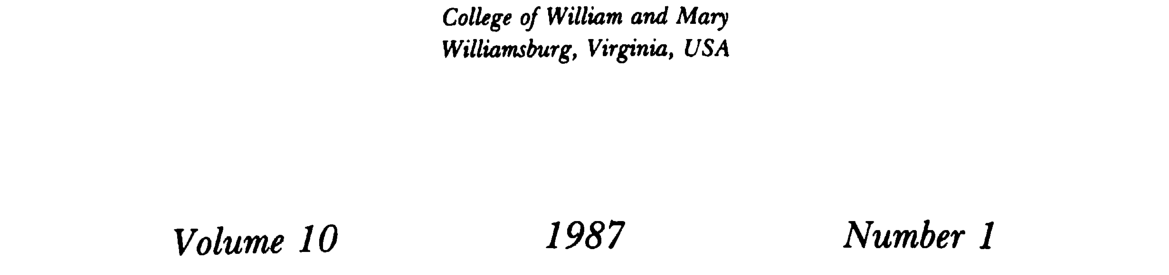
期刊题名页 书影
期刊题名页
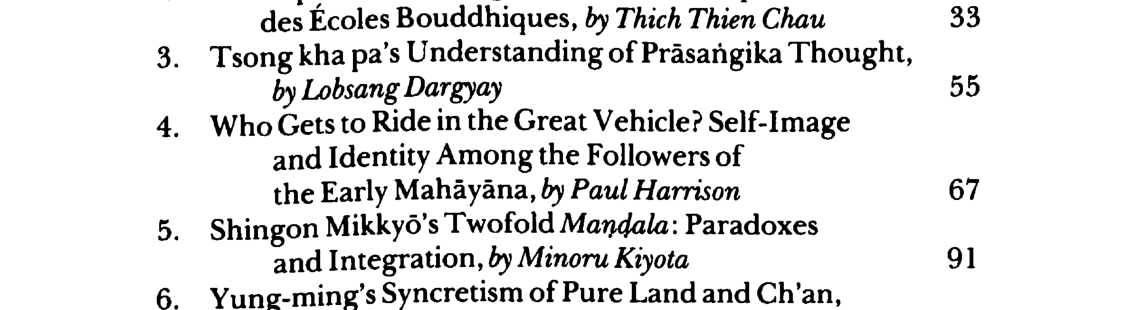
期刊目次 书影
期刊目次
原刊第 73 页 书影
原刊第 73 页
原刊第 84 页 书影
原刊第 84 页
原刊第 85 页 书影
原刊第 85 页
核查结论

(一)著录逐项对:该期目次作「Who Gets to Ride in the Great Vehicle? Self-image and Identity Among the Followers of the Early Mahayana, by Paul Harrison … 67」,刊头作「Volume 10 / 1987 / Number 1」;次篇 Kiyota〈Shingon Mikkyō's Twofold Maṇḍala〉起書 91,故迄書 89 相合。书目行 JIABS 10, no. 1 (1987): 67–89 无误。(二)所系论点亦在:全文 self-image 十三见、identity 十七见、bodhisattva 一百零八见。

核查全文

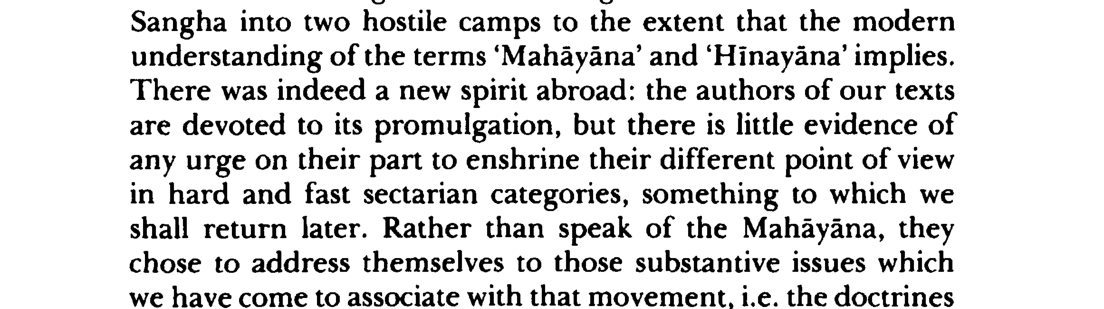
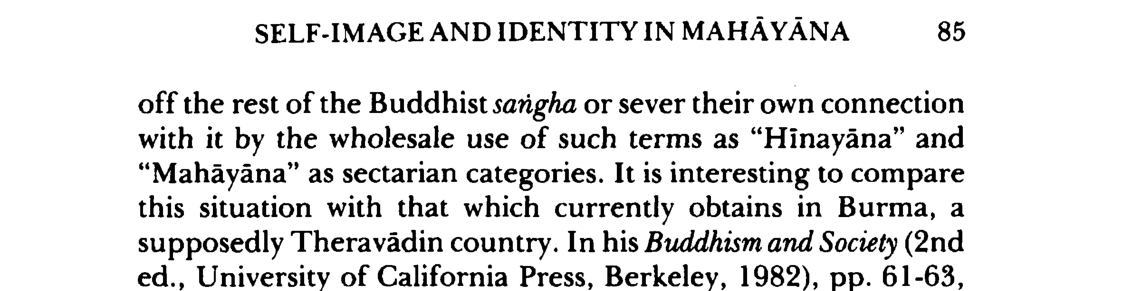
放弃部派归属之据有二处正面表述——「there is little evidence of any urge on their part to enshrine their different point of view in hard and fast sectarian categories」;早期大乘者未尝「cut themselves off the rest of the Buddhist saṅgha or sever their own connection with it by the wholesale use of such terms as 'Hīnayāna' and 'Mahāyāna' as sectarian categories」。书 107 行脚注称此文为「放弃部派归属说的理由,最早见」,与文中所论相符。附记:全文「Mahāsāṃghika」零命中——该文不以驳大众部说立论,而以早期大乘自我认定不循部派为据;书 107 行行文作「放弃部派归属说的理由」而非「驳大众部说」,措辞正确,无须改。

题名页与目次合证 JIABS 10.1(1987)、文题、作者及起页 67。第 73 页说早期文本几乎没有把不同观点固化为严格部派分类的冲动;第 84—85 页跨页说明早期菩萨乘追随者虽反对以自利涅槃为目标,却不愿以“小乘/大乘”部派标签切断自己与其余僧团的联系。此文所论是早期大乘自我认同不循部派分类,不是直接反驳“大众部起源说”。

第 100 行脚注 williams

纸本1.4.1-3条0468
所据
New Evidence for Mahayana in Early Gandhara - Mark Allon 与 Richard Salomon - 2010
书页
书内第 10 页(该卷分栏排印,左栏) 书影
书内第 10 页(该卷分栏排印,左栏)
核查结论

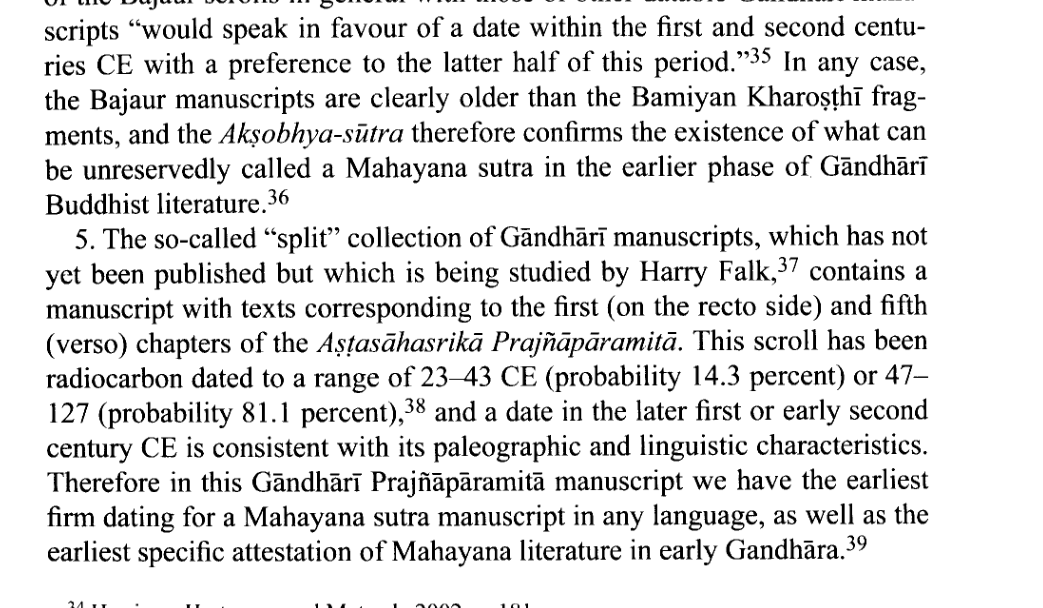
把那一句从本注里分出去,另系确切出处,本注余下各项本已核实,故转确。「split」藏犍陀罗语残卷中一件正面写《八千颂般若》第一品、背面写第五品,碳定年得「23-43 CE (probability 14.3 percent) or 47-127 (probability 81.1 percent)」,并谓「a date in the later first or early second century CE is consistent with its paleographic and linguistic characteristics」;二氏断曰「the earliest firm dating for a Mahāyāna sūtra manuscript in any language」。

核查全文

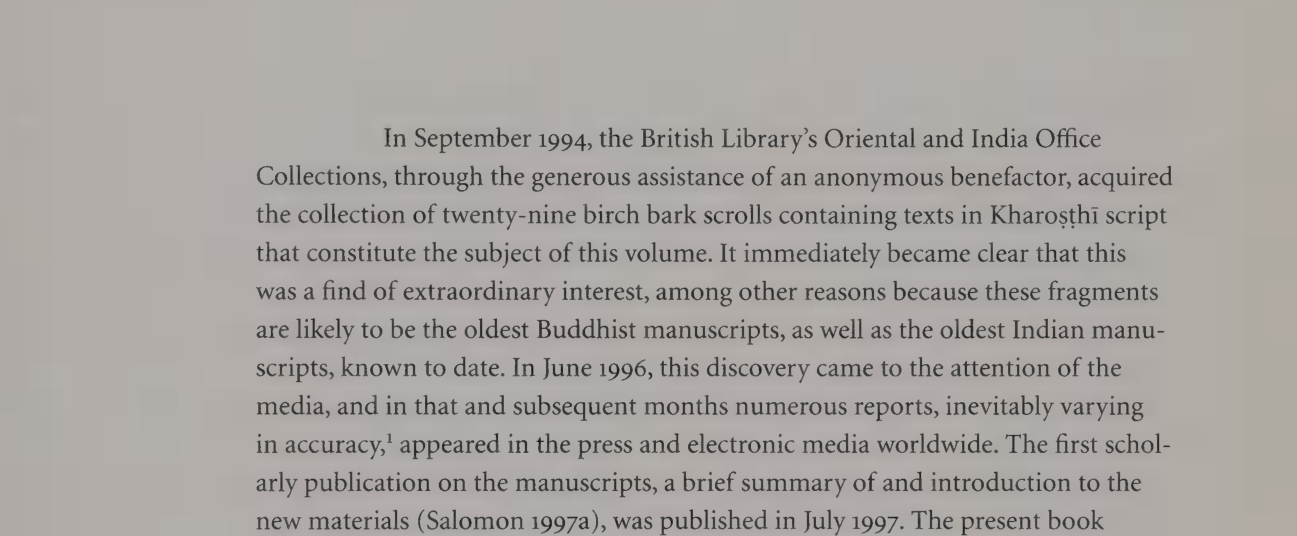
正文「约一至二世纪」「目前已知最早的大乘写本实物」逐项相合。(二)一处分寸已写进新注:原文说的是「最早的确切定年」,不是「确知别无更早者」。同文另举巴焦尔《阿閦佛国经》残卷,无碳定年,斯特劳赫据字体断为一至二世纪而偏后半,并谓巴焦尔诸卷「clearly older than the Bamiyan Kharoṣṭhī fragments」。(三)材质與出土地亦已坐实:艾伦與萨洛蒙记诸批来处为「present-day eastern Afghanistan and northwestern Pakistan」;桦树皮之说见 Salomon《Ancient Buddhist Scrolls from Gandhāra》(UW Press, 1999),所收二十九件即桦树皮卷,序谓「likely to be the oldest Buddhist manuscripts, as well as the oldest Indian manuscripts, known to date」。但大英图书馆这一批不是大乘写本(其内容属主流部派一系),只能作材质與年代的旁证,新注已明写此界,免得与般若残卷相混。

本行所留缺口的正解。「split」藏犍陀罗语《八千颂般若》卷(正面第一品、背面第五品)碳定年 23-43 CE(14.3%)或 47-127 CE(81.1%),字体與语言特征與「later first or early second century CE」相合。分寸须照原文:所断是最早的确切定年,非确知别无更早者。

第 101 行脚注 nattier

书目著录1.4.1-4条0142
所据
A Few Good Men - Jan Nattier - 2003
书页
版权页
版权页

此页所载版权声明禁止以任何方式复制或传播本书的任何部分。本页书影只为核对该条著录而摆在此处,请勿转载、转贴、下载或另行传播——禁令未开「少量节取」之例,剪一小段同样不在许可之内。

核查结论

Nattier《A Few Good Men》pp.73–102逐项反驳平川彰的在家/塔庙起源说,指出《郁伽问经》以僧团为重心;pp.127–134又把出家菩萨写成修头陀、住林野、禅修并避免人际接触的严苛少数。书目与正文所用“精英苦行菩萨道”均相符。

第 102 行脚注 schopen

纸本1.4.1-5条0106
所据
Figments and Fragments of Mahāyāna Buddhism in India - Gregory Schopen - 2005
书页
书内第 13 页 书影
书内第 13 页
核查结论

Schopen《Figments and Fragments》pp. 13–17 记主流僧团作为受施者及大乘名号至五世纪末、六世纪初才较多见;正文已将误写的“捐献者自报部派”改为受施僧团归属。

Schopen 明言印度本土目前所知最早两条明确以“大乘”名号出现的材料同属五世纪末/六世纪初。本书,今保留已复验的,并以实际论证句代替页首指纹。

第 103 行脚注 drewes

书目著录1.4.1-6条0197
所据
Early Indian Mahayana Buddhism I Recent Scholarship - David Drewes - 2010
书页
版权页
版权页

此页所载版权声明禁止以任何方式复制或传播本书的任何部分。本页书影只为核对该条著录而摆在此处,请勿转载、转贴、下载或另行传播——禁令未开「少量节取」之例,剪一小段同样不在许可之内。

核查结论

Drewes 两篇抽印本均,著录逐项相符:Religion Compass 4/2 (2010),上篇 55–65(DOI 10.1111/j.1749-8171.2009.00195.x),下篇 66–74(…00193.x),合为脚注所记「I–II」。铭文一节亦在上篇:该文明说可与大乘挂钩的印度佛教铭文极少,并指出可确指大乘的最早铭刻是一件台座题记,与正文「笈多前铭文中大乘痕迹极少」相合。

第 105 行脚注 karashima

汉文原典1.4.1-7条0018
所据
T1562《阿毘達磨順正理論》 尊者眾賢造 唐 玄奘譯
原典

…立漸現觀等。讚學根本異門等經,說一切有部中不誦。撫掌喻等眾多契經,於餘部中曾所未誦。雖有眾經諸部同誦,然其名句互有差別,謂有經說汝阿氏多於當來世成等正覺、非黑非白、非黑非白異熟業等,無量名句諸部不同,是故不應由義宗異阿毘達磨便非佛說。阿毘達磨定是佛說,由佛攝受三藏教故。如世尊說:…

坐标
T29n1562_p0329c12 段起行 · 卷 1 · 该段甚长,引文在段内第 842 字,宜按上面标黄的字用浏览器查找
核查结论

机器比对:两侧都先归一化——只留汉字,合并异体(毘/毗、麤/麁 一类)——再在所据原典中逐字找;繁体一式不中则转简再试一遍。上面「原典」一栏标黄的即命中处。

第 107 行脚注 harrison2018

书目著录1.4.1-8条0532
所据
Early Indian Mahayana Buddhism I Recent Scholarship - David Drewes - 2010
书页
版权页
版权页

此页所载版权声明禁止以任何方式复制或传播本书的任何部分。本页书影只为核对该条著录而摆在此处,请勿转载、转贴、下载或另行传播——禁令未开「少量节取」之例,剪一小段同样不在许可之内。

核查结论

其 起印码 67,题作「Who Gets to Ride in the Great Vehicle? Self-image and Identity Among the Followers of the Early Mahāyāna」,其后逐面递增(68、69、70…),与本注所署 JIABS 10.1 (1987) 及著录之 67–89 相合。本注称「放弃部派归属说的理由,最早见」此篇——这一句是本注最承重的一项,而它有据另有其第二篇〈II: New Perspectives〉,本注未及,可备。另记一处互见:该篇书内 57 页正引 Harrison 上文之语「although 'both men and women can ride in the Great Vehicle, only men are allowed to drive it'」,两篇本自相属。

核查全文

Silk〈Origins of the Mahāyāna〉(IIJ 63, 2020: 371–394)——ls | grep -iE 'origins of the mahāyāna|origins of the mahayana|indo-iranian' 全列得两条,皆非此篇(King 论《圣教论》年代 IIJ 38.4、Kvaerne 论苯教藏经 IIJ 16)。 (四)判确不待件:本注举四件而其最承重的一项(放弃部派归属说之理由最早见于 Harrison 1987)已由原刊坐实,综述一项(Drewes 2010)亦逐字对上;未到的两件一为论文集、一为其书评,属「参」与「书评见」之列,不担独立断言。

版权页/题名页书影只核本卡所列书目著录,不承担该书的内容主张。

第 110 行脚注 gandhara2 条佐证

本书原文

目前已知最早的大乘写本实物,指所谓"split"藏犍陀罗语残卷中一件正面写《八千颂般若》第一品、背面写第五品的卷子。见 Mark Allon and Richard Salomon. "New Evidence for Mahāyāna in Early Gandhāra." The Eastern Buddhist 41, no. 1 (2010):该卷经放射性碳定年,得区间"23-43 CE (probability 14.3 percent) or 47-127 (probability 81.1 percent)",并谓"a date in the later first or early second century CE is consistent with its paleographic and linguistic characteristics";二氏因此断曰"Therefore in this Gandhārī Prajñāpāramitā manuscript we have the earliest firm dating for a Mahāyāna sūtra manuscript in any language, as well as the earliest specific attestation of Mahāyāna literature in early Gandhāra"。须照原文的分寸读:所断是最早的确切定年,不是确知别无更早者。同文另举巴焦尔(Bajaur)藏《阿閦佛国经》残卷,二氏明记"No radiocarbon dating is available for the Bajaur Akṣobhya-sūtra",只引斯特劳赫的字体比较为断;须照原文的分寸读:斯特劳赫所比的是巴焦尔诸卷整批与其他可定年的犍陀罗语写本,语气亦是"would speak in favour of a date within the first and second centuries CE with a preference to the latter half of this period",二氏称之为 plausibly concludes,非径断此一卷之年。同文并谓巴焦尔诸卷"clearly older than the Bamiyan Kharoṣṭhī fragments"。材质與出土范围:艾伦與萨洛蒙所记的"present-day eastern Afghanistan and northwestern Pakistan"是大犍陀罗(Greater Gandhāra)一区的范围,诸批残卷即出于此区,巴焦尔一批出巴基斯坦巴焦尔地区;桦树皮之说见 Richard Salomon. Ancient Buddhist Scrolls from Gandhāra: The British Library Kharoṣṭhī Fragments. Seattle: University of Washington Press, 1999,所收二十九件即桦树皮卷,其序谓"likely to be the oldest Buddhist manuscripts, as well as the oldest Indian manuscripts, known to date"。惟大英图书馆这一批不是大乘写本,于本节只作材质與年代的旁证,不可与上引般若残卷相混。

纸本1.4.1-9条0499
所据
New Evidence for Mahayana in Early Gandhara - Mark Allon 与 Richard Salomon - 2010
书页
書 10(第 5 节) 书影
書 10(第 5 节)
核查结论

确,六项引文逐字核实于本,另订正两处分寸。逐字核过的:其一,碳定年作 This scroll has been radiocarbon dated to a range of 23-43 CE (probability 14.3 percent) or 47—127 (probability 81.1 percent),与注中所引全同;其二,a date in the later first or early second century CE is consistent with its paleographic and linguistic characteristics;其三,T

核查全文

herefore in this Gandhārī Prajñāpāramitā manuscript we have the earliest firm dating for a Mahāyāna sūtra manuscript in any language, as well as the earliest specific attestation of Mahāyāna literature in early Gandhāra;其四,该卷"正面写第一品、背面写第五品"作 contains a manuscript with texts corresponding to the first (on the recto side) and fifth (verso) chapters of the Aṣṭasāhasrikā Prajñāpāramitā,且明记其属尚未刊布的 split 藏、由 Harry Falk 研究中;其五,萨洛蒙一九九九年那本的序作 acquired the collection of twenty-nine birch bark scrolls containing texts in Kharoṣṭhī script… these fragments are likely to be the oldest Buddhist manuscripts, as well as the oldest Indian manuscripts, known to date,二十九件与桦树皮之说皆合;其六,注中「大英图书馆这一批不是大乘写本」的提醒亦不误。订正两处分寸:其一,巴焦尔《阿閦佛国经》一节,原注作「斯特劳赫据字体断为……」,而原文先明记 No radiocarbon dating is available for the Bajaur Akṣobhya-sūtra,继谓 Strauch plausibly concludes that a comparison of the paleographic features of the Bajaur scrolls in general with those of other datable Gandhārī manuscripts would speak in favour of a date…——所比是整批而非此一卷,语气是「would speak in favour of」而非径断,已照改;其二,present-day eastern Afghanistan and northwestern Pakistan 在原文里是界定「大犍陀罗」一区的范围,非直接描述诸卷出土点,已改为「是大犍陀罗一区的范围,诸批残卷即出于此区」。检索坑一条:该本 把 47—127 断在行末作「47— 127」,按「47-127」直检零命中;同本 Prajñāpāramitā 出作 Prajfaparamita、Aṣṭasāhasrikā 出作 Astasahasrika,变音符与 ñ 尽失,须按坏码或按纯拉丁词检。

本行主证。全段作:This scroll has been radiocarbon dated to a range of 23-43 CE (probability 14.3 percent) or 47—127 (probability 81.1 percent), and a date in the later first or early second century CE is consistent with its paleographic and linguistic characteristics. Therefore in this Gandhārī Prajñāpāramitā manuscript we have the earliest firm dating for a Mahāyāna sūtra manuscript in any language, as well as the earliest specific attestation of Mahāyāna literature in early Gandhāra——与脚注所引逐字相同,「所断是最早的确切定年而非确知别无更早者」的提醒亦与原文分寸合。同段并记该卷属尚未刊布的 split 藏、由 Harry Falk 研究,正面第一品、背面第五品。Prajñāpāramitā 出作 Prajfaparamita、Aṣṭasāhasrikā 出作 Astasahasrika。

纸本1.4.1-10条0500
所据
Ancient Buddhist Scrolls from Gandhara - Richard Salomon - 1999
书页
序(Preface) 书影
序(Preface)
核查结论

确,六项引文逐字核实于本,另订正两处分寸。逐字核过的:其一,碳定年作 This scroll has been radiocarbon dated to a range of 23-43 CE (probability 14.3 percent) or 47—127 (probability 81.1 percent),与注中所引全同;其二,a date in the later first or early second century CE is consistent with its paleographic and linguistic characteristics;其三,T

核查全文

herefore in this Gandhārī Prajñāpāramitā manuscript we have the earliest firm dating for a Mahāyāna sūtra manuscript in any language, as well as the earliest specific attestation of Mahāyāna literature in early Gandhāra;其四,该卷"正面写第一品、背面写第五品"作 contains a manuscript with texts corresponding to the first (on the recto side) and fifth (verso) chapters of the Aṣṭasāhasrikā Prajñāpāramitā,且明记其属尚未刊布的 split 藏、由 Harry Falk 研究中;其五,萨洛蒙一九九九年那本的序作 acquired the collection of twenty-nine birch bark scrolls containing texts in Kharoṣṭhī script… these fragments are likely to be the oldest Buddhist manuscripts, as well as the oldest Indian manuscripts, known to date,二十九件与桦树皮之说皆合;其六,注中「大英图书馆这一批不是大乘写本」的提醒亦不误。订正两处分寸:其一,巴焦尔《阿閦佛国经》一节,原注作「斯特劳赫据字体断为……」,而原文先明记 No radiocarbon dating is available for the Bajaur Akṣobhya-sūtra,继谓 Strauch plausibly concludes that a comparison of the paleographic features of the Bajaur scrolls in general with those of other datable Gandhārī manuscripts would speak in favour of a date…——所比是整批而非此一卷,语气是「would speak in favour of」而非径断,已照改;其二,present-day eastern Afghanistan and northwestern Pakistan 在原文里是界定「大犍陀罗」一区的范围,非直接描述诸卷出土点,已改为「是大犍陀罗一区的范围,诸批残卷即出于此区」。检索坑一条:该本 把 47—127 断在行末作「47— 127」,按「47-127」直检零命中;同本 Prajñāpāramitā 出作 Prajfaparamita、Aṣṭasāhasrikā 出作 Astasahasrika,变音符与 ñ 尽失,须按坏码或按纯拉丁词检。

桦树皮与二十九件之说的原句,全句作 In September 1994, the British Library’s Oriental and India Office Collections… acquired the collection of twenty-nine birch bark scrolls containing texts in Kharoṣṭhī script that constitute the subject of this volume. It immediately became clear that this was a find of extraordinary interest, among other reasons because these fragments are likely to be the oldest Buddhist manuscripts, as well as the oldest Indian manuscripts, known to date。脚注「惟大英图书馆这一批不是大乘写本,于本节只作材质與年代的旁证」的提醒不误。