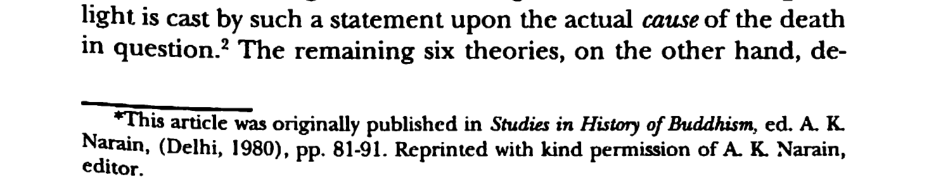
页码 2026-09-05 已改:原作「1980, 181–191」,今作「1980, 81–91」。据者,而该文重印本首页星号注自述「originally published in Studies in History of Buddhism, ed. A. K. Narain, (Delhi, 1980), pp. 81-91」,书影 jaini-139-note 可证,非 讹字。本行所引之义则已核实。2026-09-05 全文到手(Jaini《Collected Papers on Buddhist Studies》,Motilal Banarsidass, Delhi, 2001,本文为第七章,重印页 139–153,正文至 149,注 151–153;
核查全文
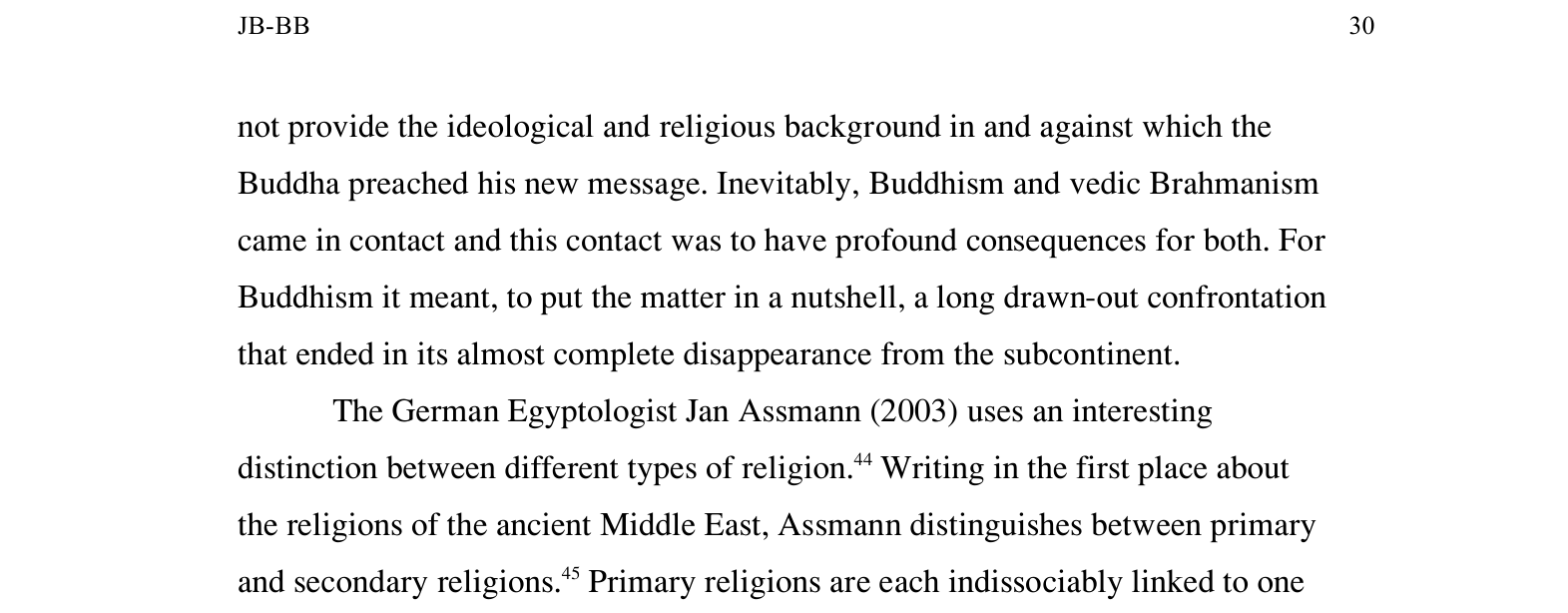
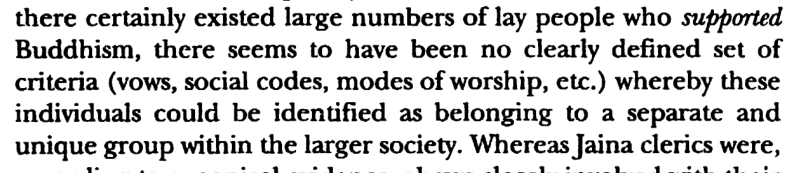
重印 面减 13)。正文所倚两义均由该文承担:①在家身份界限模糊——重印页 144:「Buddhist」一名向来只指已出家者,「there seems to have been no clearly defined set of criteria (vows, social codes, modes of worship, etc.) whereby these individuals could be identified as belonging to a separate and unique group within the larger society」;同页并以著述量作证:耆那教前后出了约五十部在家行仪(śrāvakācāra),佛教只出一部,还迟至十一世纪。②改宗无感——重印页 145:佛陀被《摩诃婆罗多》、若干往世书与阇耶提婆《牧童歌》列作毗湿奴化身,而佛教方面「not a single extant text shows any attempt either to assimilate the popular Hindu deities into Buddhist mythology or to refute the notion of Buddha as avatāra」,「by their very silence Buddhist writers seemed to lend tacit support to the Hinduization of their founder」;重印页 146 名之为「the insidious weaning away of lay support by absorption of heterodox beliefs and cults into the Hindu sphere」;重印页 147–149 给出实例:南印曼加罗尔的 Kadri-Mañjunātha 湿婆庙原是佛教 Kadarika-vihāra,庙内 1068 年那尊 Lokeśvara 像的题记出自笃信湿婆的阿卢波王 Kundavarma,Lokeśvara 又与那陀派祖师 Matsyendranātha 合一,一座菩萨道场就这样无声地成了湿婆庙。旁得:Jaini 本人的答案不是「疏于在家」。他在重印页 146 反驳自己刚立的这一说——南印天衣派把印度教的生婚丧诸仪几乎照搬(「virtually indistinguishable from those of the surrounding Hindu majority」),照顾在家不可谓不周,南方耆那教反而衰了;北方两派几乎不作此举,却仍兴旺。故他把决定性因素落在教义一侧:大乘的天界菩萨说——菩萨被写成全然出世的存在,「became virtual gods, who dispensed worldly boons and even spiritual grace in a manner not unlike that of the Hindu deities」,历史佛陀的位置遂被文殊、观音这些形象「functionally usurped」,于是与湿婆派那陀教团之间有了可以合流的共同地基;耆那教只许夜叉一类低于僧人的精灵入仪,无此地基。正文若要引 Jaini 立论,宜连这一层一并取,或至少不要让读者以为「疏于在家」就是 Jaini 的结论。
①原刊出处与页码,该文首页星号注自述:「This article was originally published in Studies in History of Buddhism, ed. A. K. Narain, (Delhi, 1980), pp. 81-91」——注中页码据此改定;②所概之义:在家一侧「there seems to have been no clearly defined set of criteria (vows, social codes, modes of worship, etc.) whereby these individuals could be identified as belonging to a separate and unique group within the larger society」。