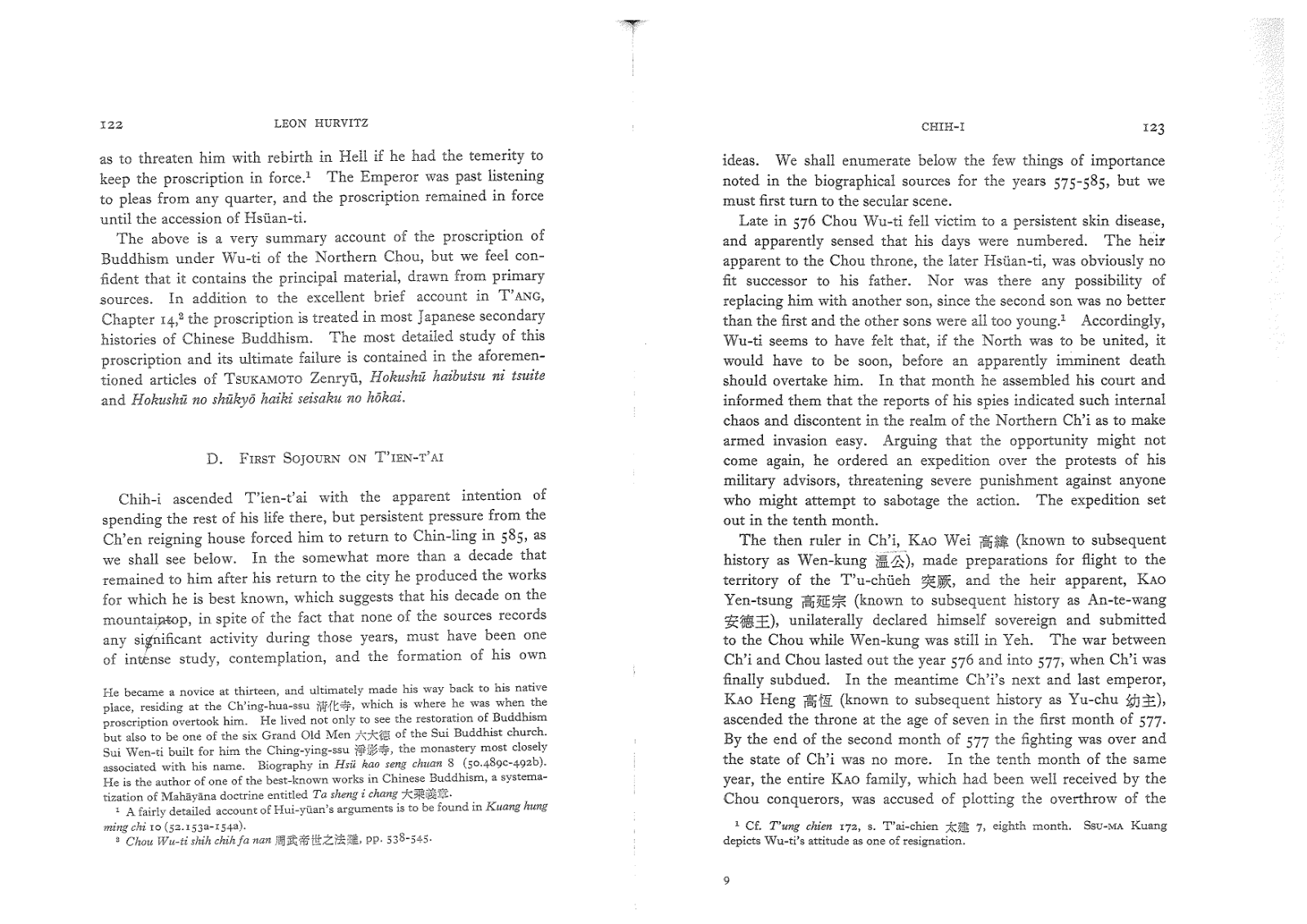
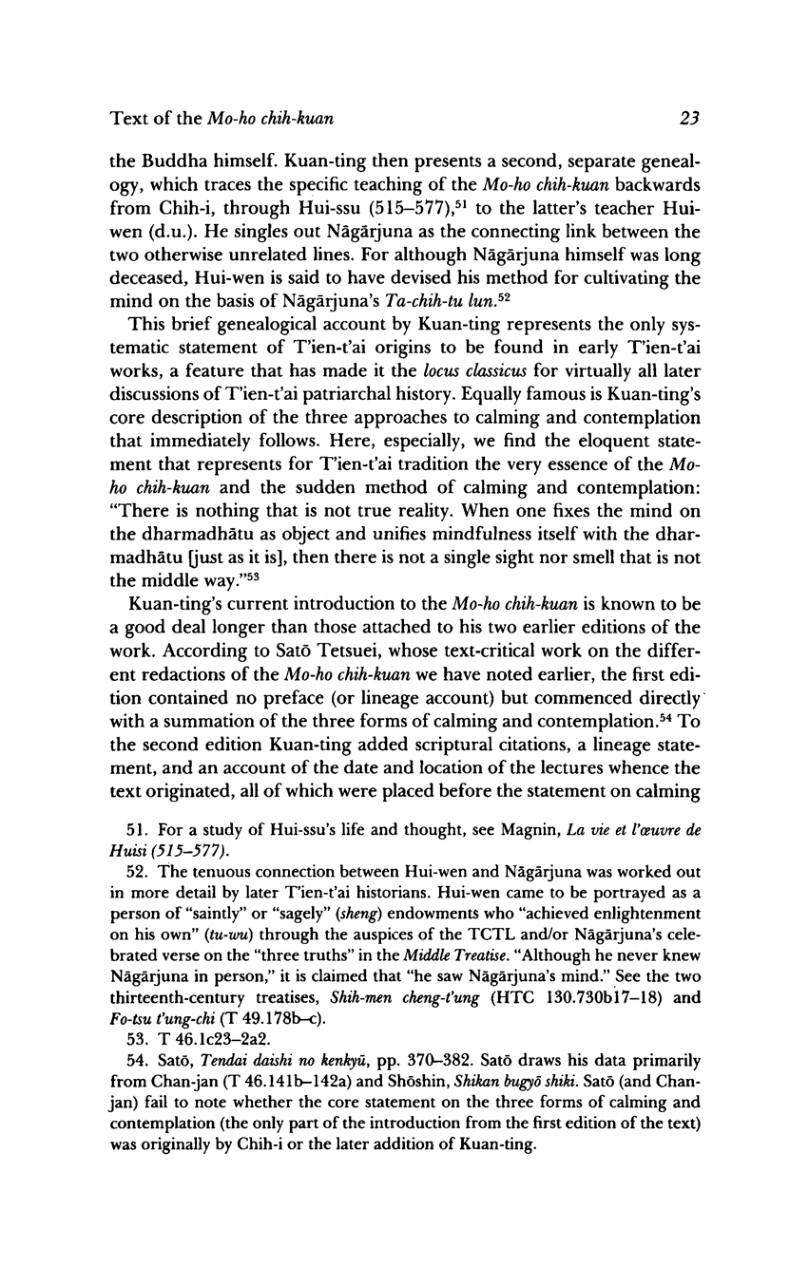
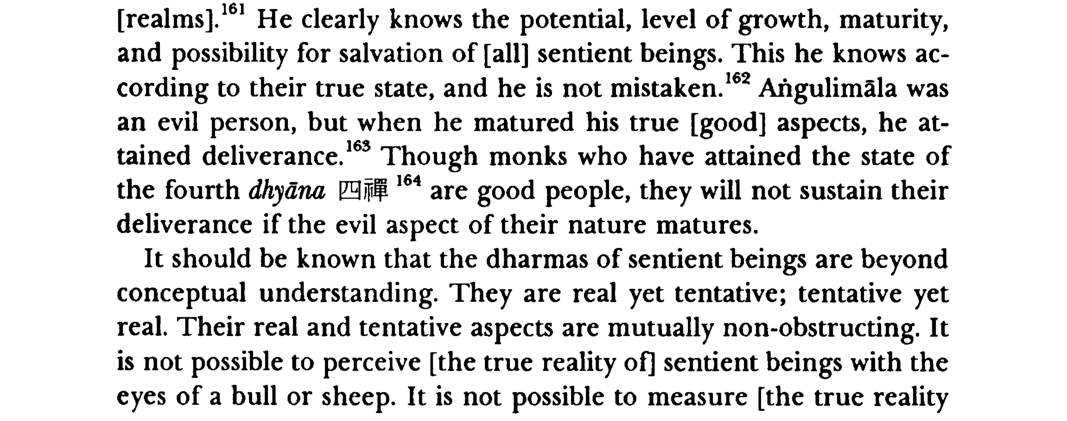
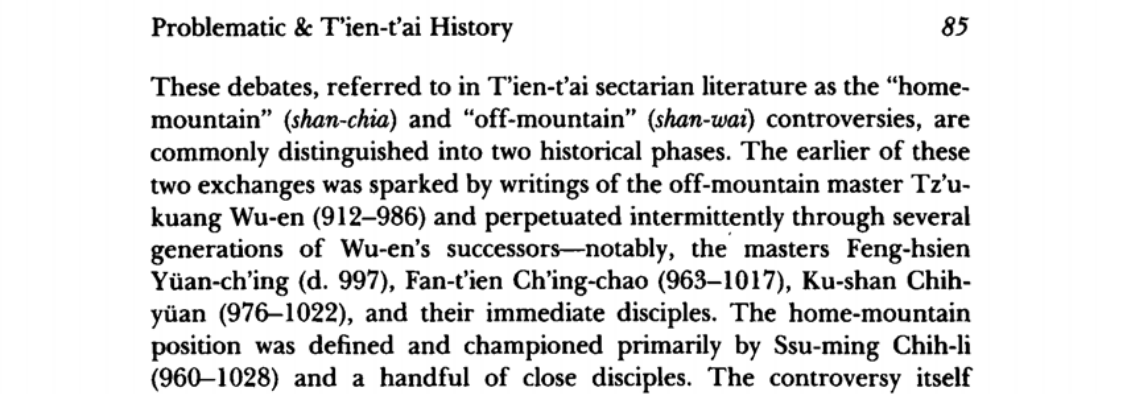
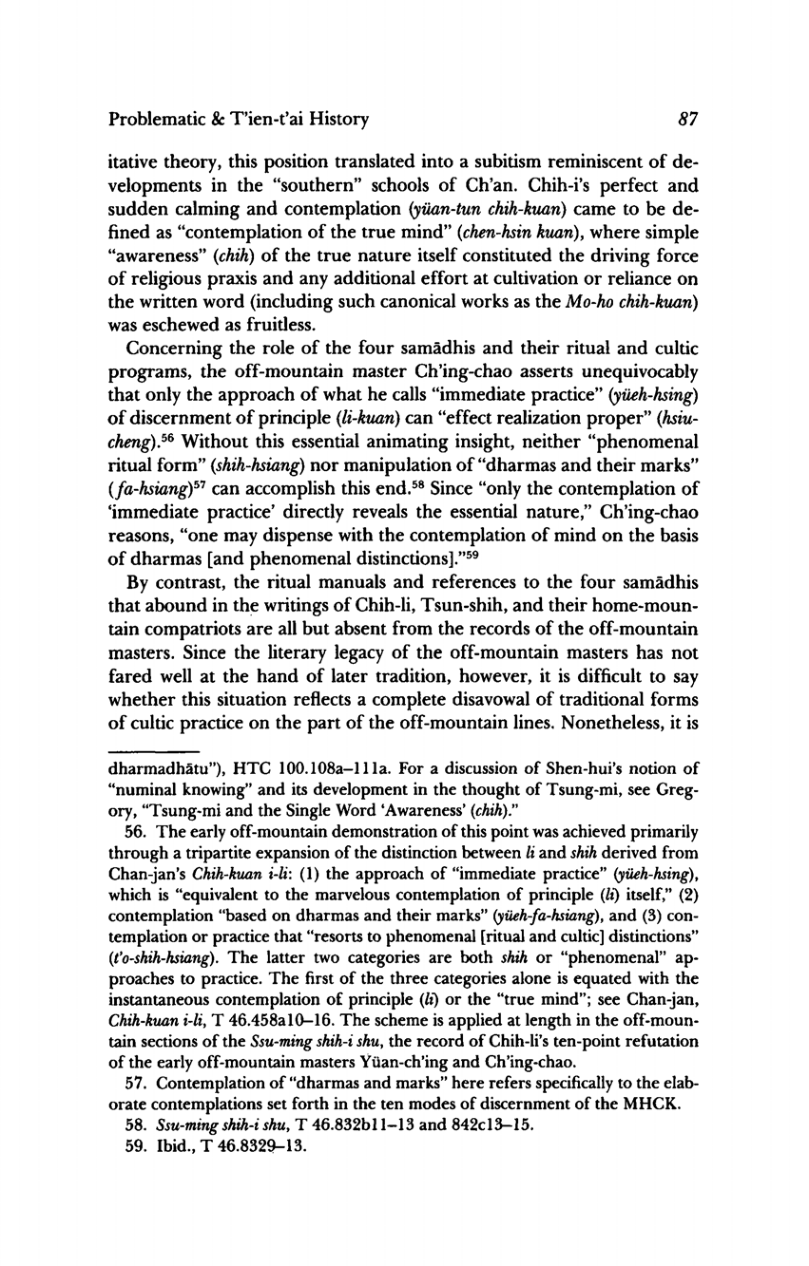
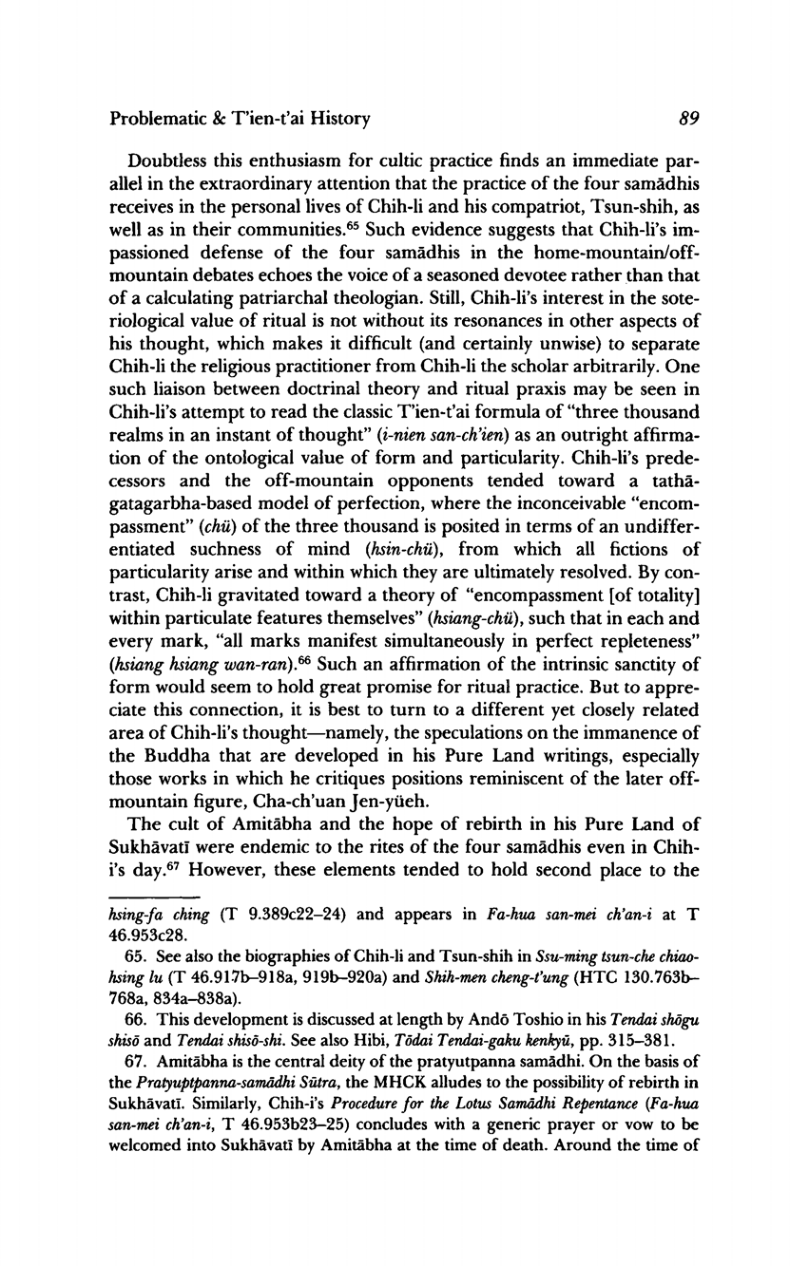
Leon Hurvitz. Chih-I (538–597): An Introduction to the Life and Ideas of a Chinese Buddhist Monk,Mélanges chinois et bouddhiques 第十二卷。Bruxelles: Institut Belge des Hautes Études Chinoises, 1962.智顗一侧两项,该书页次如下(下引皆据原书页图核对)。其一,天台与金陵两地:书内 122 页第四节题 "First Sojourn on T'ien-t'ai",其文作 "Chih-i ascended T'ien-t'ai with the apparent intention of spending the rest of his life there, but persistent pressure from the Ch'en reigning house forced him to return to Chin-ling in 585",又谓其山中十年 "must have been one of intense study, contemplation, and the formation of his own ideas",而传世名作皆成于返都之后的十馀年。其二,"智者"之号:书内 145 页作 "Chih-i went from Lu-shan to the Prince's residence, where, on the twenty-third day in the eleventh month of 591, he administered the bodhisattvacila to him, giving him the clerical name Tsung-ch'ih 總持. The Prince in turn gave Chih-i the honorary title Chih-che 智者, which he bears in history to this day.",即此号系晋王杨广(后为炀帝)於开皇十一年所赠,其时智顗为之授菩萨戒并为之取法名總持。慧文一侧该书不担(全书涉此人者仅书内 235 页一注,谓后世天台传其法出於读鸠摩罗什译籍),另据 Neal Donner and Daniel B. Stevenson. The Great Calming and Contemplation: A Study and Annotated Translation of the First Chapter of Chih-i's Mo-ho chih-kuan. Honolulu: Kuroda Institute, 1993:书内 23 页注五二记慧文 "achieved enlightenment on his own" (tu-wu),所凭是《大智度论》(TCTL)与《中论》中龙树论三谛之偈;书内 31 页引灌顶之语更明:"Purely through his own endowments and without recourse to transmission [from a teacher], the venerable [Hui-wen] of the Northern Ch'i awakened spontaneously to Nagarjuna's truth of the identity of emptiness, provisionality, and the middle. He fashioned a method of meditation on the basis of it and taught it to Nan-yueh [Hui-ssu], . . . who in turn taught it to Chih-i."。同书书内 23 页并谓灌顶此说是早期天台著作中唯一成系统的溯源之文,后世诸论皆本於此,与正文"生平几乎没有可靠的史料"一语相合。惟"他没有留下著作"一语,两书皆未明言,系就其无著录可考而言。(智顗的生平与思想的西方研究奠基作)