← 引用核查

06-印度佛教的衰亡

5 条 · 5 行 · 到书里读本章 →

第 197 行脚注 tambiah

纸本1.8.6-1条0297
所据
Padmanabh S. Jaini《Collected Papers on Buddhist Studies》(Motilal Banarsidass, Delhi, 2001)所收〈The Disappearance of Buddhism and the Survival of Jainism〉
书页
书内第 139 页 书影
书内第 139 页
书内第 144 页 书影
书内第 144 页
核查结论

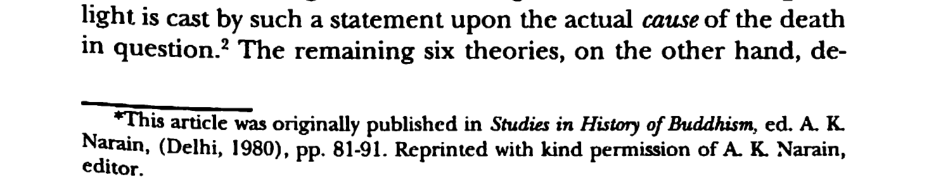
页码 2026-09-05 已改:原作「1980, 181–191」,今作「1980, 81–91」。据者,而该文重印本首页星号注自述「originally published in Studies in History of Buddhism, ed. A. K. Narain, (Delhi, 1980), pp. 81-91」,书影 jaini-139-note 可证,非 讹字。本行所引之义则已核实。2026-09-05 全文到手(Jaini《Collected Papers on Buddhist Studies》,Motilal Banarsidass, Delhi, 2001,本文为第七章,重印页 139–153,正文至 149,注 151–153;

核查全文

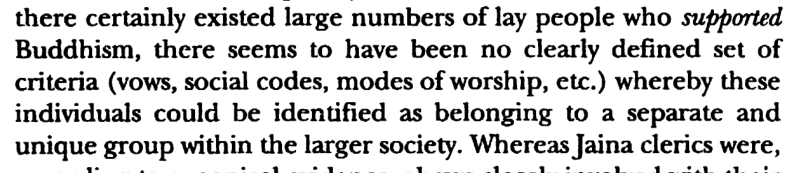
重印 面减 13)。正文所倚两义均由该文承担:①在家身份界限模糊——重印页 144:「Buddhist」一名向来只指已出家者,「there seems to have been no clearly defined set of criteria (vows, social codes, modes of worship, etc.) whereby these individuals could be identified as belonging to a separate and unique group within the larger society」;同页并以著述量作证:耆那教前后出了约五十部在家行仪(śrāvakācāra),佛教只出一部,还迟至十一世纪。②改宗无感——重印页 145:佛陀被《摩诃婆罗多》、若干往世书与阇耶提婆《牧童歌》列作毗湿奴化身,而佛教方面「not a single extant text shows any attempt either to assimilate the popular Hindu deities into Buddhist mythology or to refute the notion of Buddha as avatāra」,「by their very silence Buddhist writers seemed to lend tacit support to the Hinduization of their founder」;重印页 146 名之为「the insidious weaning away of lay support by absorption of heterodox beliefs and cults into the Hindu sphere」;重印页 147–149 给出实例:南印曼加罗尔的 Kadri-Mañjunātha 湿婆庙原是佛教 Kadarika-vihāra,庙内 1068 年那尊 Lokeśvara 像的题记出自笃信湿婆的阿卢波王 Kundavarma,Lokeśvara 又与那陀派祖师 Matsyendranātha 合一,一座菩萨道场就这样无声地成了湿婆庙。旁得:Jaini 本人的答案不是「疏于在家」。他在重印页 146 反驳自己刚立的这一说——南印天衣派把印度教的生婚丧诸仪几乎照搬(「virtually indistinguishable from those of the surrounding Hindu majority」),照顾在家不可谓不周,南方耆那教反而衰了;北方两派几乎不作此举,却仍兴旺。故他把决定性因素落在教义一侧:大乘的天界菩萨说——菩萨被写成全然出世的存在,「became virtual gods, who dispensed worldly boons and even spiritual grace in a manner not unlike that of the Hindu deities」,历史佛陀的位置遂被文殊、观音这些形象「functionally usurped」,于是与湿婆派那陀教团之间有了可以合流的共同地基;耆那教只许夜叉一类低于僧人的精灵入仪,无此地基。正文若要引 Jaini 立论,宜连这一层一并取,或至少不要让读者以为「疏于在家」就是 Jaini 的结论。

①原刊出处与页码,该文首页星号注自述:「This article was originally published in Studies in History of Buddhism, ed. A. K. Narain, (Delhi, 1980), pp. 81-91」——注中页码据此改定;②所概之义:在家一侧「there seems to have been no clearly defined set of criteria (vows, social codes, modes of worship, etc.) whereby these individuals could be identified as belonging to a separate and unique group within the larger society」。

第 198 行脚注 lorenzen

本书原文

商羯罗传记文学的史实问题,见 David Lorenzen. “Las ideologías sociales del hinduismo: Shankara, Tukaram y Kabir.” Estudios de Asia y África 21, no. 4 (1986): 576–603(本书所据为作者自撰的西班牙文本;英文论文集 Who Invented Hinduism? Essays on Religion in History(New Delhi: Yoda Press, 2006)未获原文复核)。该文书内 581 页分商羯罗传记为二系:与 Kanchi 相系者以 Anantanandagiri 之 Shankaravijaya 为要,与 Shringeri 相系者以 Mādhava 之 Shankaradigvijaya(一名 Sankshepa-Shankarajaya)为底本,而后者的成书年代,作者别处论之更明:David N. Lorenzen. “Warrior Ascetics in Indian History.” Journal of the American Oriental Society 98, no. 1 (1978): 61–75(即该论文集第二篇),书内 65 页作 “recent researches by Baldev Upadhyāy, Sri Balsastri Hardas, and W. R. Antarkar have shown conclusively that the Mādhavācārya who compiled the Śaṅkaradigvijaya cannot be dated earlier than sometime between the years 1630 and 1800 although many of the verses found in this text were borrowed from earlier works”;西班牙文本作“en una fecha entre 1650 y 1800”,起年与英文本差二十年,两说并存以英文本为先。无论取何说,成书皆距商羯罗八百年以上,“hoy en día, la mayoría de los seguidores monásticos de Shankara la aceptan como la autoridad principal”。巴克提一路的社会可及性亦见此文(其正题即 Tukaram 与 Kabir)。须记两层限:该文不涉佛教(budista、budismo 全篇零命中),故商羯罗与佛教之关系一层此文不担;商羯罗学派影响年代与南印度佛教式微时序两事,该文亦不论(全篇 siglo 仅一见,无世纪序数),须另举其书。商羯罗学派并未因他一举独尊一层,见 Andrew J. Nicholson. Unifying Hinduism: Philosophy and Identity in Indian Intellectual History. New York: Columbia University Press, 2010(本书所据为 2014 年平装本):书内 160 页言十四世纪摩陀婆著书时,二元论与限定不二论 "represented the greatest threat to the Advaita Vedānta";书内 15 页言以不二论为 "the essence and culmination of Indian philosophical systems",是 "the hegemonic narrative established in the nineteenth century";书内 8 页并言近代不二论之霸权 "has blinded most modern authors to the diversity of opinions among the Vedānta schools"。正文原作"要到十一、十二世纪以后才稳固"之断代,此书不载,今删;书内 38 页且以设问言九至十三世纪为不二论与限定不二论并盛之期,故原作"在他死后的两三个世纪里并不特别显著"一语亦一并收去。

书目著录1.8.6-2条0607
所据
[1070] Unifying Hinduism Philosophy and Identity in Indian Intellectual History - Andrew J. Nicholson - 2010
书页
版权页
版权页

此页所载版权声明禁止以任何方式复制或传播本书的任何部分。本页书影只为核对该条著录而摆在此处,请勿转载、转贴、下载或另行传播——禁令未开「少量节取」之例,剪一小段同样不在许可之内。

核查结论

书 93 行其二今作「商羯罗的学派并未因他而一举独尊:直到十四世纪,不二论仍须与二元论、限定不二论相争,把它奉为印度哲学的精髓与顶点,是十九世纪才定型的叙事;而到十四世纪,佛教在印度已基本消失」。逐层对 Nicholson(书目 1070):「直到十四世纪仍须相争」=書 160「These two schools represented the greatest threat to the Advaita Vedānta in the fourteenth century when Mādhava was writing」;「奉为精髓与顶点是十九世纪定型的叙事」=書 15「the hegemonic narrative established in the nineteenth century of Advaita Vedānta as the essence and culmination of Indian philosophical systems」;

核查全文

「并未一举独尊」並得書 8「the hegemony of Advaita Vedānta in the modern period has blinded most modern authors to the diversity of opinions among the Vedānta schools」之旁证。「十一、十二世纪以后才稳固」断代已删;「死后两三个世纪里并不特别显著」照作者命一并收去(書 38 以九至十三世纪为不二论與限定不二论并盛之期,与之略相左)。末句「到十四世纪佛教在印度已基本消失」较原「十一、十二世纪」之说为宽,与本篇衰亡之叙相容,不另立据。判疑→确,处置待裁→已改(

第 199 行脚注 sankara

纸本1.8.6-3条0608
所据
[0209] Encyclopedia of Indian Philosophies III Advaita Vedanta up to Samkara and His Pupils - Karl H. Potter (ed.) - 1981
书页
书内第 15 页 书影
书内第 15 页
核查结论

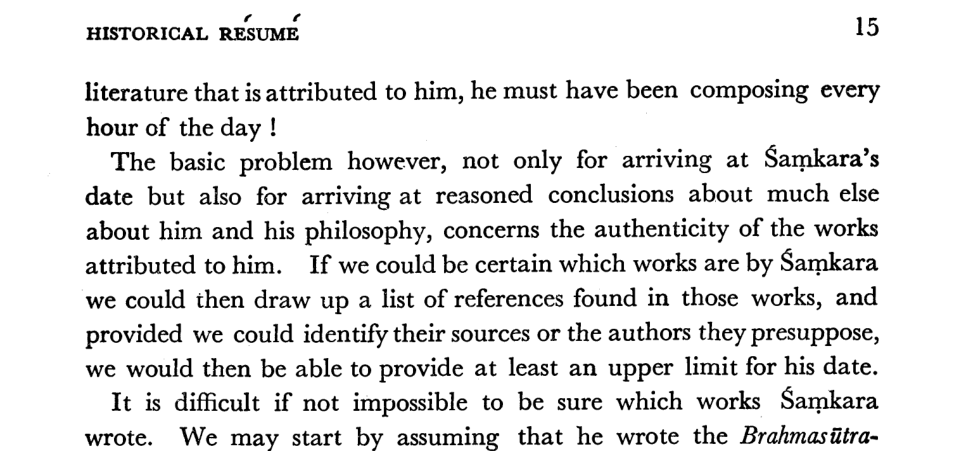
本页直接说明商羯罗断代及哲学研究的基本困难在于著作真伪,并谓几乎不可能确定哪些作品由其所作。

第 200 行脚注 xiyuji_nanyin

书目著录1.8.6-4条0609
所据
[0106] Buddhism in India as Described by the Chinese Pilgrims AD 399-689 - Kanai Lal Hazra - 1983
书页
版权页
版权页

此页所载版权声明禁止以任何方式复制或传播本书的任何部分。本页书影只为核对该条著录而摆在此处,请勿转载、转贴、下载或另行传播——禁令未开「少量节取」之例,剪一小段同样不在许可之内。

核查结论

Hazra 并入作旁证并写明其所记衰落在恒河流域。现文所担俱有原书可回验。

第 202 行脚注 bronkhorst_agrahara

纸本1.8.6-5条0521
所据
Buddhism in the Shadow of Brahmanism - Johannes Bronkhorst - 2011
书页
論赐村一节與绪论 书影
論赐村一节與绪论
Buddhism in the Shadow of Brahmanism - Johannes Bronkhorst - 2011 书影
核查结论

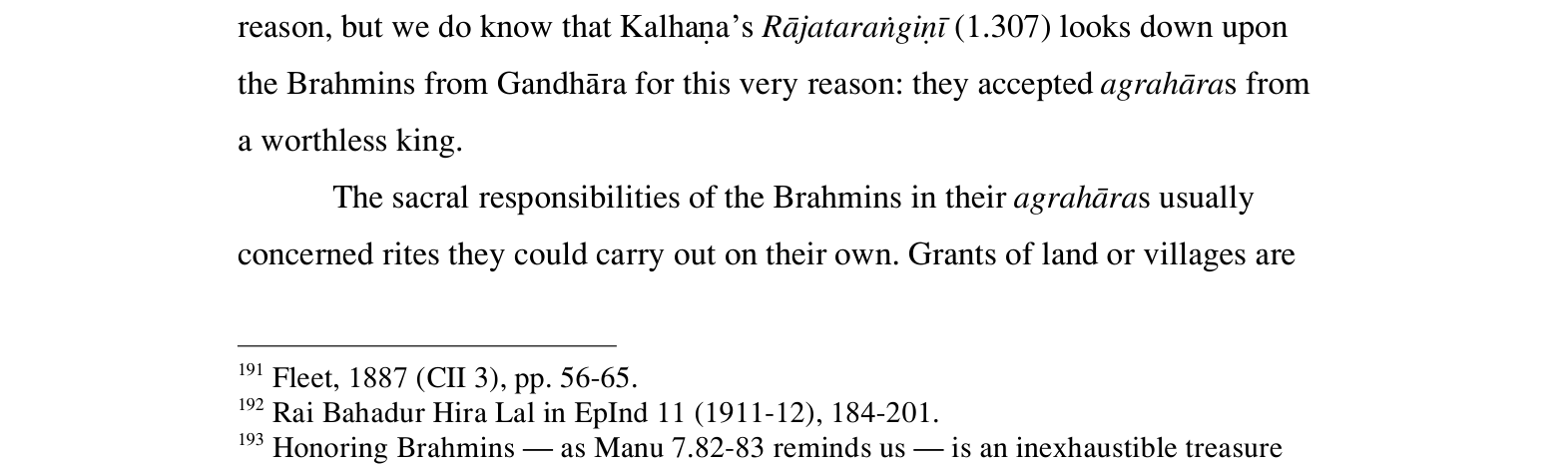
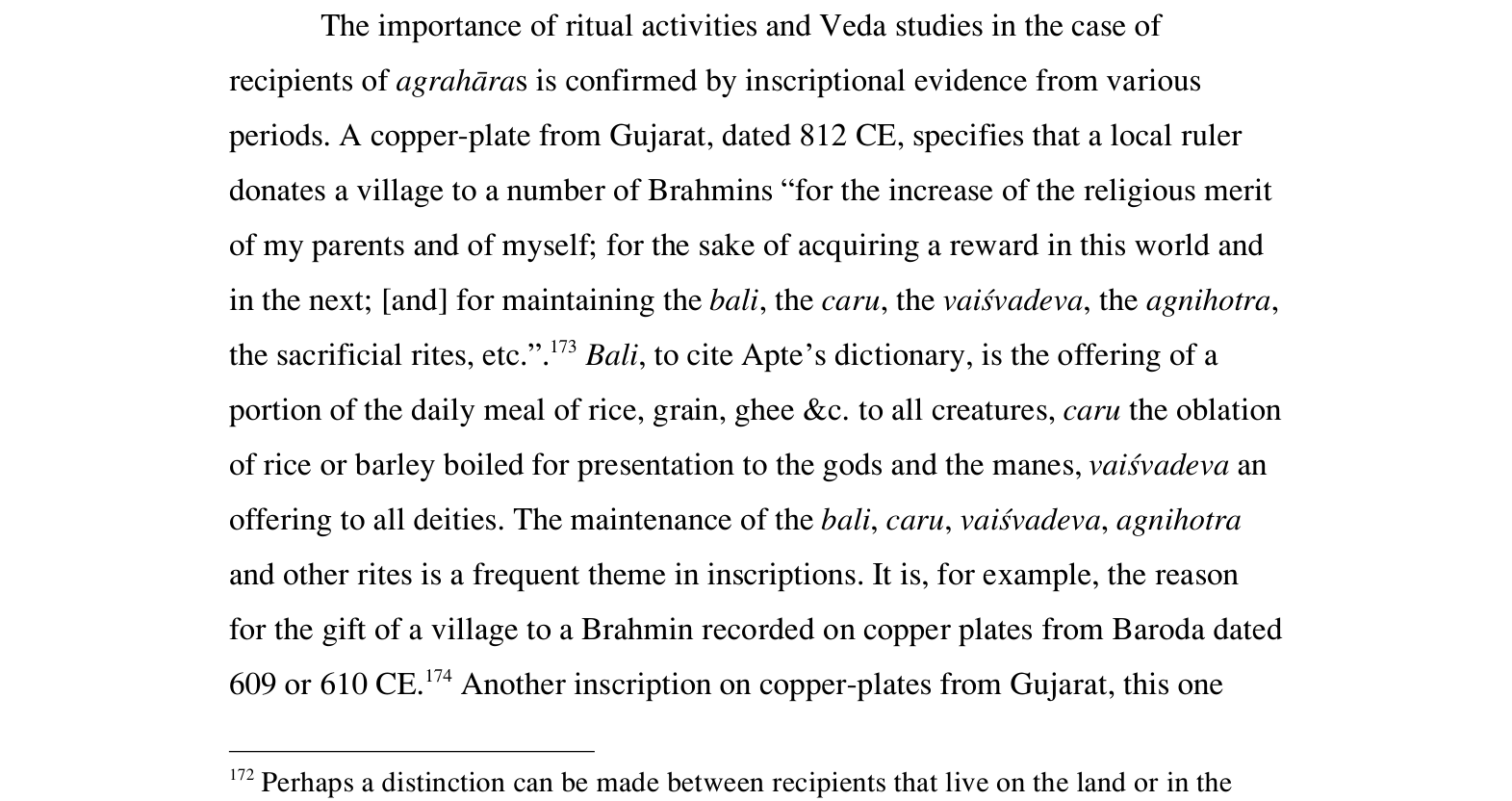
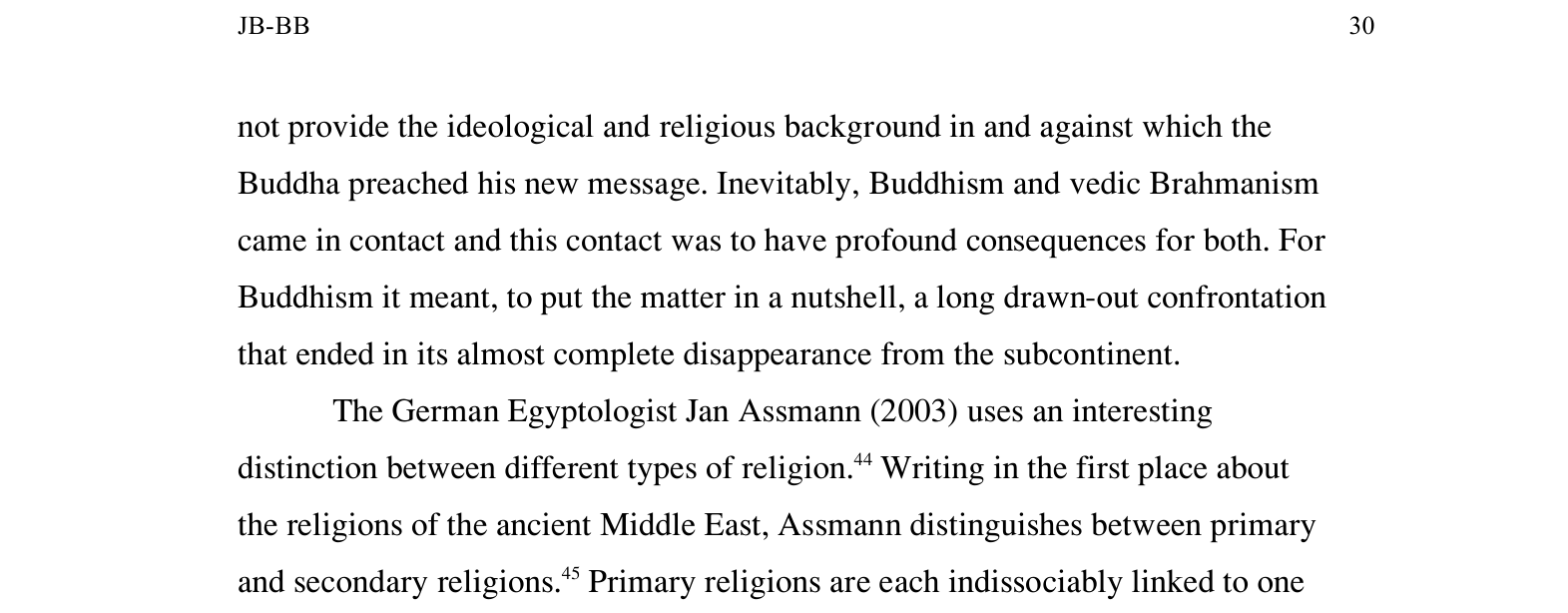
确,三处引文与两项通检数皆核实于本。引文:(一)「a long drawn-out confrontation that ended in its almost complete disappearance from the subcontinent」;(二)赐村一节作 The sacral responsibilities of the Brahmins in their agrahāras usually concerned rites they could carry out on their own;(三)八一二年古吉拉特铜板作 a local ruler donate

核查全文

s a village to a number of Brahmins “for the increase of the religious merit of my parents and of myself; for the sake of acquiring a reward in this world and in the next; [and] for maintaining the bali, the caru, the vaiśvadeva, the agnihotra, the sacrificial rites, etc.”——三处皆一字不差,全书各只一见。两项通检数亦复算得实:rebuild 全书零命中、recover 仅一见,与本注所记分毫不差;故本注「该书并未论及寺院被毁之后能否重建,正文那一句是本书据此不对称所作的推断」一语,是把推断与文证分清了的写法,处置得当。agrahāra 一词全书三十八见,本注所据之节确为该书正面处理的题目。其二(耆那教一侧未获原文复核专门文献)与其三(Hazra 所涵年代早于毁寺期约四百年)两项自限,本注已自陈,不待外证。

赐村一节之据,全句作 The sacral responsibilities of the Brahmins in their agrahāras usually concerned rites they could carry out on their own;同节并录八一二年古吉拉特铜板,作 for maintaining the bali, the caru, the vaiśvadeva, the agnihotra, the sacrificial rites, etc.;绪论作 a long drawn-out confrontation that ended in its almost complete disappearance from the subcontinent。三处全书各只一见。两项通检数亦复算得实:rebuild 全书零命中、recover 仅一见,故脚注「该书并未论及寺院被毁之后能否重建」不误。agrahāra 全书三十八见。