← 引用核查

01-佛陀之前的印度

9 条 · 9 行 · 到书里读本章 →

第 119 行脚注 bechert

纸本1.1.1-1条0353
所据
[0538] The Dating of the Historical Buddha A Review Article - L. S. Cousins - 1996
书页
来源页 书影
来源页
转载本书内第 108 页 书影
转载本书内第 108 页
转载本书内第 108 页 书影
转载本书内第 108 页
核查结论

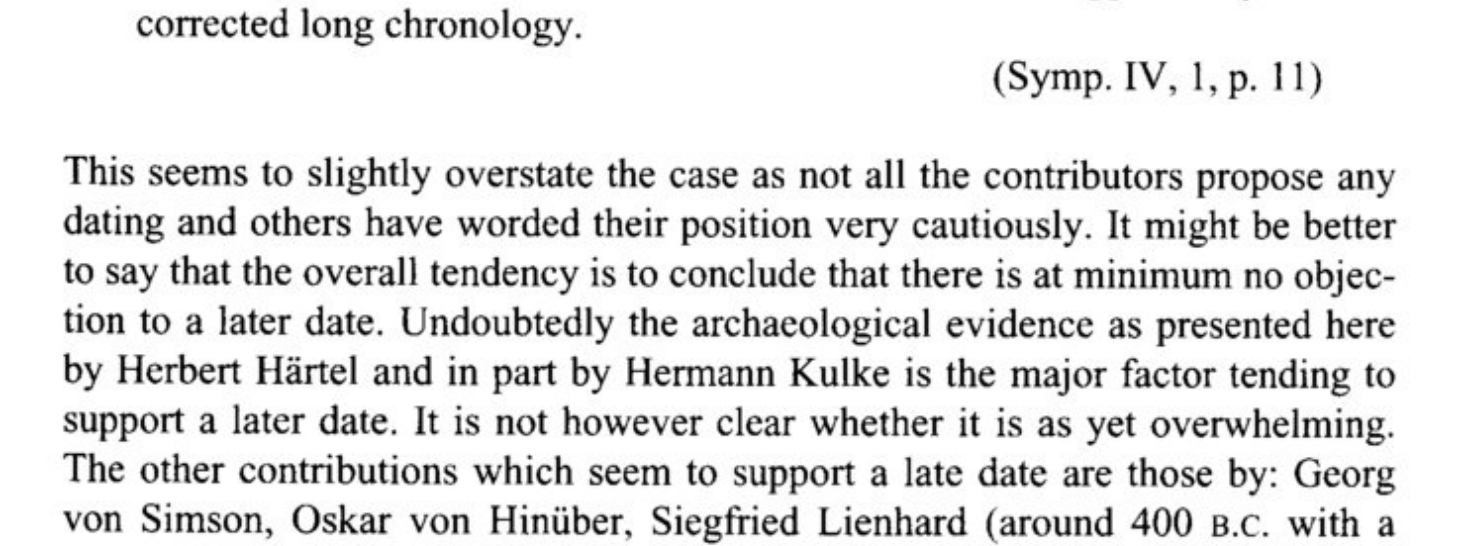
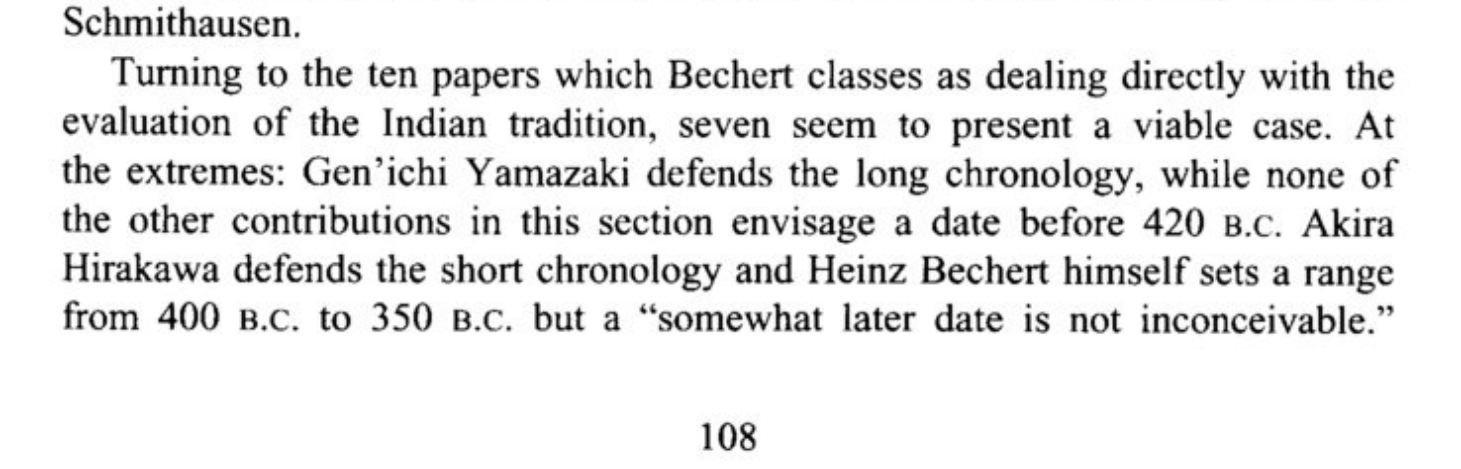
(一)书评二种:L. S. Cousins〈The Dating of the Historical Buddha: A Review Article〉,JRAS 第三系列 6 卷 1 期(1996)57–63;A. K. Narain 评第一卷,JIABS 16 卷 1 期(1993)。二文合计 Bechert 三十七见、long chronology 二十三见、short chronology 十三见。(二)「文集本身收录彼此分歧的结论」· 确,且 Cousins 给出逐家分布:「At the extremes: Gen'ichi Yamazaki defends the long chronology

核查全文

, while none of the other contributions in this section envisage a date before 420 B.C. Akira Hirakawa defends the short chronology and Heinz Bechert himself sets a range from 400 B.C. to 350 B.C. but a 'somewhat later date is not inconceivable.'」即:长年表、短年表、折中三说并存于同一文集,正文所述无误。(三)「至今仍有学者为接近传统的长年表辩护」· 确,即上引山崎元一(Yamazaki)一家。(四)「也有学者认为现有证据不足以在两者之间作出裁断」· 确,且 Cousins 本人即持此态:论及 Härtel 与 Kulke 所举考古证据时曰「Undoubtedly the archaeological evidence… is the major factor tending to support a later date. It is not however clear whether it is as yet overwhelming」。(五)Cousins 并纠 Bechert 自述之过当,此层可供正文取用:Bechert 于卷首谓诸家倾向下移,Cousins 评曰「This seems to slightly overstate the case, as not all the contributors propose any dating and others have worded their position very cautiously. It might be better to say that the overall tendency is to conclude that there is at minimum no objection to a later date」。「至少不反对更晚的年代」比「相当多学者下移了几十年」更准,正文書 15 行可按此收紧。(六)学者比例亦有数:直接评估印度传统的十篇中,Cousins 谓「seven seem to present a viable case」;支持晚期年代者他列出 von Simson、von Hinüber、Lienhard(约前 400 年,上下约二十年)、Halbfass,及「rather cautiously」的 Schmithausen。(七)一项未能核实,惟不碍:脚注作「3 vols… 1991–1997」。二评所及者,Narain 评第一卷(1991,xv+525 面),Cousins 评前二卷(1991–92)并谓「with a third to come」;第三卷的 1997 之年,二评皆早于其出版,无从坐实,然与 Cousins 所言不相悖。 该细节属著录,非承重之判,故不碍本行结案。

来源页明载 Cousins 文题及原刊 JRAS 6.1(1996)57—63;现存 是 Williams 2005 论文集转载本。转载本第 108 页一处说 Bechert 的总体归纳略有过度、考古证据是否已压倒尚不清楚,另一处列出山崎元一护长年表、平川彰护短年表、Bechert 取前 400—350 年且不排除更晚。此为支持正文分歧与未定论的二手人证,不冒充 Bechert 三卷原书,也不证明第三卷 1997 年的著录细节。


第 120 行脚注 thapar

书目著录1.1.1-2条0354
所据
Early India From the Origins to AD 1300 - Romila Thapar - 2002
书页
版权页
版权页

此页所载版权声明禁止以任何方式复制或传播本书的任何部分。本页书影只为核对该条著录而摆在此处,请勿转载、转贴、下载或另行传播——禁令未开「少量节取」之例,剪一小段同样不在许可之内。

核查结论

书 27、105 行 所系四项俱确。哈拉帕断代:「the Mature Harappan (from c. 2600 to 1900 BC)」,与正文精确相合。十六大国:「Sixteen of them are listed in Buddhist texts」。gana-saṅgha 共和制与释迦族:「gana-sanghas consisted of… such as the Shakyas, Koliyas and Mallas」。对佛教僧团制度的影响,原书说得比正文更直接:「The organization of the monast

核查全文

eries was modelled on the procedures adopted for the functioning of the gana-sanghas. Regular fortnightly meetings were held… decisions arrived at… democratically」——僧团议事程序直接仿自共和部落议事,不只是词源借用。判确,脚注无须改动。

第 121 行脚注 narasimhan

纸本1.1.1-3条0355
所据
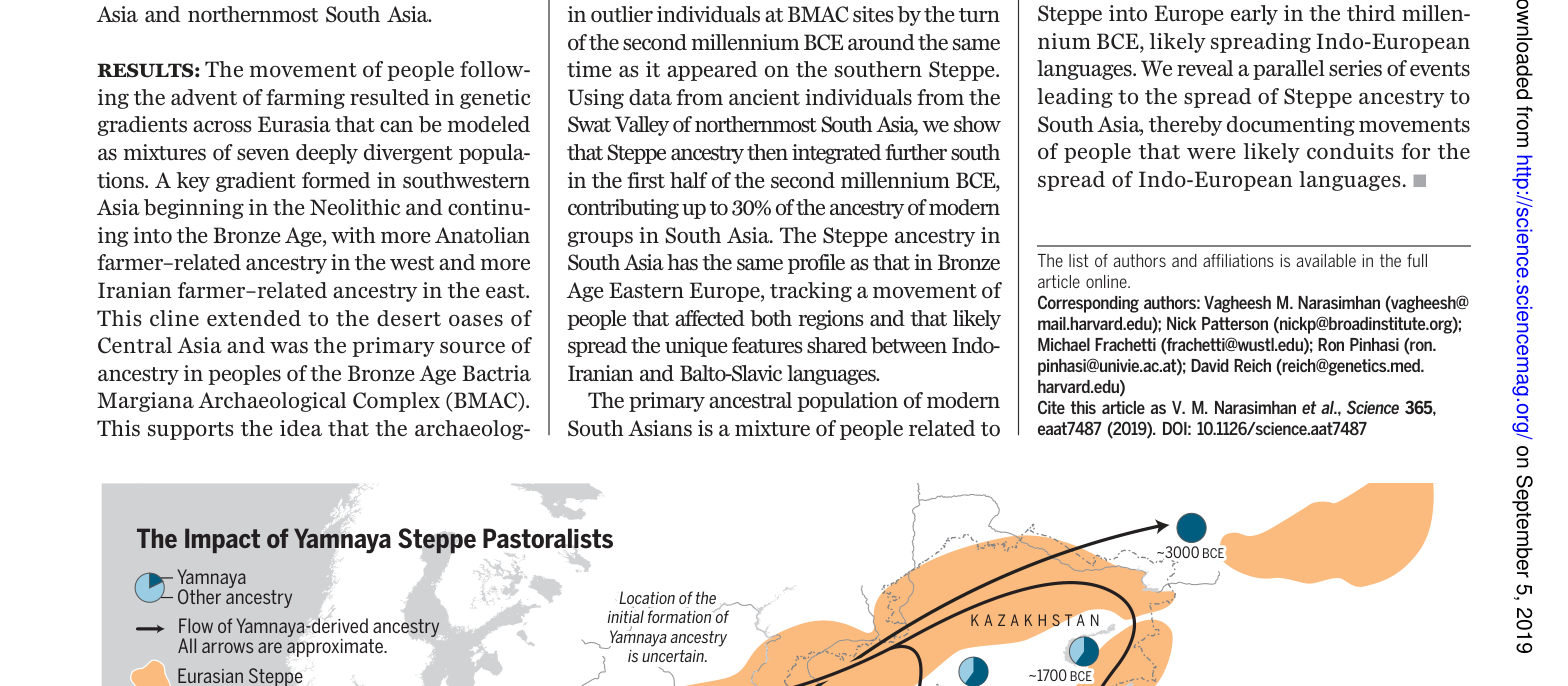
[0681] The formation of human populations in South and Central Asia - Narasimhan et al. - 2019
书页
Research Article Summary 书影
Research Article Summary
Research Article Summary 书影
Research Article Summary
正文第 5 页 书影
正文第 5 页
核查结论

三项俱对上,无出入。(一)时间:正文「公元前两千纪前期」=原文「a narrow time window (first half of the second millennium BCE) when the Steppe ancestry that is widespread today in South Asia must have arrived」;摘要另有「Steppe ancestry then integrated further south in the first half of the second millennium BCE, contributing up to 30% of the ancestry of modern groups in South Asia」。

核查全文

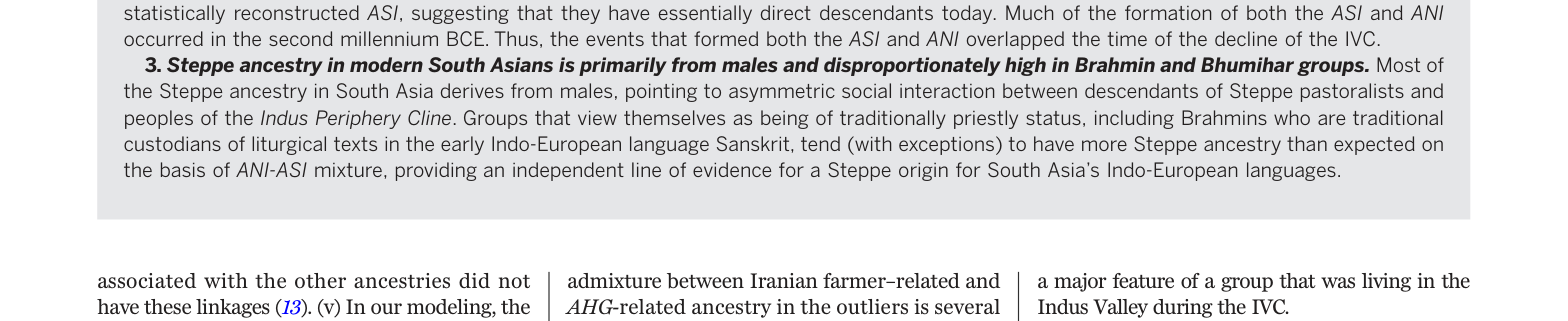
(二)路径:草原血统经中亚南下——「Yamnaya Steppe pastoralists who spread into Central Asia by the turn of the second millennium BCE」,先见于 BMAC 诸址的离群个体,再经斯瓦特河谷入南亚。(三)与印欧语传入相吻合:「providing an independent line of evidence for a Steppe origin for South Asia's Indo-European languages」;所据为婆罗门等传统司祭群体草原血统高于 ANI-ASI 混合预期(「Brahmins who are traditional custodians of liturgical texts in the early Indo-European language Sanskrit, tend (with exceptions) to have more Steppe ancestry than expected」),并以波罗的—斯拉夫语与印度—伊朗语之亲缘为旁证。原文亦正面排除本土/伊朗高原起源:「provide evidence against an Iranian plateau origin for Indo-European」。另一项正文保留语亦得支持:「不是一支军队的一次性征服」——原文谓草原血统在今南亚人中主要来自男性,指向「asymmetric social interaction」,属渗透式接触,全文无 invasion 之论。

摘要首页核文章题名与首位作者;同页说草原血统在公元前二千纪上半叶从中亚进一步进入南亚,今南亚群体可占至百分之三十,并把这一人群移动与印度—伊朗语和波罗的—斯拉夫语的共同特征相联系。正文第 5 页又说今南亚草原血统主要来自男性、不对称社会接触,并以婆罗门等传统祭司群体的血统比例为南亚印欧语草原起源的独立证据。原文支持迁徙及语言联系,不支持把过程说成一次军事征服;摘要图并明示进入南亚的精确路径仍不确定。

第 122 行脚注 anthony

书目著录1.1.1-4条0356
所据
The Horse the Wheel and Language - How Bronze-Age Riders from the Eurasian Steppes Shaped the Modern World - David W. Anthony - Princeton University Press 2007
书页
版权页
版权页

此页所载版权声明禁止以任何方式复制或传播本书的任何部分。本页书影只为核对该条著录而摆在此处,请勿转载、转贴、下载或另行传播——禁令未开「少量节取」之例,剪一小段同样不在许可之内。

核查结论

三项俱坐实,其中「渗透而非一次性入侵」一项,原书有专节立此说。该书第六章有一节径题〈Small-scale Migrations, Elite Recruitment, and Language Shift〉(書 117),其立论作:「the spread of the Indo-European languages beyond that homeland probably did not happen principally through chain-type folk migrations. A folk movement is not required to establish a new language in a strange land.

核查全文

Language change flows in the direction of accents that are admired and emulated by large numbers of people. Ritual and political elites often introduce and popularize new ways of speaking. Small elite groups can encourage widespread language shift toward their language, even in tribal contexts」。并明改前人之名:「Renfrew has called this mode of language shift elite dominance but elite recruitment is probably a better term」。全书 migration 二百一十六见而 invasion 仅十三见,用词的悬殊本身即是其立场。二证同向,正文書 35 行末「不是一支军队的一次性征服」一语由此两面坐实。

第 123 行脚注 witzel

纸本1.1.1-5条0357
所据
[0198] Early India From the Origins to AD 1300 - Romila Thapar - 2002
书页
书内第 111 页 书影
书内第 111 页
核查结论

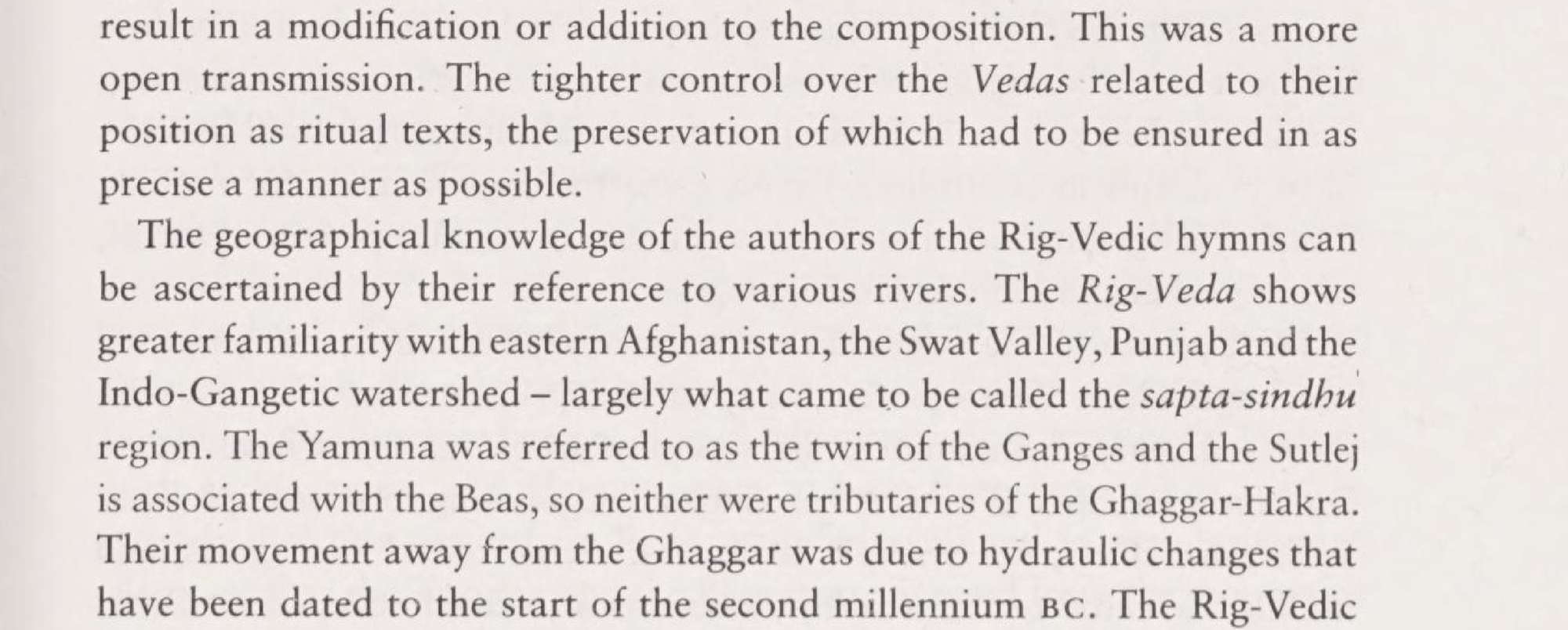
①脚注补入 Witzel 同页的自设保留原句「However, there still is no absolute dating of any Ved. text.」,并写明正文年代是落在括线内的估值而非定年;同时把该章的地理句与口传句原文一并录入,页码补作 pp.68—69。正文 37 行随之放宽:原作「地点在今旁遮普一带,即吠陀里说的七河之地」,把旁遮普径等于七河之地,与 Thapar 所记范围不合;今改为「编成之地在今旁遮普一带;若按诗中提到的诸河来划,范围还要更宽一些,东起今阿富汗东部与斯瓦特河谷,经旁遮普直到印度河与恒河的分水岭,也就是后来所谓的七河之地(sapta-sindhu)」。Thapar 该书本章脚注 已有全著录,此处按全书成例作「前引」。

图中将《梨俱吠陀》作者熟悉的地理范围列为阿富汗东部、斯瓦特河谷、旁遮普与印度河—恒河分水岭,并说大体即后称 sapta-sindhu 的区域。

第 124 行脚注 gonda

纸本1.1.1-6条0358
所据
[0703] Vedic Literature Saṃhitās and Brāhmaṇas - Jan Gonda - 1975
书页
书内第 8 页 书影
书内第 8 页
书内第 332 页 书影
书内第 332 页
核查结论

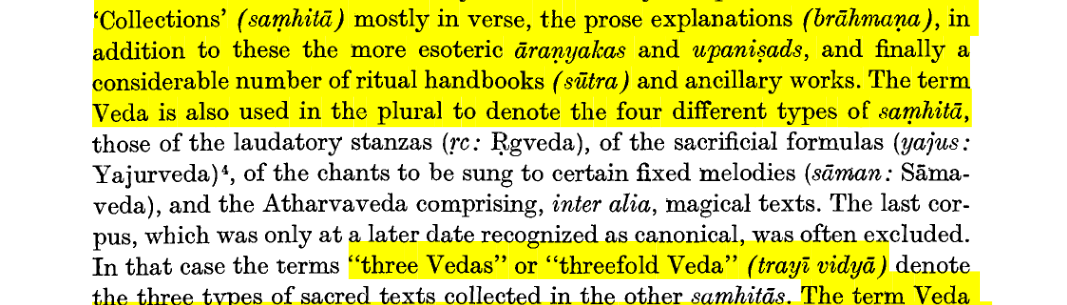
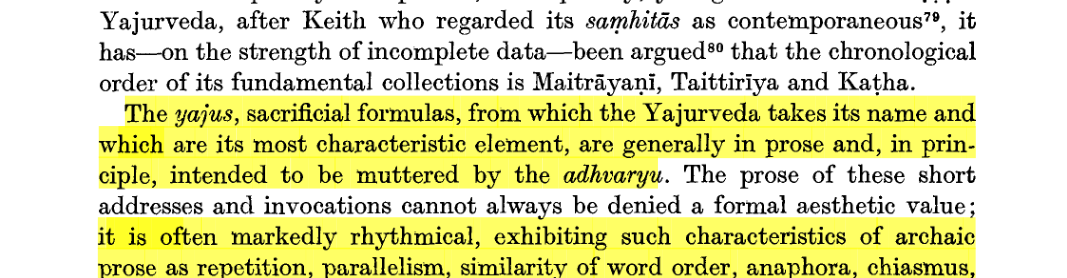
正文「四吠陀按祭祀职能分工而非四套并列教义」一判,原书开篇有总纲,逐项对上。「The term Veda is also used in the plural to denote the four different types of saṃhitā, those of the laudatory stanzas (ṛc: Ṛgveda), of the sacrificial formulas (yajus: Yajurveda), of the chants to be sung to certain fixed melodies (sāman: Sāmaveda), and the Atharvaveda comprising, inter alia, magical texts」——四者皆以「何种祭祀言语」为别,非以教义为别,正是正文之意。

核查全文

(二)祭官与经的对应亦有据:「The yajus… from which the Yajurveda takes its name… are generally in prose and, in principle, intended to be muttered by the adhvaryu」;又记 anuvākyā 为「mantras to be recited by the hotar」,yājyā 为同一祭官所诵以配 adhvaryu 之献;某祭「a brāhmaṇa for the hotar and one for the adhvaryu」。全书 hotar 三十四见、hotṛ 三十九见、adhvaryu 十八见、udgātar 二见(另见书末索引 111、190、314、348、432 诸页)、brahman priest 九见。(三)一层精确可供正文取用:原书指《阿闼婆》「was only at a later date recognized as canonical, was often excluded」,其时则称「three Vedas」或「threefold Veda(trayī vidyā)」。「四吠陀」之为四,本身即有先后,正文若言其分工,宜带此一笔。

第 8 页把四类结集分别界定为赞颂诗节、祭祀式文、按固定旋律歌唱的颂文及兼收巫术文本的《阿闼婆吠陀》,并说明后者较晚才获经典地位;第 332 页说明 yajus 是《夜柔吠陀》得名且最具特征的祭祀式文,原则上由 adhvaryu 低声诵念。两处合证四吠陀依祭祀言语及职能分工,而非四套并列教义。

第 125 行脚注 doniger

纸本1.1.1-7条0325
所据
S. K. Ramachandra Rao《Purusha Sūkta: Text, Transliteration, Translation & Commentary》(Bangalore: Sri Aurobindo Kapāli Sāstry Institute of Vedic Culture, 2006)
书页
书内第 71 页 书影
书内第 71 页
核查结论

and the śūdra was born from his feet」。正文表格四格(婆罗门口、刹帝利双臂、吠舍双腿、首陀罗双脚)与此逐格相合,「四种姓由原人献祭时身体各部所生」之说亦坐实。改判「确」。两点须记明。(一)人证不是脚注所引的那一本:脚注引 Doniger O’Flaherty 译《The Rig Veda: An Anthology》(Penguin, 1981),该书仍无,其页码著录未复核;所核者是这一颂的文本与译义,不是 Doniger 的译文措辞。改法(可径用):脚注宜先标原颂坐标《梨俱吠陀》10.90.12,再以译本为参,一部译文选集单独承担一条原典引据,读者无从复核。

核查全文

(二)该书自身对这一颂的读法与正文口径有出入,值得知道:Rao 于此颂下明言,把它读作四种姓起源「is the explanation most often given」,并举 rājanya 一词于《梨俱吠陀》仅此一见、visha 在吠陀语境泛指人群等语,主张此颂本意在万有同源而非社会分层。正文说它「给等级制套上宇宙起源的外衣」,讲的是后世如何用它,与 Rao 所论不冲突;但若正文他处要断言吠陀时代已有四姓之制,此条不足为据。

此为《梨俱吠陀》10.90.12 的梵文并英译。须知本图不是脚注所引的 Doniger 译本,所证的是这一颂的文本与译义;正文四格与此逐格相合。同页疏文另指出 rājanya 一词于《梨俱吠陀》仅此一见,并主张此颂本意在万有同源,四姓起源之读是后起的通行解释。

第 127 行脚注 allchin

书目著录1.1.1-8条0359
所据
The Archaeology of Early Historic South Asia The Emergence of Cities and States - F. R. Allchin - 1995
书页
版权页
版权页

此页所载版权声明禁止以任何方式复制或传播本书的任何部分。本页书影只为核对该条著录而摆在此处,请勿转载、转贴、下载或另行传播——禁令未开「少量节取」之例,剪一小段同样不在许可之内。

核查结论

书 103 行 所系因果链俱确。「second urbanization」正是全书主题(六见),punch-marked coins 亦有专节考订钱制源流。铁器垦荒一节:「large-scale forest clearance… facilitated by the large-scale use of iron implements」,并见考古分期实证(如 Kausambi 腹地最早林垦遗迹)。水稻剩余一节以产量数据具体核算(wet-system rice 每亩约 2267.5 kg,远高于旱作),支持「稳定剩余」一说。惟须留意:书内对 Kosambi 一系「铁器径直导致垦殖扩张」的强因果说法本身列有学界批评('A number of critical reviews of such ideas have been made'),正文措辞已是「这通常被称作」一类的谨慎归纳,非坐实单向因果,无碍。判确,脚注无须改动。

第 128 行脚注 bronkhorst

纸本1.1.1-9条0126
所据
[0229] Greater Magadha - Johannes Bronkhorst - 2007
书页
书内第 3 页 书影
书内第 3 页
书内第 15 页 书影
书内第 15 页
核查结论

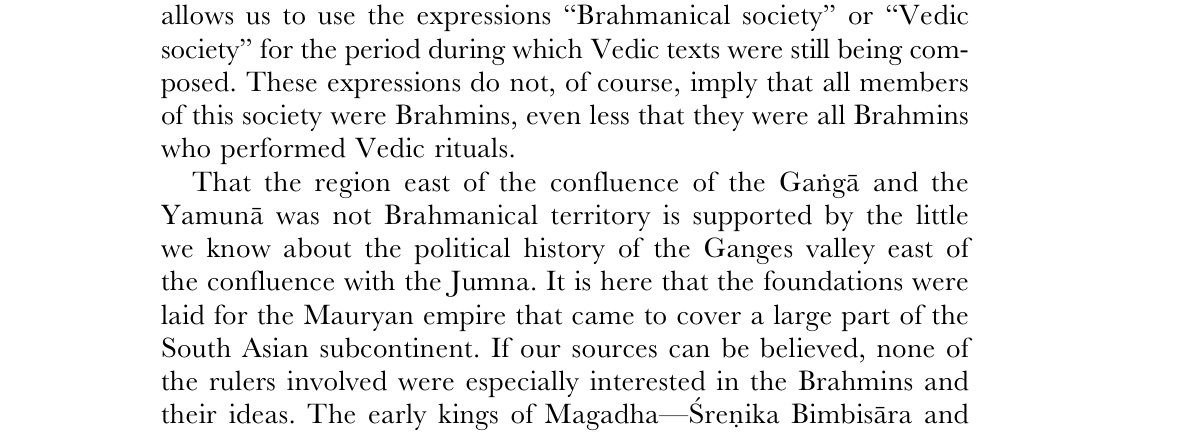
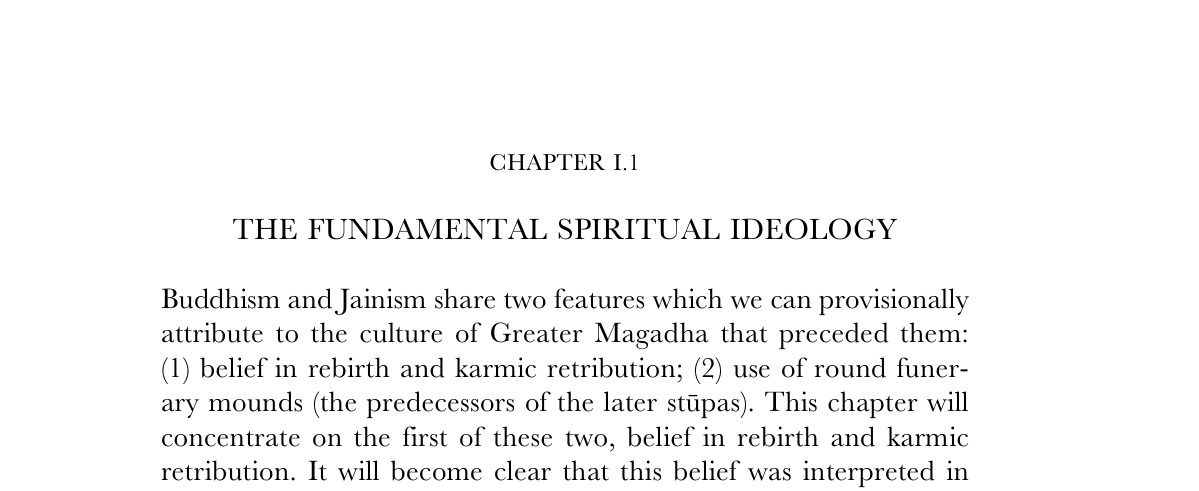
Bronkhorst《Greater Magadha》pp. 1–15、112–135明确提出大摩揭陀在佛教兴起时尚未以婆罗门文化为主,并将业、轮回等观念暂定归于这一非吠陀文化圈;作者同时交代这是一项有争议的历史假说,正文的限定语与之相符。

一图论证恒河—阎牟那河汇流以东并非婆罗门文化领地;一图明确把轮回与业报暂归于先于佛教、耆那教的大摩揭陀文化。两处均保留其假说性质。