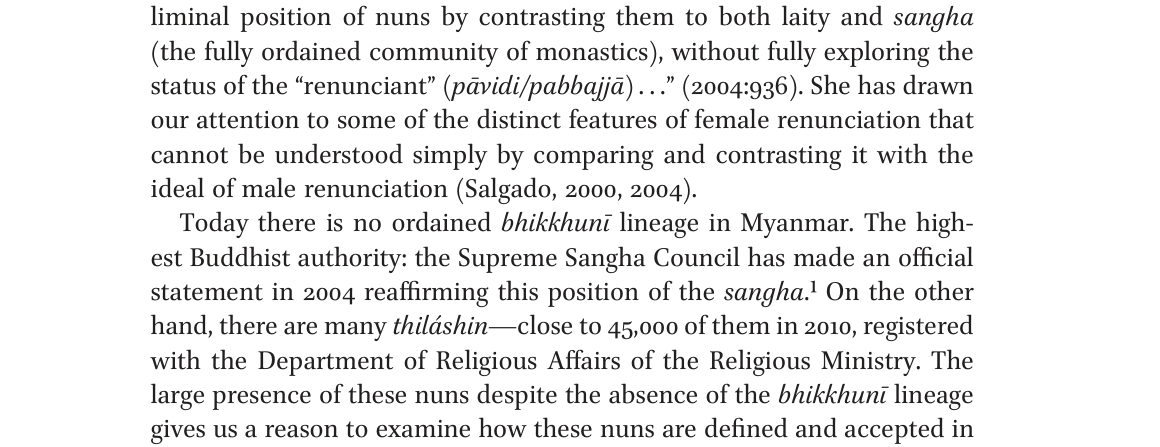
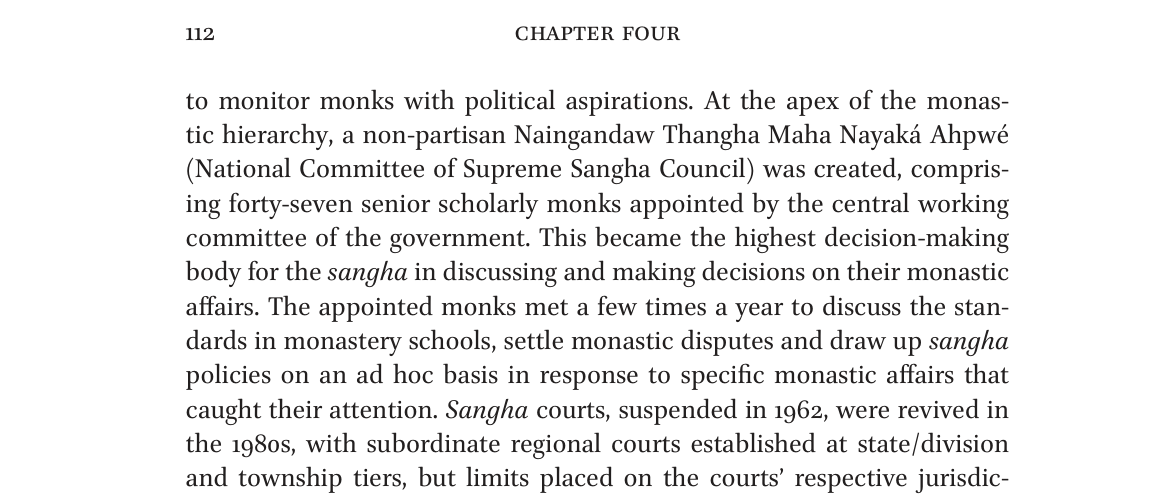
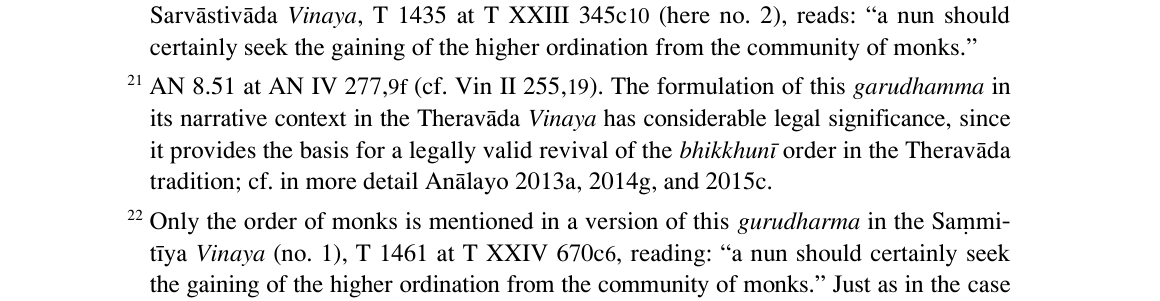
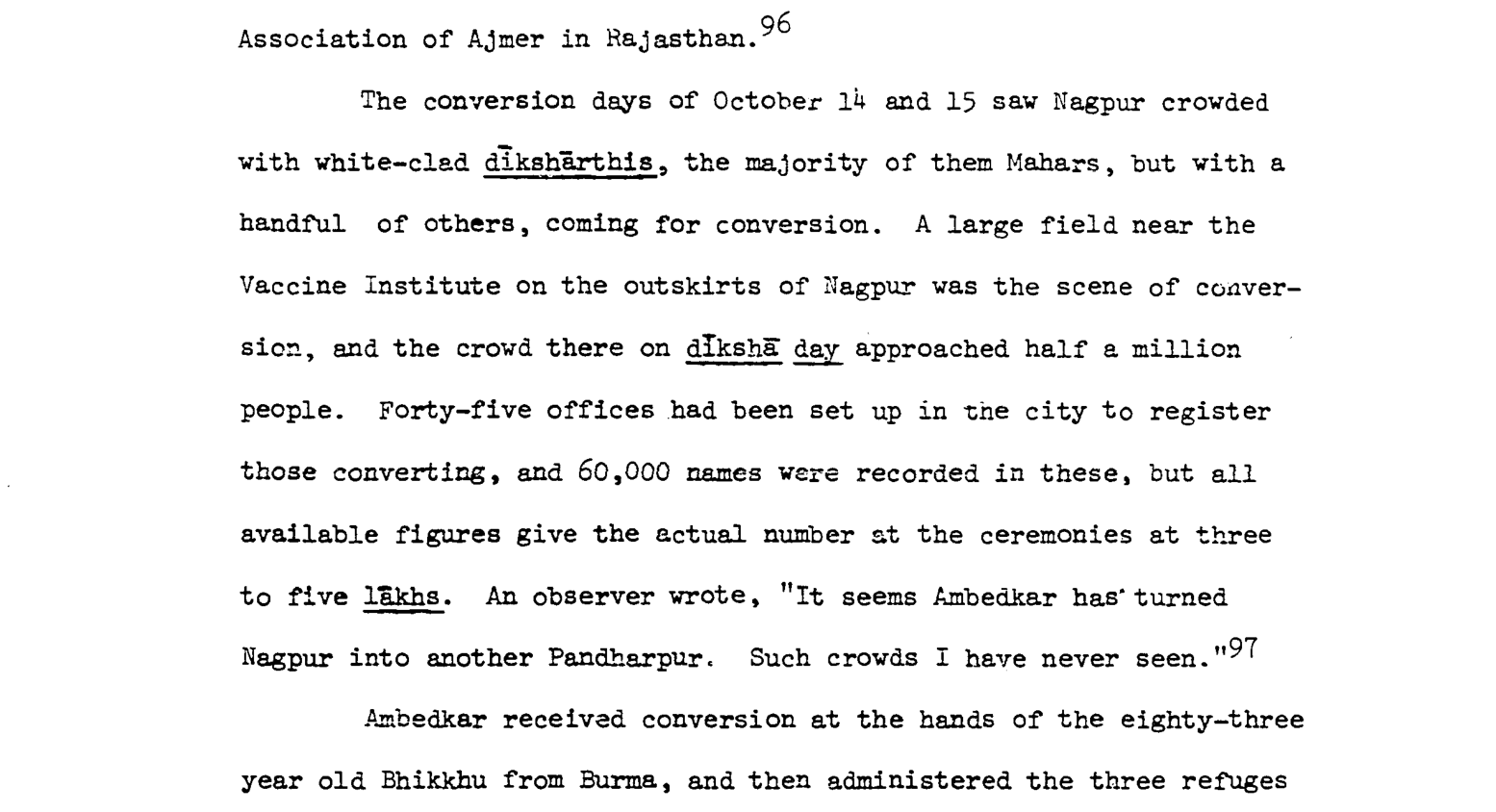
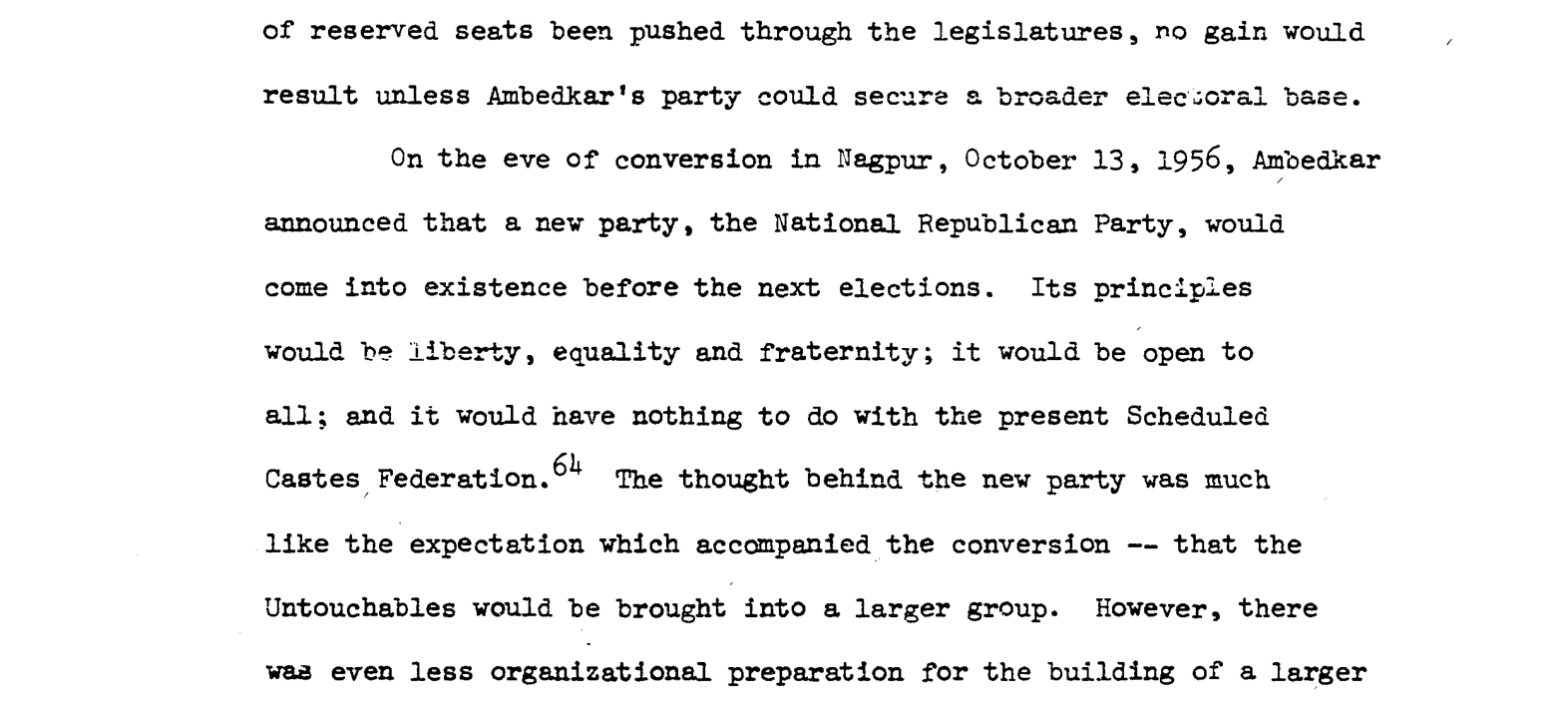
安贝德卡运动的分析,见 Christopher S. Queen, "Dr. Ambedkar and the Hermeneutics of Buddhist Liberation," in Christopher S. Queen and Sallie B. King (eds.), Engaged Buddhism: Buddhist Liberation Movements in Asia. Albany: SUNY Press, 1996, pp. 45–71。该章书内 46 页记皈依之后的规模:"his conversion to Buddhism in 1956 triggered a mass movement, as the number of Buddhists reported by the Indian census increased over a thousand percent in a decade, from 181,000 in 1951 to 3,250,000 in 1961"(所给是一九六一年普查之数,近年规模该章不及);书内 59 页言其社群"narrowly, the Mahars of Maharashtra, more broadly, the Untouchables of India";书内 46 页以其说比于二十世纪解放神学,谓其 dhamma "is directed to the dispossessed"。书内 47 页记其一九五〇年在《摩诃菩提》刊文所立宗教四准则,其一即 "offer liberty, equality, and fraternity",下接 "He taught equality, equality not between man and man only but between man and woman",正文所举平等一项据此。该章不涉无我与缘起(anatta、no-self、dependent origination 诸词全章零命中),正文所举这两项思想资源另需其书。安贝德卡运动的地方史,见 Eleanor Mae Zelliot. Dr. Ambedkar and the Mahar Movement. 博士论文,宾夕法尼亚大学,1969:书内 236 页记一九五六年十月那格浦尔皈依大会,会场人群 "approached half a million people",市内四十五处登记点录得六万人,而 "all available figures give the actual number at the ceremonies at three to five lakhs";卷末地图二、三(书内 303、304 页)系据一九六一年普查所绘,逐县列马哈拉施特拉的佛教徒比例与马哈尔转信比例。该书书内 279 页另记同年新党(National Republican Party)纲领为 "liberty, equality and fraternity",与上引一九五〇年宗教四准则一教一政,引时须分。正文所举无我、缘起两项,此三书俱不载其与出身等级、社会条件之连:安贝德卡本人书中确以无我立说("there is no such thing as a soul… his theory of the soul is called Anatta, i.e., non-soul",见 B. R. Ambedkar. The Buddha and His Dhamma. Bombay: Siddharth College Publication, 1957),而未及于此推论。正文三项思想资源之分寸:平等一项有据,即上引一九五〇年宗教四准则(新党纲领之语见 Zelliot 书内 279 页,一教一政,勿相混);无我、缘起二项系本书就安贝德卡取佛教之由所作的引申,非上举诸书明文,Queen 1996 与 Zelliot 1969 通检 anatta、non-self、dependent origination 俱零命中。规模一层,所见止于一九六一年普查,正文故系于皈依运动以来,不作今日之数。








![[0969] The Ordination of a Tree The Thai Buddhist Environmental Movement - Susan M. Darlington - 2012 书影](../../../书影/darlington-mainstream-vocabulary-decade.92dbe82e.webp)