所指
第二卷第四篇下篇确区分普遍无常怖与佛教自产的断灭怖,并在第一、三、五章分别讨论真常的正面安慰、擦镜悖论与不可验证性;
链接
上篇-解脱论综述 › 01-佛性与解脱:核心主张 篇级 · 所指为整篇,链接落在该篇首章
核查结论
第二卷第四篇下篇确区分普遍无常怖与佛教自产的断灭怖,并在第一、三、五章分别讨论真常的正面安慰、擦镜悖论与不可验证性;交叉引用准确。
第二卷第四篇下篇确区分普遍无常怖与佛教自产的断灭怖,并在第一、三、五章分别讨论真常的正面安慰、擦镜悖论与不可验证性;交叉引用准确。
本地 SN 22.85 巴利文与 T0099《杂阿含》焰摩迦平行经均可核舍利弗以现法五蕴中如来尚不可得,驳死后断灭之见;经号与用证成立。
Sharma《Urban Decay in India (c. 300–c. 1000)》全书。三项用证逐一坐实。(一)去城市化:作者自述其判——诸址「indicate decrease in construction, manufacturing and commercial activities, and are hence associated with deurbanization. The reasons for the urban eclipse are sought not only in the fall of empires but also in social disorder and the loss of long-distance trade」。
(二)钱币减少:「The scarcity of coins in c. 600–1000 appears in almost all parts of the subcontinent with a few exceptions in Kashmir, Punjab, western Uttar Pradesh and Rajasthan」;又曰「between 600 and 1000 gold coins were almost absent in India and that in contrast to the earlier period there was general dearth of metallic currency in post-Gupta times」。惟须记一句:作者自承此说已被质疑——「The paucity of coins in the post-Gupta period has been questioned. But we see no reason to change our view」。引用时宜知其为一家之言而非定论。(三)商团萎缩:钤有城/会(nigama)之印者「ceased to issue coins」;而其归宿则是「Urban decline led to the regrouping and reorganization of social [structure]… Guilds fossilized into castes」。另记五世纪末一织绸行会自城中迁出之例。 本行另需的「贵霜后政治动荡与嚈哒兵燹」系站内交叉指向(第五篇第二章、第一卷第八篇第六章),非此书之责。惟此书对嚈哒一项有一层要紧的保留,宜转告那两处:作者谓德干诸城「most towns were deserted or had become derelict in the third century or a little later. But no foreign invasion took place at this time」,而嚈哒「may have destroyed some towns in north India in the fifth century」,仅举三例。即:去城市化在德干早于任何外患,嚈哒兵燹至多是北印一隅的部分因素,不足以充当通盘解释。 正文若以兵燹为去城市化之因,须按此收紧。
…故,略說四偈:
處處經中說,
內外一切空,
有為法如雲,
及如夢幻等。
此中何故說,
一切諸眾生,
皆有如來性,
而不說空寂?
以有怯弱心,
輕慢諸眾生,
執著虛妄法,
謗真如佛性,
計身有神我。
為令如是等,
遠離五種過,
故說有佛性。
此四行偈,以十一偈略釋應知。偈言:
諸修多羅中,
說有為諸法,
謂煩惱業等,
如雲等虛妄,
煩惱猶如雲,
所作業如夢,
如幻…
本地 T1611《究竟一乘宝性论》卷一、卷四均有「以有怯弱心……远离五种过,故说有佛性」偈,五过次第与脚注逐字相合。
…槃有平等。
後半偈者示現何義?偈言:
若無佛性者,
不得厭諸苦,
不求涅槃樂,
亦不欲不願。
以是義故,《聖者勝鬘經》言:世尊!若無如來藏者,不得厭苦、樂求涅槃,亦無欲涅槃,亦不願求。如是等此明何義?略說佛性清淨正因,於不定聚眾生能作二種業。何等為二?一者依見世間種種苦惱,厭諸苦故,生心…
本地 T0353《胜鬘师子吼一乘大方便方广经》明文作「若无如来藏者,不得厌苦乐求涅槃」,脚注引文无误。
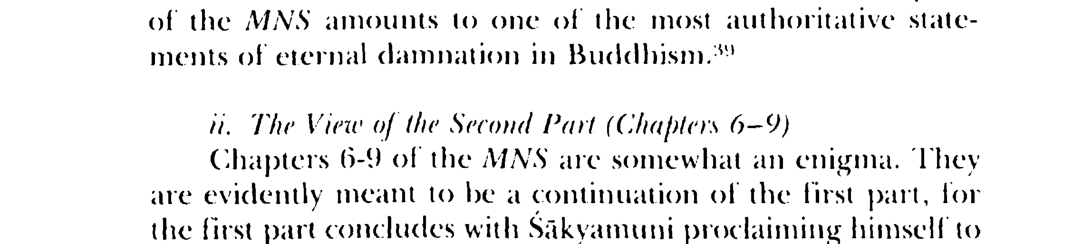
覆看 今 Drewes 2011(IIJ 54)照留,其后补「同作者另有 'Early Indian Mahāyāna Buddhism II: New Perspectives',Religion Compass 4/2, 2010, pp. 66–74,所论同此而为综述,另有此篇」。 判疑/确不变者照旧,处置待裁→已更新。
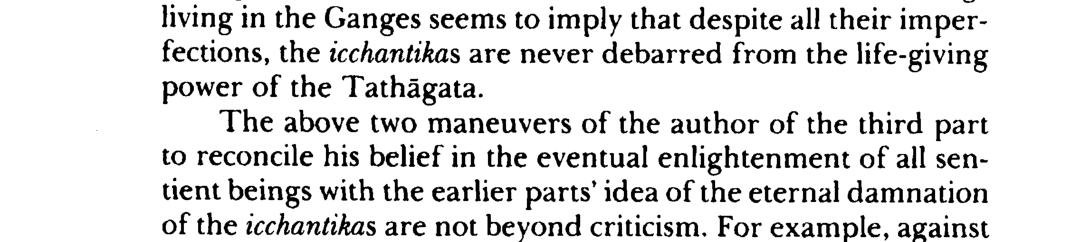
①分层:立〈The View of the Second Part (Chapters 6–9)〉一节,谓此数品「shows most of the features of a separate work」;②改判:「The above two maneuvers of the author of the third part to reconcile his belief in the eventual enlightenment of all sentient beings with the earlier parts’ idea of the eternal damnation of the icchantikas are not beyond criticism」。
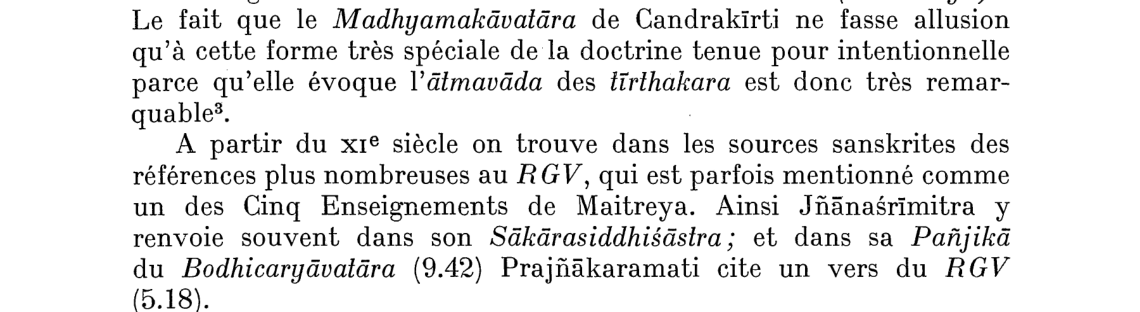
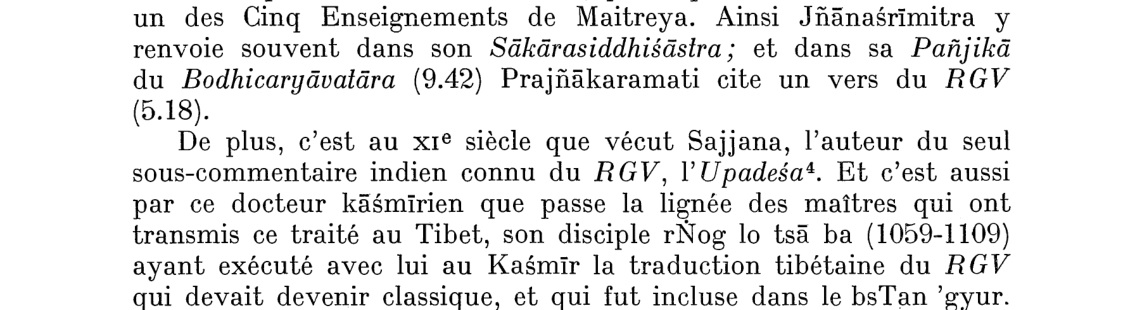
「A partir du XIe siècle on trouve dans les sources sanskrites des références plus nombreuses au RGV」,智吉祥友屡引之,智作慧《入菩萨行论细疏》引其 5.18,十一世纪迦湿弥罗的萨阇那作唯一存世的印度复注,并与弟子俄译师(1059—1109)译成藏文。②Mathes《A Direct Path to the Buddha Within》([0014],Wisdom 2008)書 2 更直言「the Indian reaction on the whole was simply to ignore
the Ratnagotravibhāga and its teaching of buddha nature for six centuries. Things changed, however, in the eleventh century」,并记藏地传说此论由弥勒巴重新发现,而其师智吉祥友(约 980—1040)已知之。正文「在印度论场寥落数百年、约十一世纪后重新浮现」两半俱坐实。已更新: 注补 Ruegg 书内第 35 页与 Mathes 书内第 2 页两处原句。
十一世纪起梵文来源对《宝性论》的征引才转多,并出现唯一已知的印度复注;承担正文所谓长期寥落与约十一世纪重新浮现。
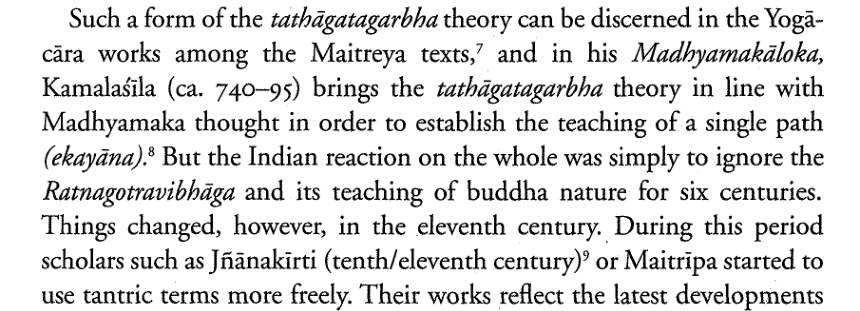
「A partir du XIe siècle on trouve dans les sources sanskrites des références plus nombreuses au RGV」,智吉祥友屡引之,智作慧《入菩萨行论细疏》引其 5.18,十一世纪迦湿弥罗的萨阇那作唯一存世的印度复注,并与弟子俄译师(1059—1109)译成藏文。②Mathes《A Direct Path to the Buddha Within》([0014],Wisdom 2008)書 2 更直言「the Indian reaction on the whole was simply to ignore
the Ratnagotravibhāga and its teaching of buddha nature for six centuries. Things changed, however, in the eleventh century」,并记藏地传说此论由弥勒巴重新发现,而其师智吉祥友(约 980—1040)已知之。正文「在印度论场寥落数百年、约十一世纪后重新浮现」两半俱坐实。已更新: 注补 Ruegg 书内第 35 页与 Mathes 书内第 2 页两处原句。
Mathes 明言印度方面总体上忽略《宝性论》及佛性说达六百年,至十一世纪情形始变。