← 引用核查

04-历史上的佛陀

19 条 · 17 行 · 到书里读本章 →

第 17 行一史料传记的来历2 条佐证

书目著录同据 ×21.1.4-1条0569
所据
[0016] A Handbook of Pāli Literature - Oskar von Hinüber - 1996
书页
版权页
版权页

此页所载版权声明禁止以任何方式复制或传播本书的任何部分。本页书影只为核对该条著录而摆在此处,请勿转载、转贴、下载或另行传播——禁令未开「少量节取」之例,剪一小段同样不在许可之内。

核查结论

表中系年改作「约 5—6 世纪(巴利注释)」,与 Hinüber《Handbook》§305—306(书内第 147—148 页)所给的相对位置相应:本生注在觉音之后、法护之前,下限可入六世纪,绝对年代「remains largely doubtful」。本行锚已 --更。

版权页/题名页书影只核本卡所列书目著录,不承担该书的内容主张。

书目著录同据 ×21.1.4-2条0729
所据
[0016] A Handbook of Pāli Literature - Oskar von Hinüber - 1996
书页
版权页
版权页

此页所载版权声明禁止以任何方式复制或传播本书的任何部分。本页书影只为核对该条著录而摆在此处,请勿转载、转贴、下载或另行传播——禁令未开「少量节取」之例,剪一小段同样不在许可之内。

核查结论

表中系年改作「约 5—6 世纪(巴利注释)」,与 Hinüber《Handbook》§305—306(书内第 147—148 页)所给的相对位置相应:本生注在觉音之后、法护之前,下限可入六世纪,绝对年代「remains largely doubtful」。本行锚已 --更。

版权页著录 Oskar von Hinüber、A Handbook of Pāli Literature、de Gruyter、1996 及 ISBN 3-11-014992-3。

第 38 行附论那个时代的口口相传靠不靠得住

纸本1.1.4-3条0310
所据
On the Very Idea of the Pali Canon - Steven Collins - 1990
书页
重印本第 78 页 书影
重印本第 78 页
核查结论

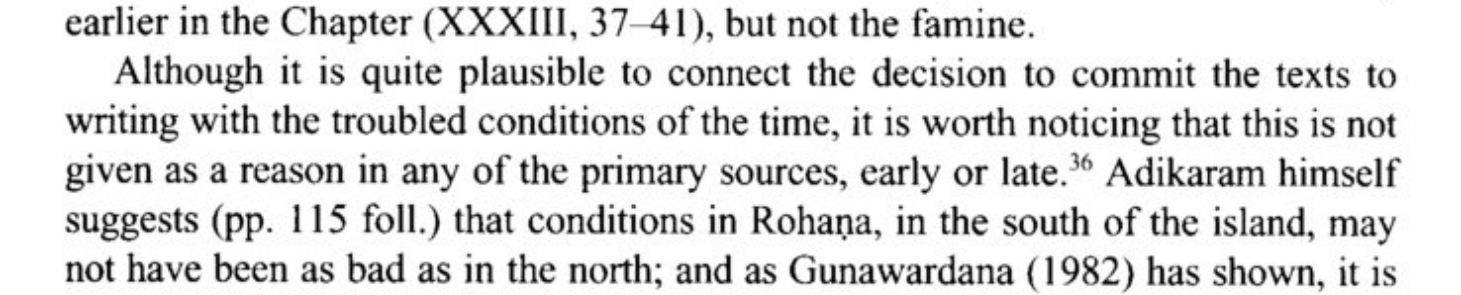
原刊 JPTS 15 (1990): 89—126 之页码只见于首页的 Source 行,正文内无原刊页标,故以下页码一律指重印本页):「In modern secondary works, there has arisen a tendency to associate the writing of the texts most closely with conditions of war and famine, and so to translate hāni as ‘decrease (in numbers)’, or more generally ‘disastrous state’. This seems first to have been suggested by Adikaram (1946, Chap. 4);②《大史》第三十三章确记提沙其人而不记饥荒

核查全文

③战乱与书写之间,原始文献自始至终未系因果。先前查到的 Norman 一环,其上游即 Adikaram 1946 与 Rahula 1956,本书原来的错是这条二手链条的末端。 柯林斯并给出他自己的正面提议(非本行所需,但可备):书写当与大寺派同无畏山寺之争相联系,「at least one of the motives for the decision was the fixation, through writing, of a definitive list of scriptures, at a time when the position of the Mahāvihāra as sole legitimate custodians of Buddhism was under threat」——韦多迦摩尼所护正是无畏山一方,故此举当读作受威胁一方的自固,不是灾变下的抢救。 正文已按两史改毕(见上),Collins 一环今亦落实,判语由「疑」改「确」。人证已备,见清单。

第 114 行五四十五年僧团与教化

巴利1.1.4-4条0714
所据
巴利本:VRI《Majjhimanikāya Mūlapaṇṇāsapāḷi》(Chaṭṭha Saṅgāyana,罗马字)
巴利原文

Evaṃ me sutaṃ – ekaṃ samayaṃ bhagavā sāvatthiyaṃ viharati jetavane anāthapiṇḍikassa ārāme

对读
suttacentral.net/mn2 篇级 · 同一底本(Mahāsaṅgīti),把上面的巴利词贴进浏览器查找框即可对上
核查结论

脚注 早已给出所需的语料范围与计数(2026-09-02 VRI 罗马字本四部尼柯耶通检:Sāvatthi 一千零六十三处、Rājagaha 二百六十七处、Vesālī 一百九十一处、Bārāṇasī 八十四处等),只是挂在表格「舍卫城」一行,未与「是可信的历史信息」这句对应——本条判语早于脚注补入的日期,属滞后未回看。四座表中城市与频次表重合,数据已够。判确,脚注不必改动,只是没人把两处对上。

正文所云「几座城市反复出现在尼柯耶经文的开头场景里」之落点(《一切漏经》开首即此定型句)。按全形计则 savatthi 1072、rajagaha 71、vesali 194、baranasi 64。王舍城一项两法相差近四倍,因经中常用处格 Rājagahe,全形比对整片漏掉;脚注旧记之数(1063/267/191/84)与词干法同一量级,可知其所用即词干法。引用此类频次,须同时说明比对的是词干还是全形,否则数目不可复现。

第 158 行脚注 bareau

纸本1.1.4-20条1784
所据
[0286] La composition et les etapes de la formation progressive du Mahaparinirvanasutra ancien - Andre Bareau - 1979
书页
题名与著录页 书影
题名与著录页
文内第 45 页 书影
文内第 45 页
文内第 63 页 书影
文内第 63 页
文内第 64 页 书影
文内第 64 页
文内第 81 页 书影
文内第 81 页
文内第 100 页 书影
文内第 100 页
核查结论

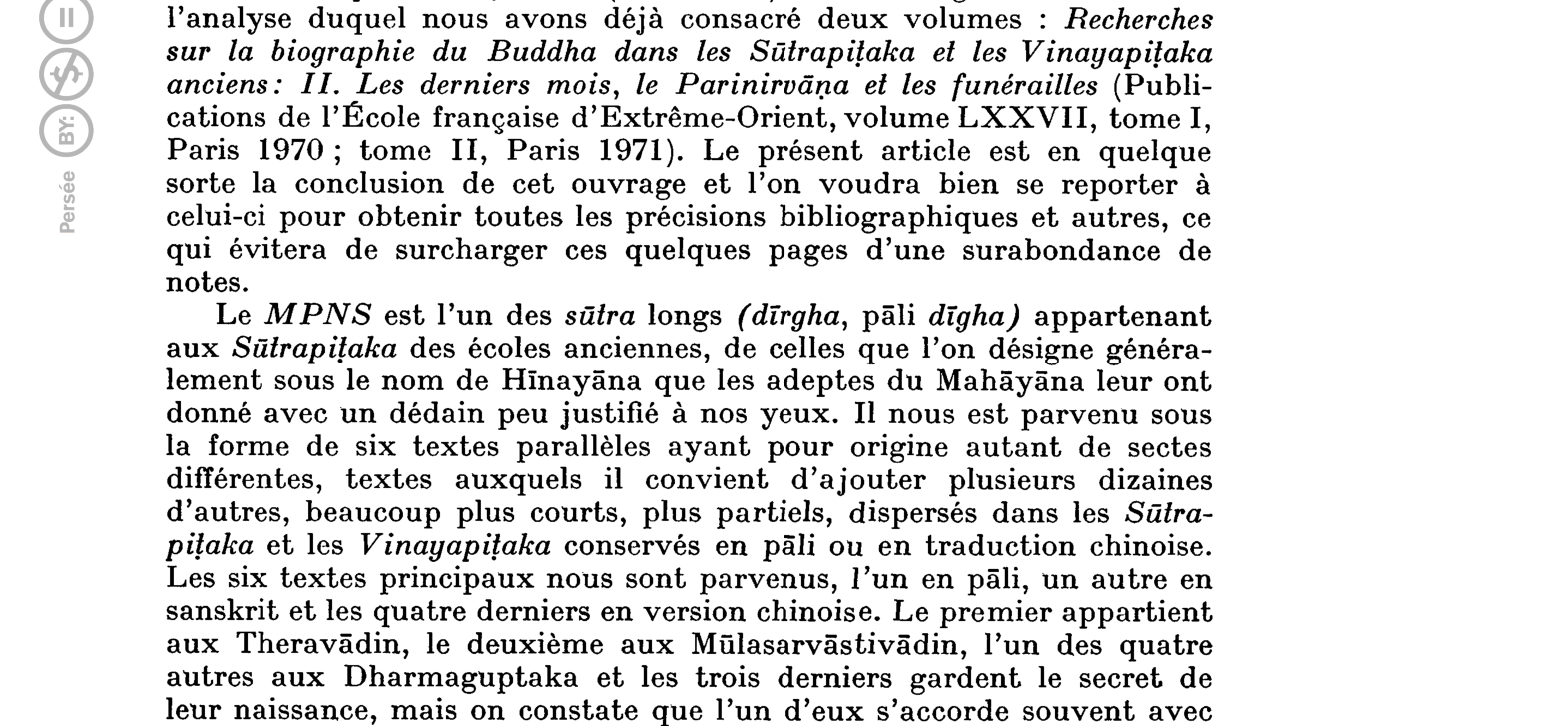
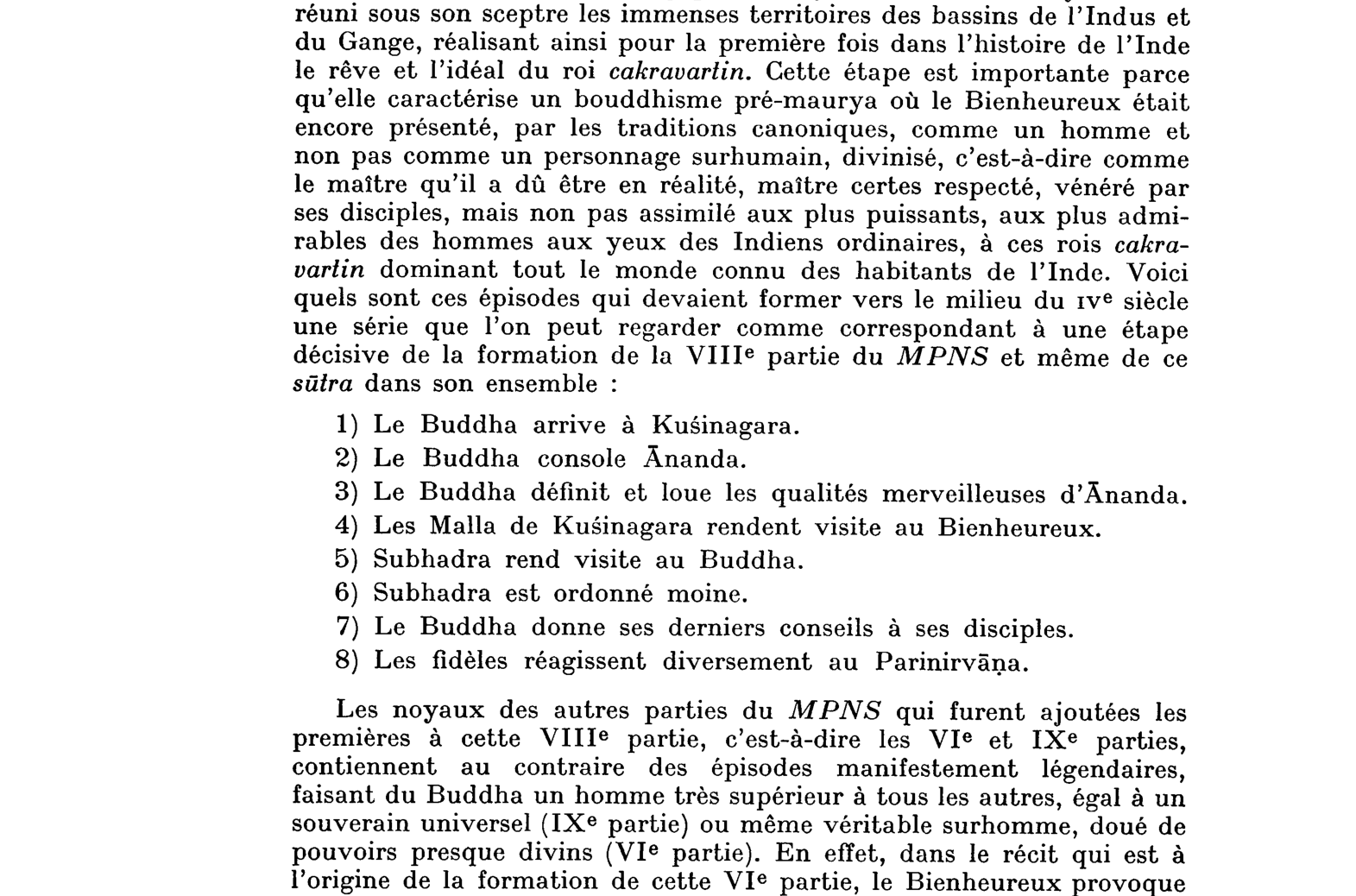
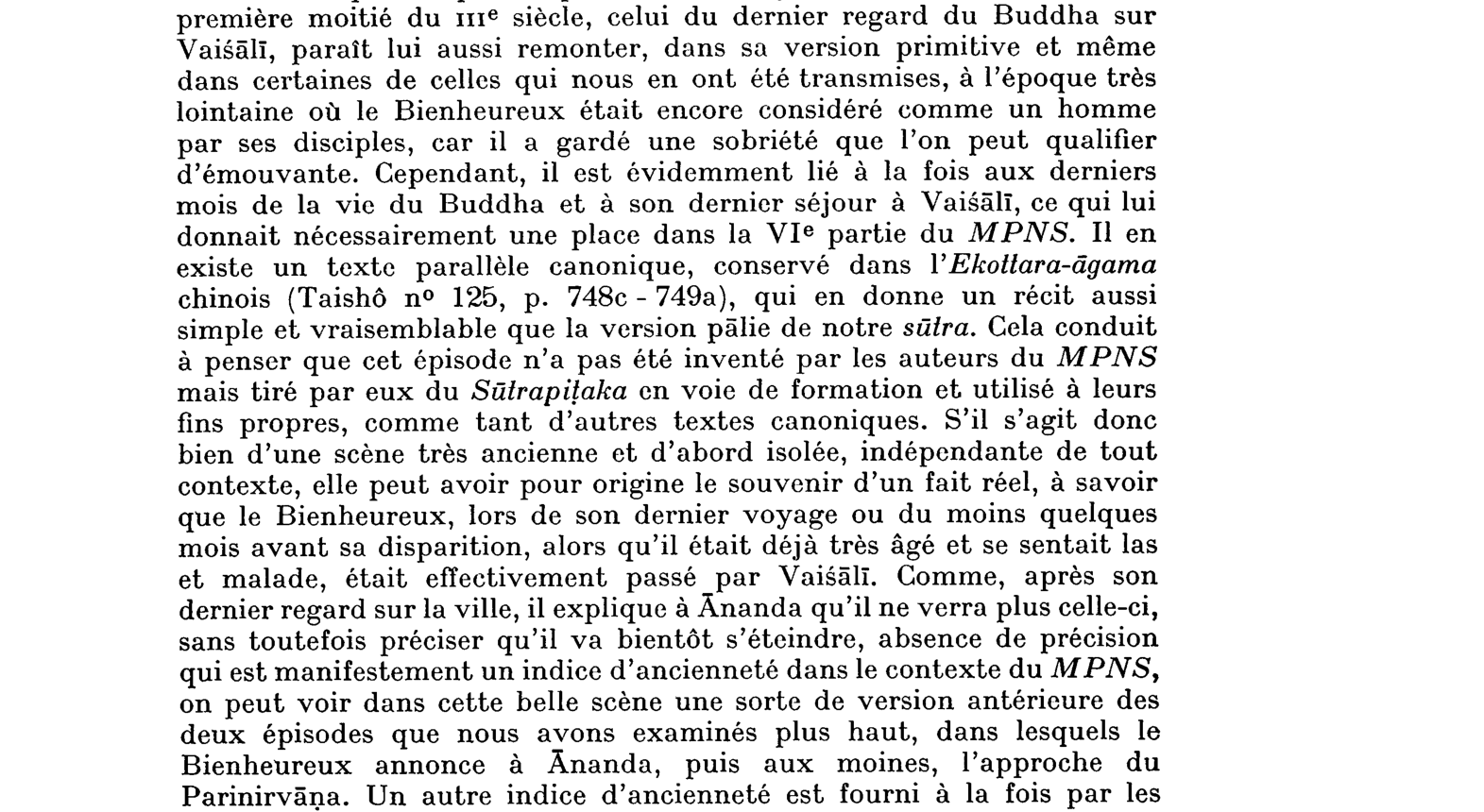
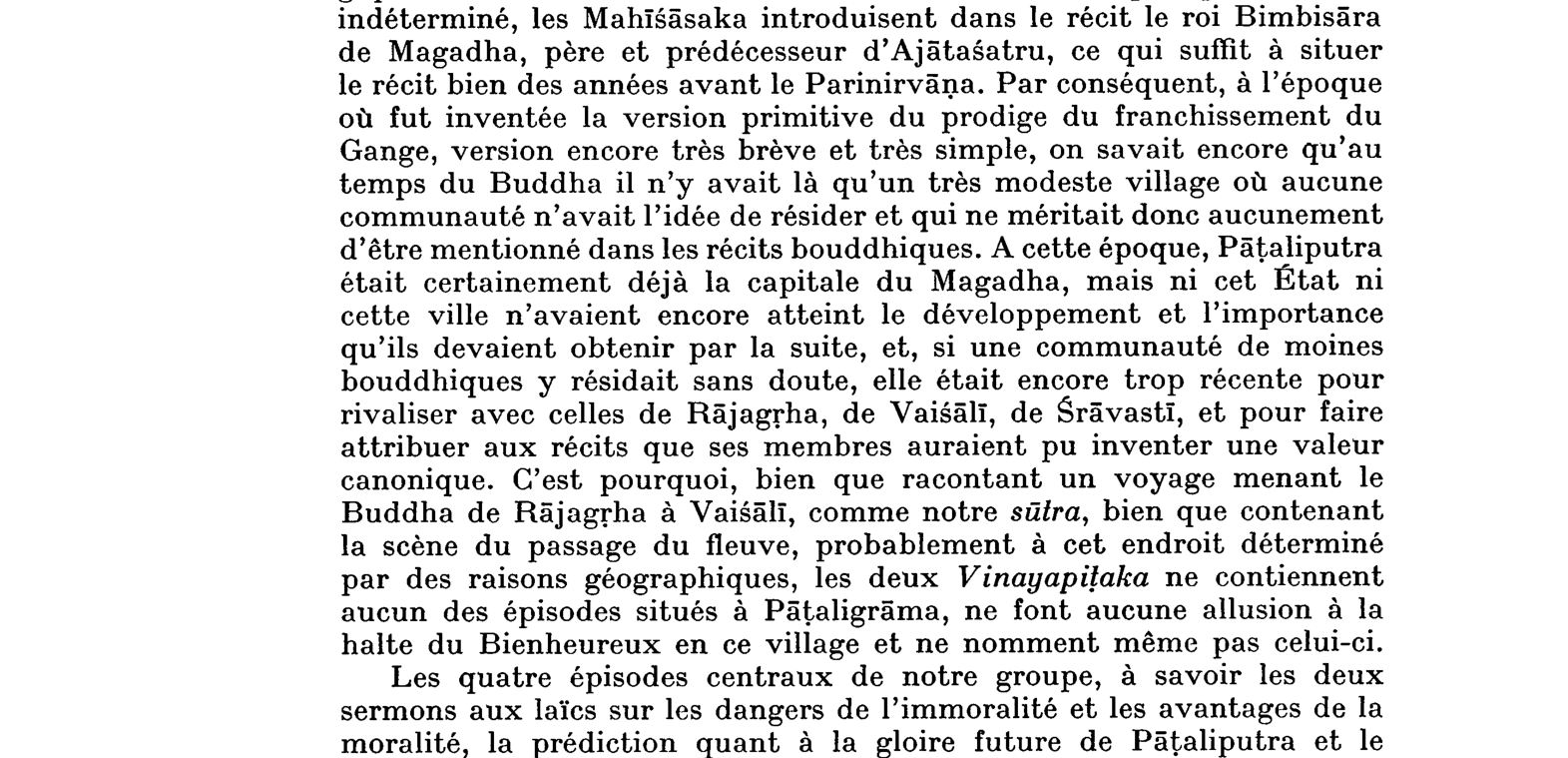
撤销之据不是放弃,是正文剩下的每一句,1979 一文皆能担。②后加诸部则「contiennent au contraire des épisodes manifestement légendaires」——正当正文「神异连篇的整段叙事,可信度越低」;③诸天云集一段判为「un élément tout à fait légendaire et assez tardif」,佛自定丧仪一段判为「caractère imaginaire et… relativement tardif」——是该判准的两个施行实例;④内核所见之佛陀「comme un homme

核查全文

, un maître vénéré de ses disciples, et nullement comme un surhomme ou un dieu, si l'on écarte les éléments et épisodes légendaires qui furent ajoutés plus tard」——正当正文末句「让佛陀显得更像凡人者最可信」。全文 tardif 十见、postérieur 十三见、prodige 十八见,「后出=增饰」是其通篇常法,非孤证。故正文书 19 行四项(越早/不增饰/体系神异者低/似凡人者高)俱由一文坐实,无一项须俟 Recherches。脚注已相应补硬:补入上举三处原语,并把末句「本书未能取得,故此处只据前者立说」改作平实的指路语「成段的方法论述见该书第一卷导论」——指明其所在而不复标为缺,读者仍知何处可求其详。惟旧记的一条戒律仍有效,勿删:《Recherches》与《Les sectes bouddhiques du Petit Véhicule》非同一书,日后不得相冒。

题名页核 BEFEO 66(1979)、45–103 页及 DOI;第 45 页自称是《Recherches》后两册的结论,第 63–64 页对比不含神异增饰的较早叙事与后加的明显传奇,并称前者仍把佛陀呈现为人而非超人;第 81 页以叙事的克制及未明说将灭判其古老,第 100 页称渡恒河的原始版本短而简单。六图均已目验,逐项承担现行脚注所列判准。

第 159 行脚注 capala

巴利1.1.4-6条0362
所指
DN 16
所据
巴利本:VRI《Dīghanikāya Mahāvaggapāḷi》(Chaṭṭha Saṅgāyana,罗马字)
巴利原文

Yassa kassaci, ānanda, cattāro iddhipādā bhāvitā bahulīkatā yānīkatā vatthukatā anuṭṭhitā paricitā susamāraddhā, so ākaṅkhamāno kappaṃ vā tiṭṭheyya kappāvasesaṃ vā. Tathāgatassa kho, ānanda, cattāro iddhipādā…

对读
suttacentral.net/dn16 篇级 · 同一底本(Mahāsaṅgīti),把上面的巴利词贴进浏览器查找框即可对上
核查结论

三处缺口今皆已了。(一)Udāna 6.1 已核到原文:「Atha kho bhagavā cāpāle cetiye sato sampajāno āyusaṅkhāraṃ ossajji. Ossaṭṭhe ca bhagavatā āyusaṅkhāre mahābhūmicālo ahosi bhiṃsanako lomahaṃso, devadundubhiyo ca phaliṃsu」,其后即出「imaṃ udānaṃ udānesi – Tulamatulañca sambhavaṃ…」一颂。与 DN 16 所记同一事而系于《自说经》,脚注「另见《自说经》(Udāna 6.1)」无误。

核查全文

又一拼写陷阱,记以备后用:DN 16 作 ossaji,而《自说经》作 ossajji(双 j);按前者检后者,零命中。同一事跨部检索,须试各部的拼写异形。紧接一句更强:「Cela seul suffirait à rendre suspects tous les épisodes des sept premières parties du MPNS」。该文立论确比《Recherches》所能提供者更直接:它不止说此节可疑,而是指出其为解释塔名而造。(三)脚注已按此改讫:改标 BEFEO 1979 并直引上举两语;《Recherches》降为「或有更详细的讨论,本书写定时未见原本」;Waldschmidt 保留作「另参」。Waldschmidt《Die Überlieferung vom Lebensende des Buddha》(1944–1948) 仍未取,惟其在注中本即「另参」性质,非承重之据,故不碍本行结案。**

第 160 行脚注 nakamura_santhagara

纸本1.1.4-7条0488
所据
Gotama Buddha A Biography Based on the Most Reliable Texts Vol. 1 - Hajime Nakamura - 2000
书页
原书未标版心页码 书影
原书未标版心页码
核查结论

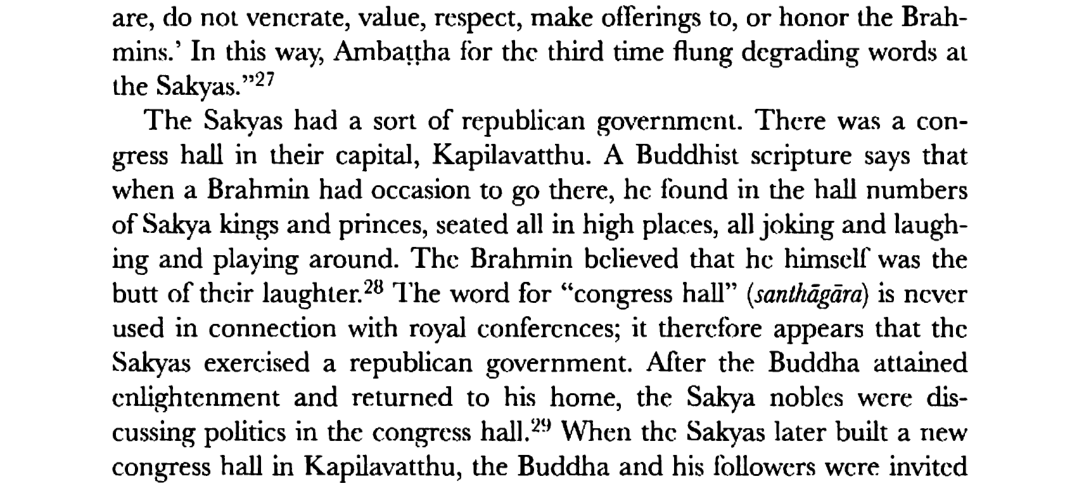
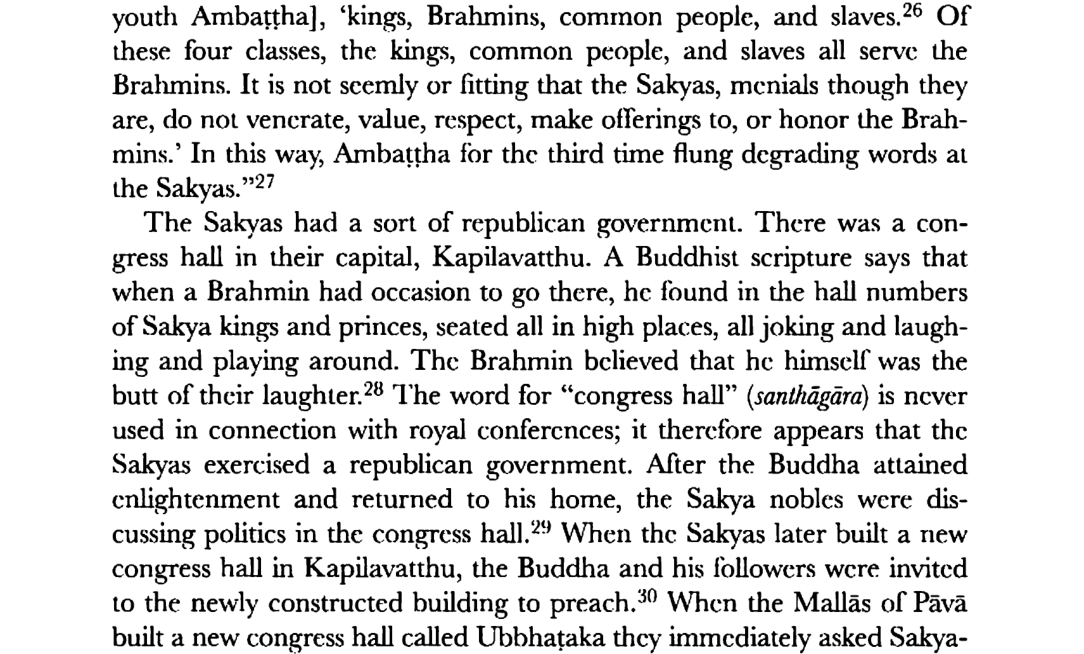
逐字对上,且脚注所引的两句本是连着的一段:「The Sakyas had a sort of republican government. There was a congress hall in their capital, Kapilavatthu……The word for "congress hall" (santhagāra) is never used in connection with royal conferences; it therefore appears that the Sakyas exercised a republican government.」脚注所举三事亦逐条在同页,且次序相同

核查全文

:(一)「After the Buddha attained enlightenment and returned to his home, the Sakya nobles were discussing politics in the congress hall」;(二)「When the Sakyas later built a new congress hall in Kapilavatthu, the Buddha and his followers were invited to the newly constructed building to preach」;(三)「When the Mallas of Pava built a new congress hall called Ubbhataka they immediately asked Sakyamuni to visit it」。又得一条脚注未记而与正文相干者:同页续举毘琉璃(Vidudabha)因母族出身低微而在议事堂受辱、其座位被视为不洁一事,中村元据以断「only those of high rank gathered in the congress hall」——是则议事堂虽非王庭,亦非人人得入,此层可备后用。判确

释迦共和制之据。全句「The Sakyas had a sort of republican government…The word for "congress hall" (santhagāra) is never used in connection with royal conferences; it therefore appears that the Sakyas exercised a republican government」。脚注所举三事(成道归乡后释迦贵族议政、迦毗罗卫新建议事堂请佛说法、波婆末罗族新堂名 Ubbhataka)逐条在同页且次序相同。同页另有一层脚注未记:毘琉璃因母族低微而在议事堂受辱、其座被视为不洁,中村元据以断 only those of high rank gathered in the congress hall——议事堂虽非王庭,亦非人人得入。

第 161 行脚注 nakamura_suzerain

纸本1.1.4-8条0489
所据
Gotama Buddha A Biography Based on the Most Reliable Texts Vol. 1 - Hajime Nakamura - 2000
书页
原书未标版心页码 书影
原书未标版心页码
核查结论

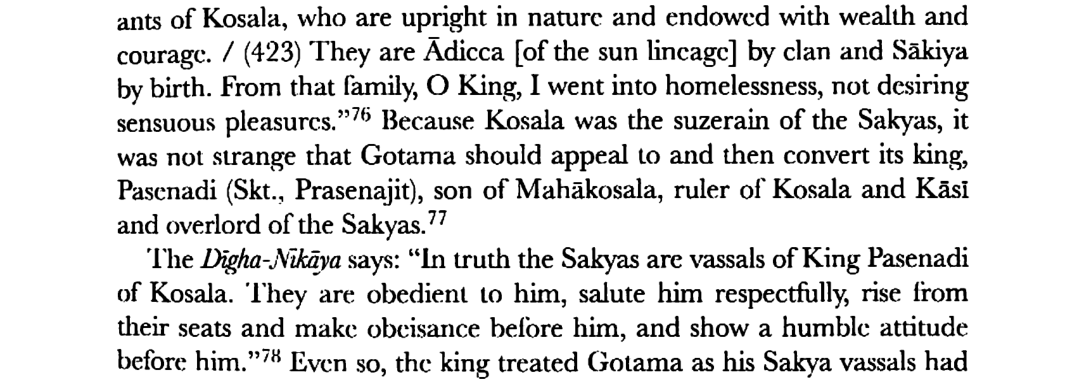
同上书,脚注所引两句连成一段,逐字对上:「Because Kosala was the suzerain of the Sakyas, it was not strange that Gotama should appeal to and then convert its king, Pasenadi (Skt., Prasenajit), son of Mahakosala, ruler of Kosala and Kāsī and overlord of the Sakyas. The Dīgha-Nikāya says: "In truth the Sakyas are vassals of King Pasenadi of Kosala. They are obedient to him

核查全文

, salute him respectfully, rise from their seats and make obeisance before him, and show a humble attitude before him."」脚注把《长部》原文与中村元的断语分列,与该页的行文次序一致,无误须记一处版本内的异文:同书 另引《起世因本经》(Aggaññasuttanta)同一段而译文小异,作「The Sakyas are the vassals of King Pasenadi of Kosala. The Sakyas are submissive to him, bow before him…」——即同一部《长部》文句在此书中有两种英译(obedient/submissive,salute/bow),日后逐字引用须标明所据之页。又该处并谓释迦族与憍萨罗「perhaps in a tributary relationship」,用语较 suzerain 一词为松,可见中村元于此层的措辞前后有轻重之别。判确:脚注所承担的两项(《长部》原文、憍萨罗为宗主)俱得。
憍萨罗为释迦宗主之据。全段并引《长部》:「In truth the Sakyas are vassals of King Pasenadi of Kosala. They are obedient to him, salute him respectfully…」。须记一处同书异文:另引 Aggaññasuttanta 同一段而译作 The Sakyas are the vassals…are submissive to him, bow before him,且该处谓两族「perhaps in a tributary relationship」,措辞较 suzerain 为松;逐字引用须标明所据之页。

第 163 行脚注 nakamura

纸本1.1.4-9条0363
所据
[0226] Gotama Buddha A Biography Based on the Most Reliable Texts Vol. 1 - Hajime Nakamura - 2000
书页
书内第 36 页 书影
书内第 36 页
核查结论

正文 51 行补入词汇旁证一句:「经里说迦毗罗卫城中有『议事堂』(santhāgāra),释迦贵族在其中议政、新堂落成还请佛去说法,而这个词在巴利文献里从不用于王室的朝会」,另立脚注 录中村元原句与其所举三事(成道归乡后释迦贵族议事堂议政、迦毗罗卫新建议事堂请佛说法、波婆末罗族新建议事堂 Ubbhataka)。原 仍系于第 44 行硬骨架总目,不动。此补使「王子被抬高」由史学推断升为有词汇证据的判断。

中村元明言释迦族实行一种共和政体,迦毗罗卫设议事堂;又以 santhāgāra 一词从不用于王室会议为据,判释迦族确行共和政体,并列佛成道归乡后贵族在堂中议政等事。此页直接支撑正文对「王子」叙事的收紧及新增词汇旁证。

第 164 行脚注 lamotte

纸本1.1.4-10条0291
所据
E. Hultzsch《Inscriptions of Asoka》(Corpus Inscriptionum Indicarum Vol. I, 1925)
书页
书内第 165 页 书影
书内第 165 页
核查结论

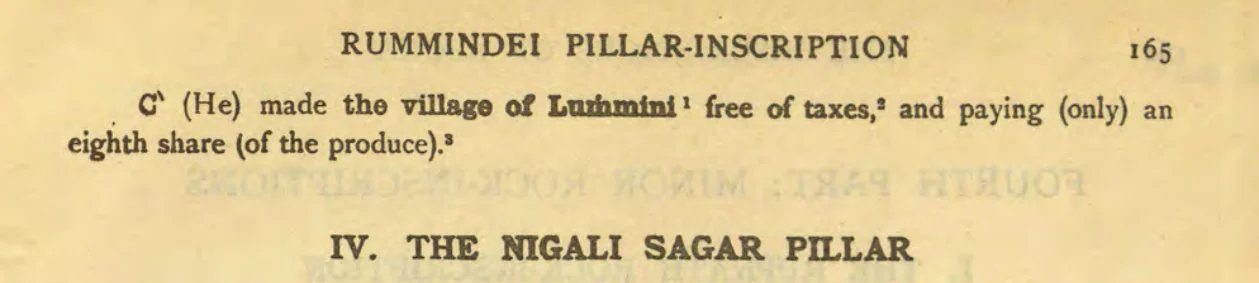
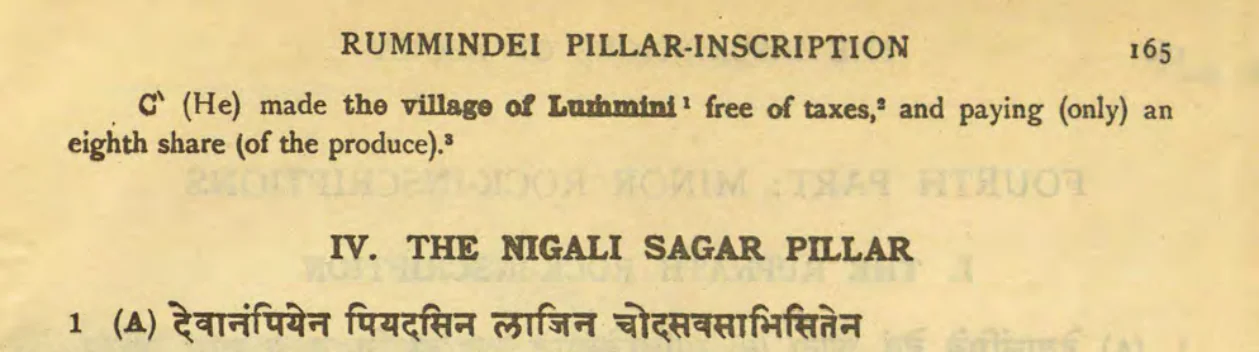
正文第 148 行已改:「而免当地赋税」改作「而减该村赋役:原文作 "ubalike kaṭe aṭha-bhāgiye cha",免其贡(bali),只取八分之一的产出份额(bhāga),是减赋而非全免」,并新立 `` 注。

蓝毗尼石柱敕 (C):「Luṃmini-gāme ubalike kaṭe aṭha-bhāgiye cha」,Hultzsch 译作「made the village of Luṃmini free of taxes, and paying (only) an eighth share」——免贡而取八分之一,是减赋非全免。

第 165 行脚注 gombrich

纸本1.1.4-21条1806
所据
[0682] Richard F. Gombrich《Theravāda Buddhism》(Routledge, 2006 第二版;1988 初版)
书页
书内第 50 页 书影
书内第 50 页
核查结论

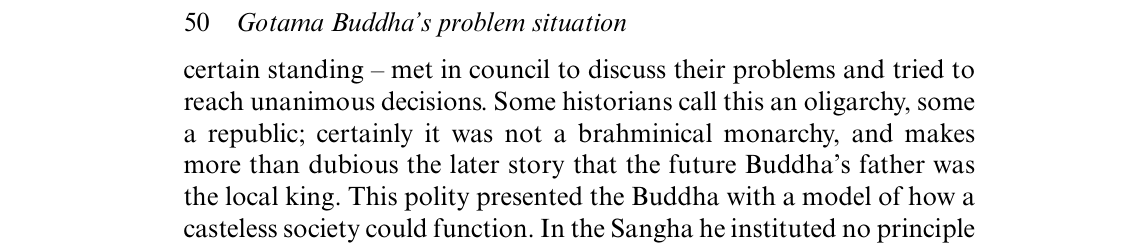
书 51 行三支主张, 只担两支:部族共和非世袭王国(「Some historians call this an oligarchy, some a republic… makes more than dubious the later story that the future Buddha's father was the local king」)、悉达多非王子(同段)。「仰憍萨罗鼻息」一支该书没有(Kosala 六见皆与释迦无关),改由同段已引的 一系另证:中村元引《长部》「the Sakyas are vassals of King Pasenadi of Kosala」并断「Kosala was the suzerain of the Sakyas」。

核查全文

已在正文 51 行补引 ,脚注定义已加在 之后。

本页明说释迦族政体可称寡头或共和、并非婆罗门式王国,且使佛父为本地国王的后起故事甚为可疑;正对本行 。

第 167 行脚注 staal

纸本1.1.4-12条0364
所据
[0564] The Fidelity of Oral Tradition and the Origins of Science - Frits Staal - 1986
书页
题名页 书影
题名页
文内第 18 页(合集页 266) 书影
文内第 18 页(合集页 266)
文内第 18 页(合集页 266) 书影
文内第 18 页(合集页 266)
核查结论

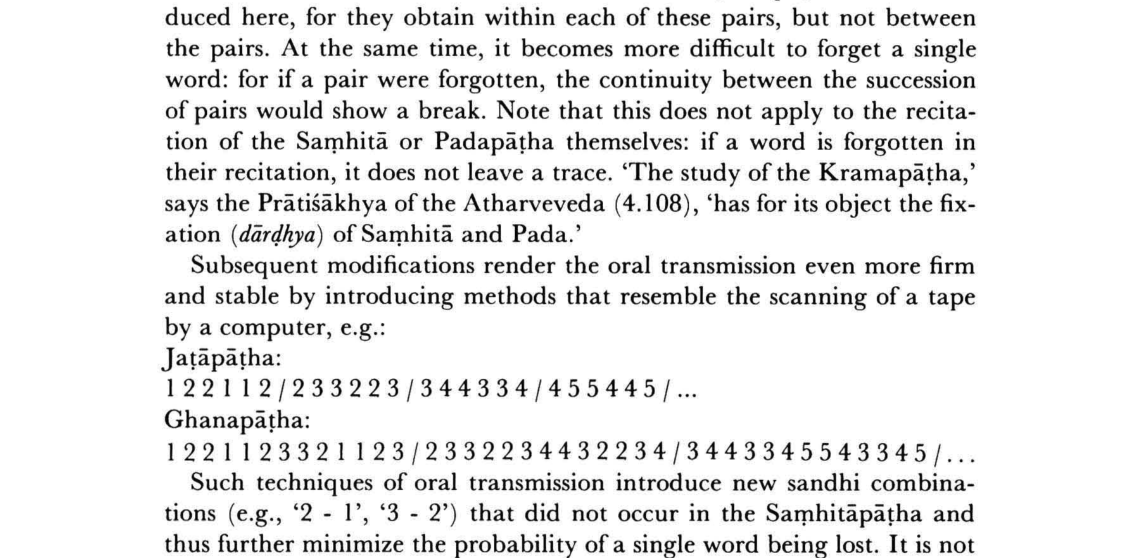
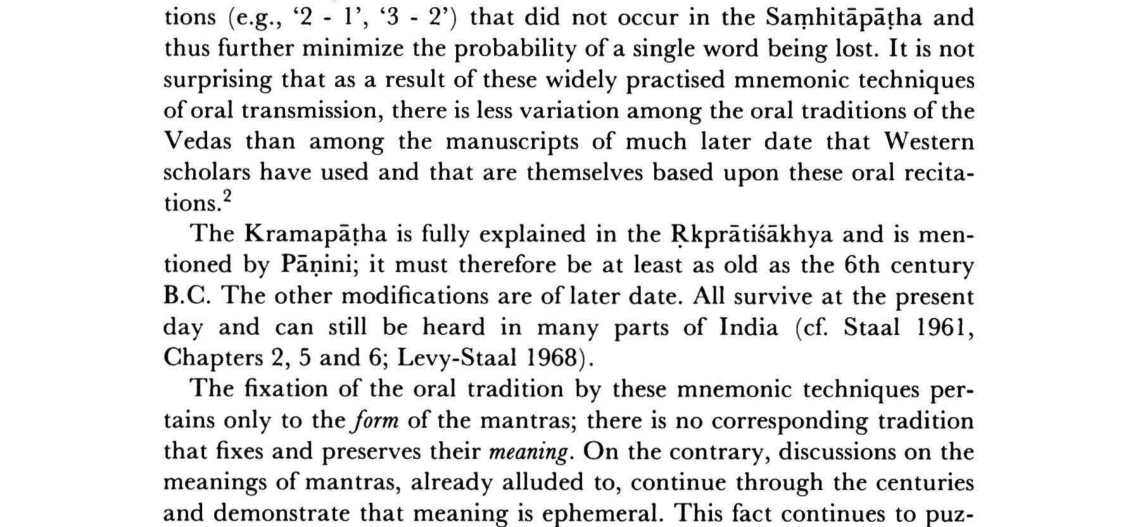
组合诵与保真度两项俱实,正文所举的数字花样与原文逐位相符。(一)诵法层级:原文自 Saṃhitāpāṭha 与 Padapāṭha 起,谓《波你尼相续论》(Prātiśākhya)诸书立「变体」(vikṛti)以「strengthen」口传,其一为 Kramapāṭha:若逐词读记作 1/2/3/4/5/…,则 krama 作「12 / 23 / 34 / 45 /…」;Jaṭāpāṭha 作「122112 / 233223 / 344334 / 455445 /…」;Ghanapāṭha 作「1221123321123 / 2332234432234 /…」。

核查全文

正文「按 1-2、2-1、1-2-3、3-2-1…… 的花样绕诵」,正是 ghana 一式的开头数位,无误。(二)串错即露:原文谓 krama 之效在「if a pair were forgotten, the continuity between the succession of pairs would show a break」,而此正是 saṃhitā 与 pada 所无者——「if a word is forgotten in their recitation, it does not leave a trace」。《阿闼婆相续论》4.108 曰 krama 之学「has for its object the fixation (dārḍhya) of Saṃhitā and Pada」。后出诸式更被比作「methods that resemble the scanning of a tape by a computer」。(三)保真度:「there is less variation among the oral traditions of the Vedas than among the manuscripts of much later date that Western scholars have used and that are themselves based upon these oral recitations」。(四)两处宜留意。①年数:原文系《梨俱吠陀》之成书于「around 1500 B.C., give or take a few centuries」,而称其传世为「the colossal time-span of three-and-a-half millennia」,即三千五百年;正文作「约三千年」略低,可径改作「三千余年」或「约三千五百年」。②krama 与 jaṭā、ghana 不同代:原文明记「The Kramapāṭha is fully explained in the Ṛkprātiśākhya and is mentioned by Pāṇini; it must therefore be at least as old as the 6th century B.C. The other modifications are of later date.」——即佛陀之世可为先例者唯 krama 一式,jaṭā 与 ghana 皆后起。正文書 25 行以此段作「吠陀的先例」而三式并举,若后文据以论佛世口传之可靠,须只取 krama,不得连举后二式。(五)另有一层可供正文他处取用,且与本书论旨相关:原文明言此类记诵之固定「pertains only to the form of the mantras; there is no corresponding tradition that fixes and preserves their meaning」,谓咒语之义历代聚讼而「meaning is ephemeral」,其固定之目的只在供仪式诵念,「where their form is all-important and where meaning plays no part」。即:吠陀先例所能担保者是音形之传,不是义解之传。 本书若以之类比佛教口传的教义保真,此限须写明。

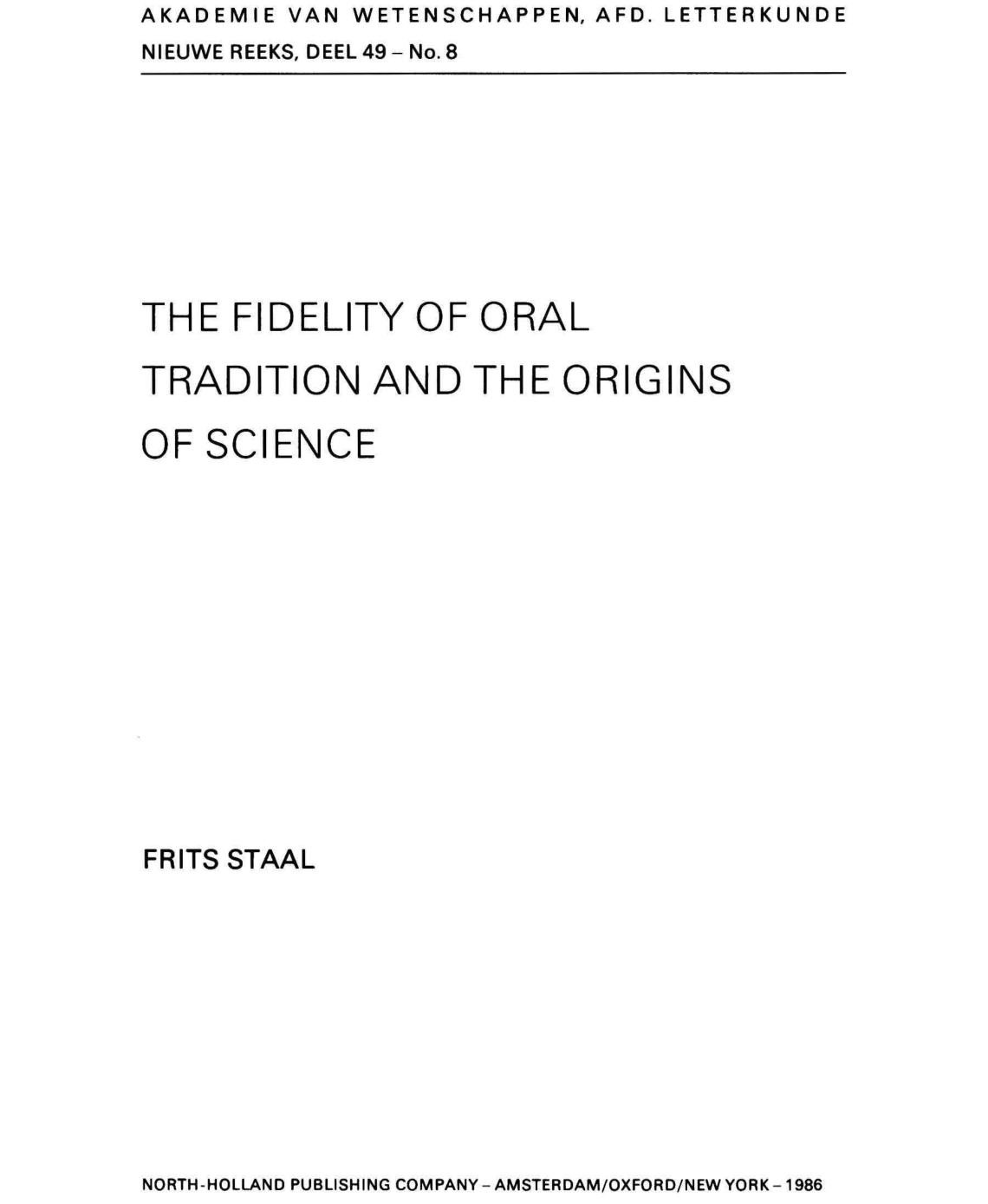
题名页核丛书卷期、题名、作者、出版者与 1986 年。文内第 18 页先说明相邻词组漏失会使连锁中断,又列 jaṭā、ghana 的数字回环并说口传异文少于后世写本;同页同时限定:只有 krama 至少可上溯前六世纪,其他变体较晚,而且这些技术固定的是咒语形式,不是意义。书影据实支持保真机制,也保留正文类比的时代与范围限制。

第 168 行脚注 allon

纸本1.1.4-13条0567
所据
[0466] Style and Function - Mark Allon - 1997
书页
书内第 3 页 书影
书内第 3 页
核查结论

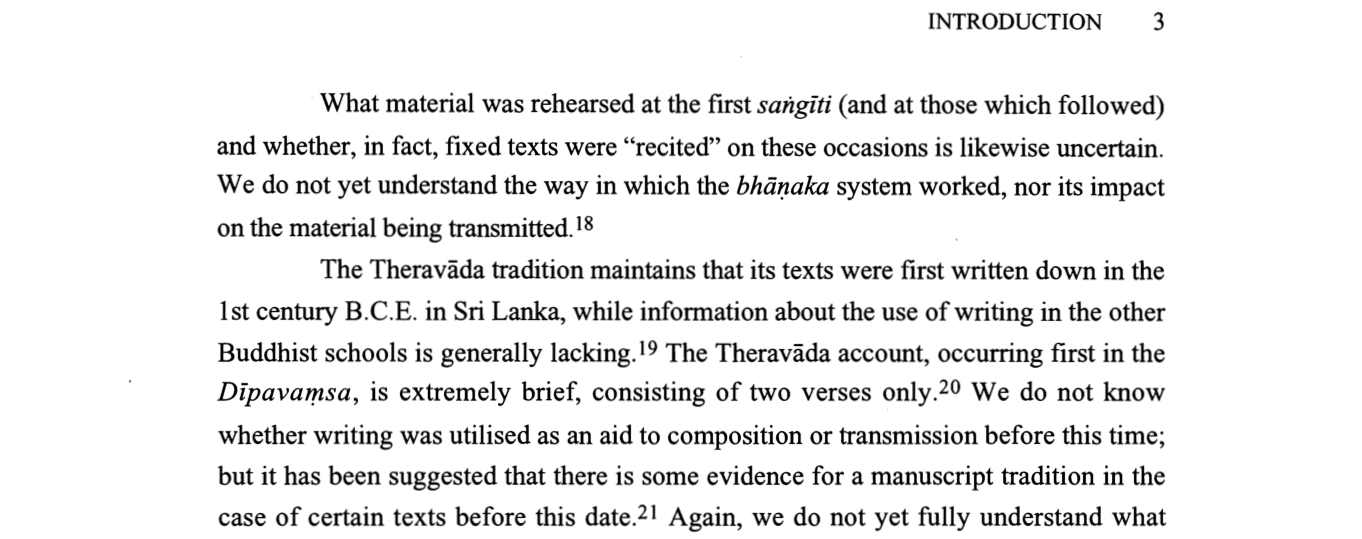
正文第 27 行已改:「等于把整部圣典拆成若干份、分散备份在不同传承线里」改作「本书把这一格局看作分散备份,这是本书的比拟,不是文献本身的说法:诵师制度究竟如何运作、对所传文本影响几何,研究者至今没有论定」——比拟归比拟,论断归论断,分清了。程式套语、复沓、法数、摄颂的助记功能一侧,为该书主题(副题即 “and their mnemonic function”),无须改。本行转确。

本页明确说诵师制度如何运作及其对所传材料的影响仍不清楚,证明正文已把“分散备份”标作本书比拟而非 Allon 的论断。

第 169 行脚注 wynne

纸本1.1.4-14条0365
所据
[0626] The Oral Transmission of Early Buddhist Literature - Alexander Wynne - 2004
书页
期刊目次 书影
期刊目次
原刊第 97 页 书影
原刊第 97 页
原刊第 115 页 书影
原刊第 115 页
原刊第 115 页 书影
原刊第 115 页
核查结论

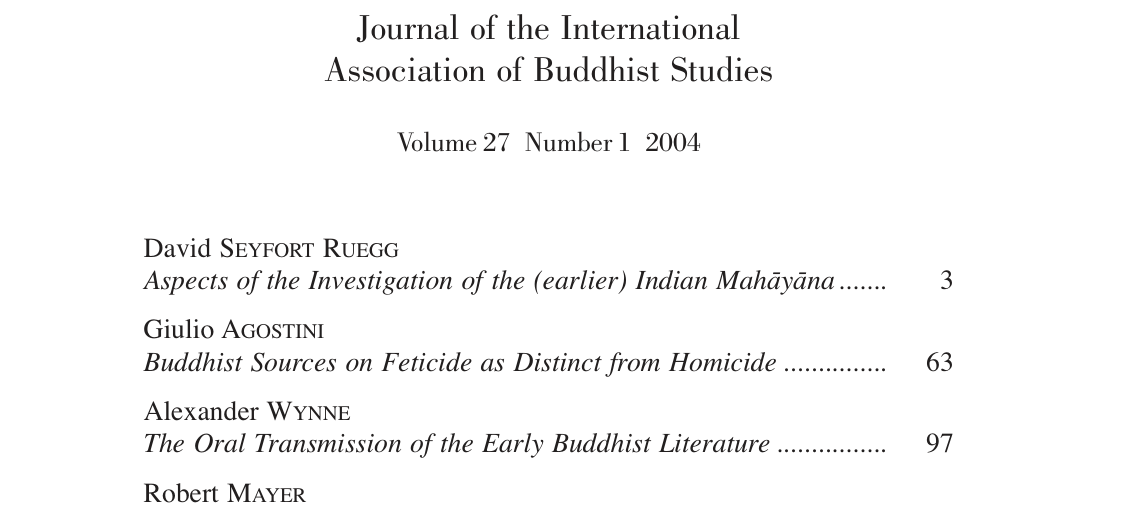
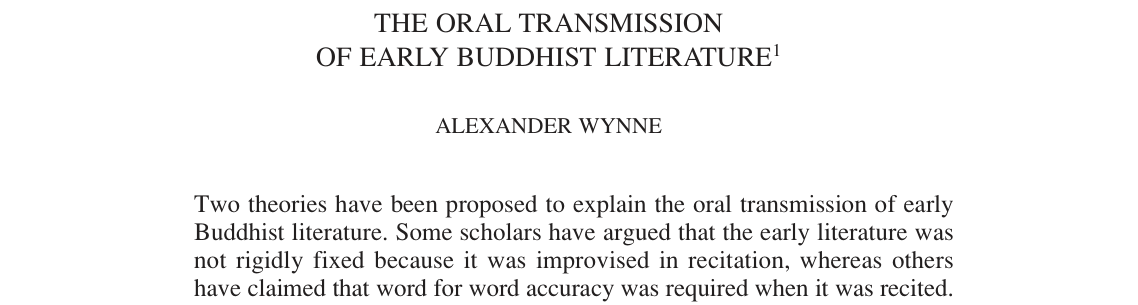
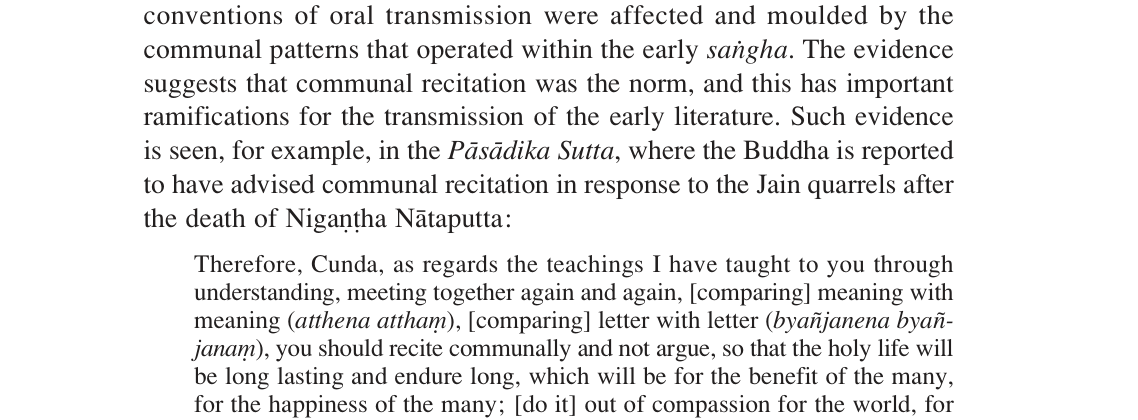
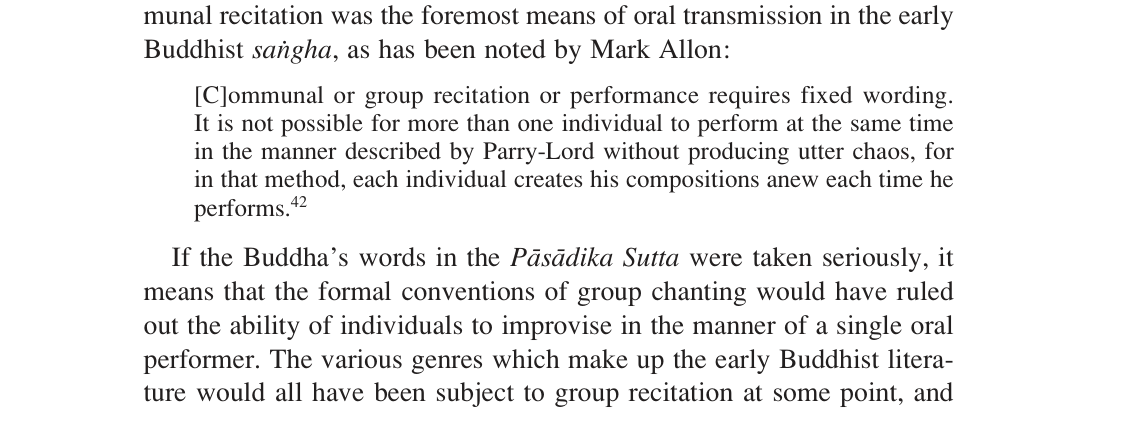
Wynne〈The Oral Transmission of Early Buddhist Literature〉,著录与脚注逐项相符,两项断言俱确: ①集体合诵即时纠错:文中引《清淨經》(Pāsādika Sutta, D III.127),佛告周那「meeting together again and again, [comparing] meaning with meaning (atthena atthaṃ), [comparing] letter with letter (byañjanena byañjanaṃ), you should recite communally and not argue」——义对义、句对句地会诵校勘,正是合诵中的即时纠错机制;

核查全文

Wynne 并指此为早期佛教鉴于耆那教身后争执而立的防错之法。 ②口传主体为群体:「The evidence suggests that communal recitation was the norm」,并引 Allon「[C]ommunal or group recitation or performance requires fixed wording. It is not possible for more than one individual to perform at the same time in the manner described by Parry-Lord without producing utter chaos」,故「the formal conventions of group chanting would have ruled out the ability of individuals to improvise in the manner of a single oral performer」——群诵之制排除了个人即兴,与正文「口传主体为群体」相合。证据面不限于《清淨經》,另及《眾集經》(Saṅgīti Sutta)。判语改「确」。

目次与首页合证 JIABS 27.1(2004)、作者、题名及起页 97。第 115 页称集体诵读为常态,引《清净经》义与义、文与文相校且共同诵而不争;同页又引 Allon 说明群诵要求固定措辞,继而判断群诵形式排除了个人表演者式的即兴。两幅分别承担共同校读与固定措辞两层。

第 170 行脚注 salomon

书目著录1.1.4-15条0568
所据
[0053] Ancient Buddhist Scrolls from Gandhara - Richard Salomon - 1999
书页
版权页
版权页

此页所载版权声明禁止以任何方式复制或传播本书的任何部分。本页书影只为核对该条著录而摆在此处,请勿转载、转贴、下载或另行传播——禁令未开「少量节取」之例,剪一小段同样不在许可之内。

核查结论

现文已收窄至 Salomon 所能担:表格该格作「难以久存」(原书 not survive very long),括注作「现存最古的佛教写本出自西北犍陀罗,赖陶罐埋藏得存」,注中并明记该书所论干燥气候之保存功指塔里木一系写本,与犍陀罗此批不同,且诸卷入罐前古代已朽损。原判疑所指之「数十年即朽」與「靠干旱才得保存」二语已不在现文。

版权页/题名页书影只核本卡所列书目著录,不承担该书的内容主张。

第 171 行脚注 collins

纸本1.1.4-16条0366
所据
[0369] On the Very Idea of the Pali Canon - Steven Collins - 1990
书页
原刊第 89 页(本转载;转载本页 72) 书影
原刊第 89 页(本转载;转载本页 72)
原刊第 89 页(本转载;转载本页 72) 书影
原刊第 89 页(本转载;转载本页 72)
核查结论

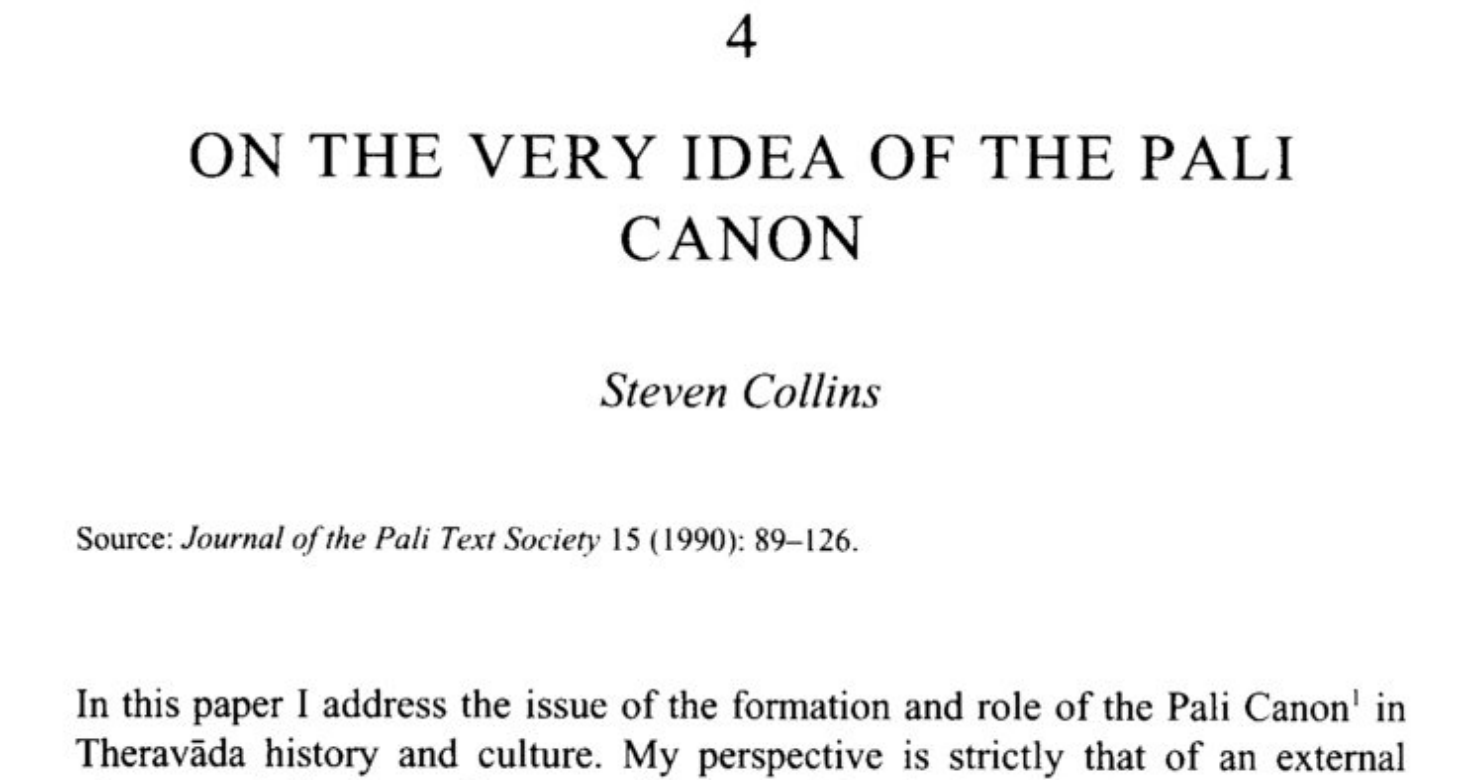
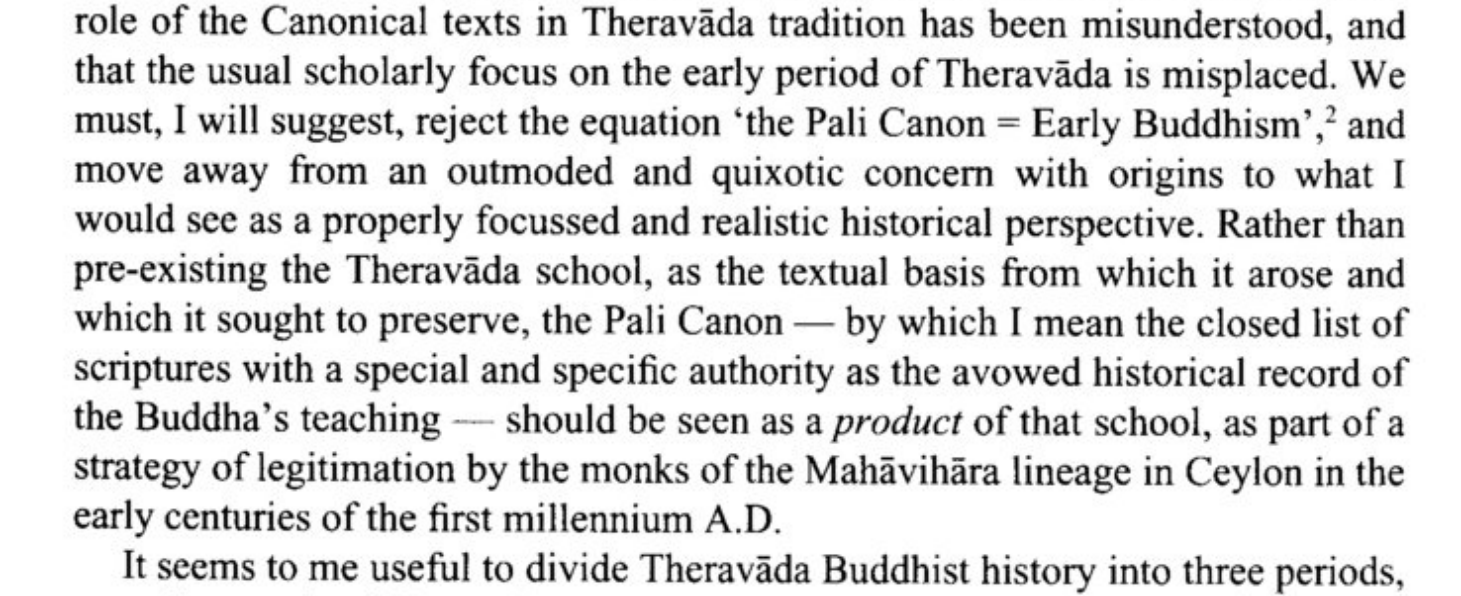
作者对本文的正论(拆「巴利圣典=早期佛教」、视圣典为大寺派合法化工程的产物)持保留意见,拟于后续加一段辩论。本行的判语只及著录与文本对读,不预判该论之是非;若日后立此辩论,须另立行、另举人证。

首页明载题名、作者与原刊 Journal of the Pali Text Society 15(1990)89—126;同页正文要求拒绝“巴利圣典等于早期佛教”的等式,并把封闭圣典视为锡兰大寺派僧侣合法化策略的产物。此卡只落实该文著录及其正面论旨;依既有结论,它不承担战乱饥荒导致首次写定的因果说。

第 178 行脚注 shuxie2 条佐证

书目著录1.1.4-17条0526
所据
A Handbook of Pāli Literature - Oskar von Hinüber - 1996
书页
版权页
版权页

此页所载版权声明禁止以任何方式复制或传播本书的任何部分。本页书影只为核对该条著录而摆在此处,请勿转载、转贴、下载或另行传播——禁令未开「少量节取」之例,剪一小段同样不在许可之内。

核查结论

本注做的是一件不容易的事:指出通行说法的出处,并证明该出处所据的原典并不载其说。 (一)《大史》XXXIII.100–101 逐字全中,页码亦对: Geiger 1912 英译本(-72,三面抽验),书内 237 页作「The text of the three pitakas and the atthakatha thereon did the most wise bhikkhus hand down in former times orally, but since they saw that the people were falling away (from religion)

核查全文

the bhikkhus came together, and in order that the true doctrine might endure, they wrote them down in books.」,其后紧接「Here ends the thirty-third chapter, called 'The Ten Kings'」。所给的理由确只两项,与本注所述一字不差。 (二)《岛史》XX.20–21 逐字全中,页码亦对: Oldenberg 1879 本(-8),书内 211 页作「20. Before this time, the wise Bhikkhus had orally handed down the text of the three Pitakas and also the Atthakatha. 21. At this time, the Bhikkhus who perceived the decay of created beings, assembled and in order that the Religion might endure for a long time, they recorded (the above-mentioned texts) in written books.」;巴利一侧(书内 102 页附近)作「hanim disvana sattanam tada bhikkhu samajjata / ciratthitattham dhammassa potthakesu likhapayum」。两处措辞几乎相同、理由只有两项,本注所述属实。 (三)Norman 一环最要紧,亦得实证: Norman《Pāli Literature》(1983)(-10),书内 10 页作「The Dipavamsa states that during the reign of Vattagāmani Abhaya (29-17 B.C.) the monks who had previously remembered the Tipiṭaka and its commentary orally now wrote them down in books, because of the threat posed by famine, war, and the growing power of the newly established Abhayagiri [vihāra]」,本注所引 “the monks … now wrote them do[wn]” 逐字在此。并得一层本注未及而更有力的旁证:Norman 该处自注(注七四)所据正作 Dip XX 20—21,而那一段(见上文(二))恰恰不载饥荒、战乱与无畏山寺三事。即通行说法的三项原因,是 Norman 加在《岛史》头上的,非《岛史》所有。此外该书书内 5 页另有一处同旨之语(「as a result of threats to the Saṅgha from famine, war, and the growing power of the Abhayagiri vihāra」),本注只举 10—11 页,未及此处。惟本注的实质断言不受影响且已坐实:第三十三章(韦提噶玛尼朝,书内约 228—237 页)之内 famine 一词零命中,饥荒确未系于该朝。惟「原文未系因果」一事已由(一)所引 100–101 两节自身坐实——那两节只给两项理由,无一涉战乱。

版权页/题名页书影只核本卡所列书目著录,不承担该书的内容主张。

书目著录1.1.4-18条0726
所据
[0016] A Handbook of Pāli Literature - Oskar von Hinüber - 1996
书页
版权页
版权页

此页所载版权声明禁止以任何方式复制或传播本书的任何部分。本页书影只为核对该条著录而摆在此处,请勿转载、转贴、下载或另行传播——禁令未开「少量节取」之例,剪一小段同样不在许可之内。

核查结论

本注做的是一件不容易的事:指出通行说法的出处,并证明该出处所据的原典并不载其说。 (一)《大史》XXXIII.100–101 逐字全中,页码亦对: Geiger 1912 英译本(-72,三面抽验),书内 237 页作「The text of the three pitakas and the atthakatha thereon did the most wise bhikkhus hand down in former times orally, but since they saw that the people were falling away (from religion)

核查全文

the bhikkhus came together, and in order that the true doctrine might endure, they wrote them down in books.」,其后紧接「Here ends the thirty-third chapter, called 'The Ten Kings'」。所给的理由确只两项,与本注所述一字不差。 (二)《岛史》XX.20–21 逐字全中,页码亦对: Oldenberg 1879 本(-8),书内 211 页作「20. Before this time, the wise Bhikkhus had orally handed down the text of the three Pitakas and also the Atthakatha. 21. At this time, the Bhikkhus who perceived the decay of created beings, assembled and in order that the Religion might endure for a long time, they recorded (the above-mentioned texts) in written books.」;巴利一侧(书内 102 页附近)作「hanim disvana sattanam tada bhikkhu samajjata / ciratthitattham dhammassa potthakesu likhapayum」。两处措辞几乎相同、理由只有两项,本注所述属实。 (三)Norman 一环最要紧,亦得实证: Norman《Pāli Literature》(1983)(-10),书内 10 页作「The Dipavamsa states that during the reign of Vattagāmani Abhaya (29-17 B.C.) the monks who had previously remembered the Tipiṭaka and its commentary orally now wrote them down in books, because of the threat posed by famine, war, and the growing power of the newly established Abhayagiri [vihāra]」,本注所引 “the monks … now wrote them do[wn]” 逐字在此。并得一层本注未及而更有力的旁证:Norman 该处自注(注七四)所据正作 Dip XX 20—21,而那一段(见上文(二))恰恰不载饥荒、战乱与无畏山寺三事。即通行说法的三项原因,是 Norman 加在《岛史》头上的,非《岛史》所有。此外该书书内 5 页另有一处同旨之语(「as a result of threats to the Saṅgha from famine, war, and the growing power of the Abhayagiri vihāra」),本注只举 10—11 页,未及此处。惟本注的实质断言不受影响且已坐实:第三十三章(韦提噶玛尼朝,书内约 228—237 页)之内 famine 一词零命中,饥荒确未系于该朝。惟「原文未系因果」一事已由(一)所引 100–101 两节自身坐实——那两节只给两项理由,无一涉战乱。

版权页著录 Oskar von Hinüber、A Handbook of Pāli Literature、de Gruyter、1996 及 ISBN 3-11-014992-3。

第 180 行脚注 hultzsch

纸本1.1.4-19条0494
所据
Inscriptions of Asoka - E. Hultzsch - 1925
书页
書 164—165(III. THE RUMMINDEI PILLAR) 书影
書 164—165(III. THE RUMMINDEI PILLAR)
核查结论

确,逐字核实于图版。 Hultzsch《Inscriptions of Asoka》(CII I, new ed. 1925,Indological Book House 重印) 书内第 164 页题 III. THE RUMMINDEI PILLAR,载婆罗谜图版、罗马字转写 (A)(B)(C) 与 (A)(B) 的英译;第 165 页载 (C) 的英译,作 (He) made the village of Luṃmini free of taxes, and paying (only) an eighth share (of the produce)。注中所引 (C) 段转写与此译文皆合,页码亦合。

核查全文

(A)(B) 两段原文为 Devanaṃpiyena Piyadasina lājina visati-vasābhisitena atana āgācha mahiyite hida Budhe jāte Sakyamuni ti 与 silā vigaḍabhī cha kālāpita silā-thabhe cha usapāpite hida Bhagavaṃ jāte ti,英译作 he came himself and worshipped (this spot), because the Buddha Śākyamuni was born here 与 caused a stone pillar to be set up, (in order to show) that the Blessed one was born here,与注中所述"灌顶二十年亲临礼敬,并立石柱以示世尊生于此"相合。ubalika 之义亦有本:同页注二作 For ubalika = Skt. *udbalika,列 Barth、Bühler、Fleet、Lyall、Thomas 诸家,故正文所说"免其贡而只取八分之一"不误。

蓝毗尼柱敕之据。書 164 页载罗马字转写 (A)(B)(C) 与 (A)(B) 的英译,書 165 页载 (C) 的英译,全句作 (He) made the village of Luṃmini free of taxes, and paying (only) an eighth share (of the produce);同页注二作 For ubalika = Skt. *udbalika,列 Barth、Bühler、Fleet、Lyall、Thomas 诸家,故正文「免其贡而只取八分之一」不误。